
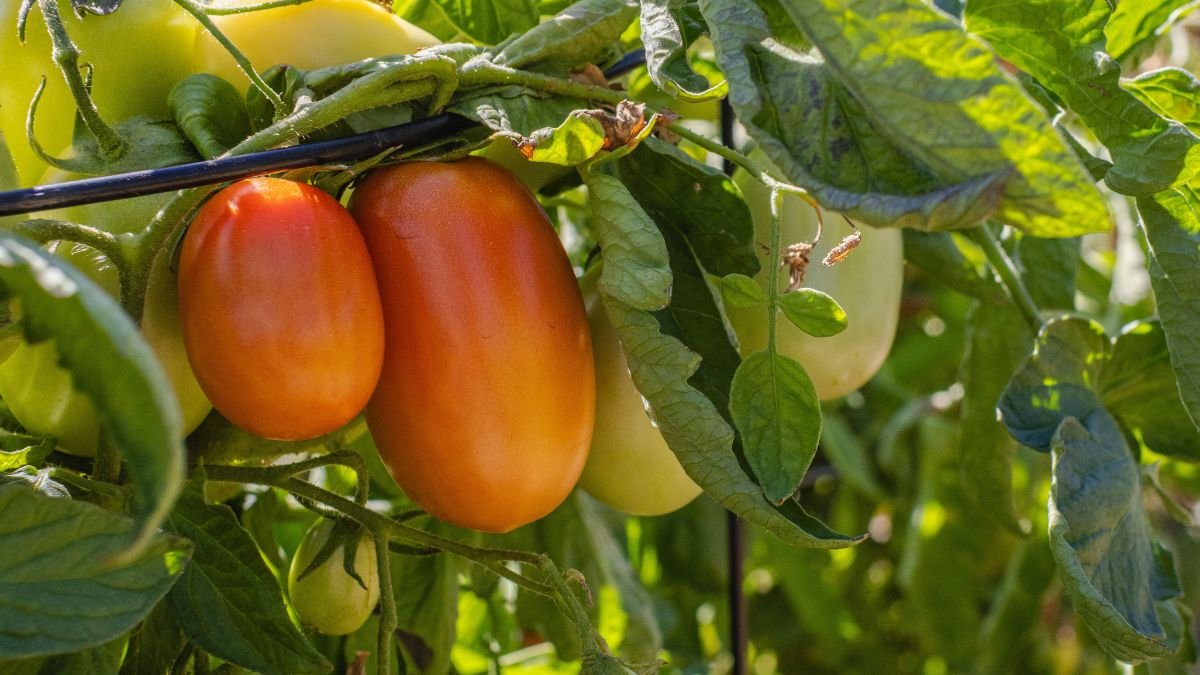
Tomato Growing Guide for Pots: Size, Soil, Watering and Care
A practical guide to growing tomatoes on a balcony, patio, or doorstep, from choosing a pot to picking your first ripe fruit.
You don’t need a garden bed to grow tomatoes; a sunny balcony, patio, or doorstep can work well. With the right care, plants in pots can be productive enough to rival those grown in the ground. Containers also let you move plants into better light or shelter and can reduce exposure to soil-borne pests. This guide explains how to grow tomatoes in pots, covering varieties, pot size, soil, planting, watering, feeding, support, and harvest. You can follow it from the start, even if this is your first tomato plant.
Start with a pot of 5 gallons or more that has drainage holes. Fill it with potting mix and compost, provide 6 to 8 hours of sun, water when the top inch of soil feels dry, and feed every two weeks.
Which Tomato Varieties Grow Best in Pots
Tomatoes fall into two main groups based on how they grow.
Determinate, or bush, tomatoes stay compact and produce most of their fruit over a short period. Indeterminate varieties keep growing and fruiting through the season and may reach six feet tall. If space is limited or you are just starting out, determinate and dwarf varieties are easier to manage. Options include Patio, Tiny Tim, Tumbling Tom, and Better Bush. Cherry tomatoes such as Sungold and Sweet 100 can also work, but these vining varieties need a larger pot and sturdy support. When shopping, look for “determinate,” “dwarf,” or “container” on the seed packet or plant label.
Best Pot Size for Growing Tomatoes
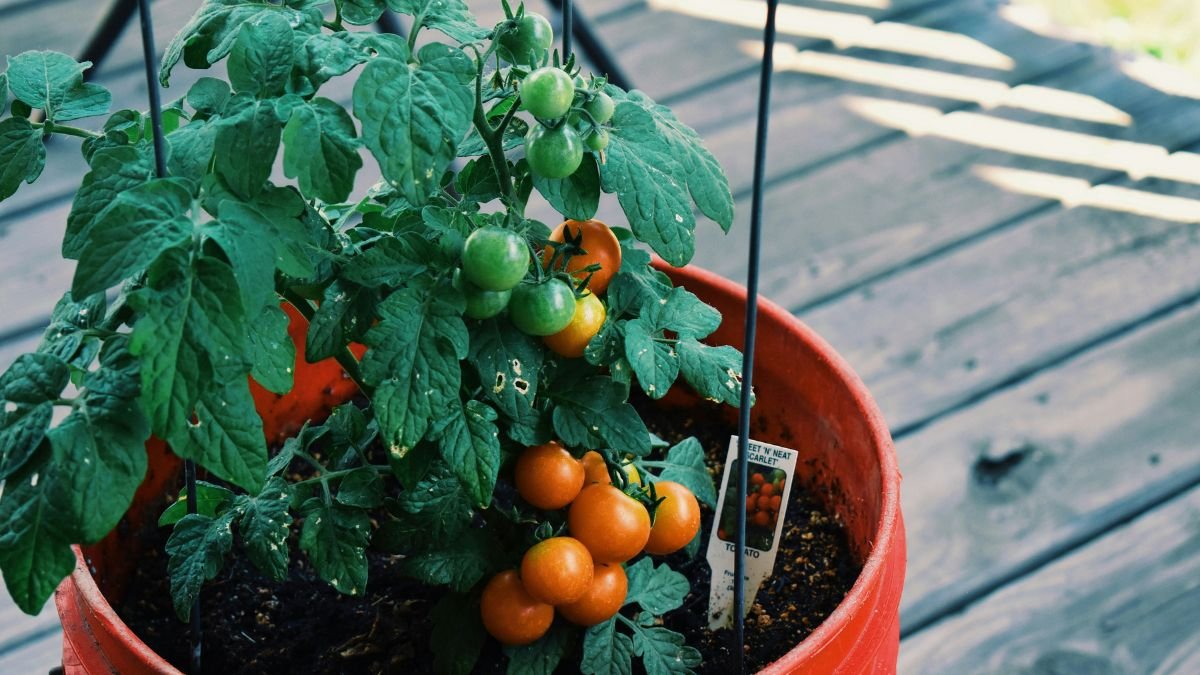
A roomy pot gives tomato roots space to grow and helps the plant cope with changes in moisture. Allow at least 5 gallons (19 L) of soil for compact bush varieties and 10 to 20 gallons (38 to 76 L) for indeterminate varieties. Choose a pot between 12 and 18 inches deep, with a drainage hole at the bottom so water does not collect around the roots and lead to rot. Plastic pots, grow bags, and glazed pots can all work. Dark containers absorb a lot of heat, so it’s worth choosing a lighter-colored grow bag for a long growing season.
Best Soil for Growing Tomatoes in Pots
Use potting mix instead of garden soil, which can compact, drain poorly, and carry pests or diseases. Mix in a couple of handfuls of finished compost for extra nutrients. If you are unsure what belongs in your compost bin, our guide answers the question: what can you compost? Choose a mix that is light and airy but still holds moisture. Perlite can help lighten it if the texture feels too heavy.
How and When to Plant Tomatoes in Pots
It’s best to wait until after the last spring frost, when night-time temperatures stay at or above 50°F (10°C). Tomatoes are sensitive to cold. If your growing season is short, it’s worth starting seeds indoors 6 to 8 weeks before planting out. Our guide on how to start seeds indoors has more detail. Buying established plants from a local nursery is another option that saves time, especially for beginners. When you are ready to plant, follow these steps.
Fill the pot with potting mix, leaving about 2 inches of space below the rim.
Remove the lower leaves from each seedling.
Plant deeply, covering the stem up to the first remaining set of leaves. The plant’s roots can grow along the buried stem, helping it establish a stronger root system.
Gently firm the soil around the root ball, then water thoroughly.
Put a stake or cage in place at planting time. That way, you don’t disturb the roots later.
Keep newly planted tomatoes out of harsh afternoon sun for a few days while they settle in.
Sunlight and Watering Tomatoes
Choose a spot with at least 6 to 8 hours of direct sun a day. A sunny position on the south side of the house can work well. Too little sun can mean slower growth and fewer tomatoes. Check the top inch of soil with your finger and water deeply when it feels dry. In hot weather, daily watering may be needed, and some pots may need two waterings. Aim the water at the base to keep the leaves dry and reduce the risk of disease. Uneven watering can contribute to cracked fruit and blossom end rot, which appears as sunken, dark spots at the bottom of the fruit. A layer of 2 inches of straw helps the soil hold moisture.
Feeding Potted Tomatoes
Potted tomatoes need regular feeding because watering washes nutrients out of the mix. Use a balanced fertilizer at planting time, then switch to a tomato fertilizer that is low in nitrogen when flowers appear. Too much nitrogen favors leafy growth over fruit. Feed every two weeks, or follow the schedule on the package.
Supporting and Pruning Tomato Plants
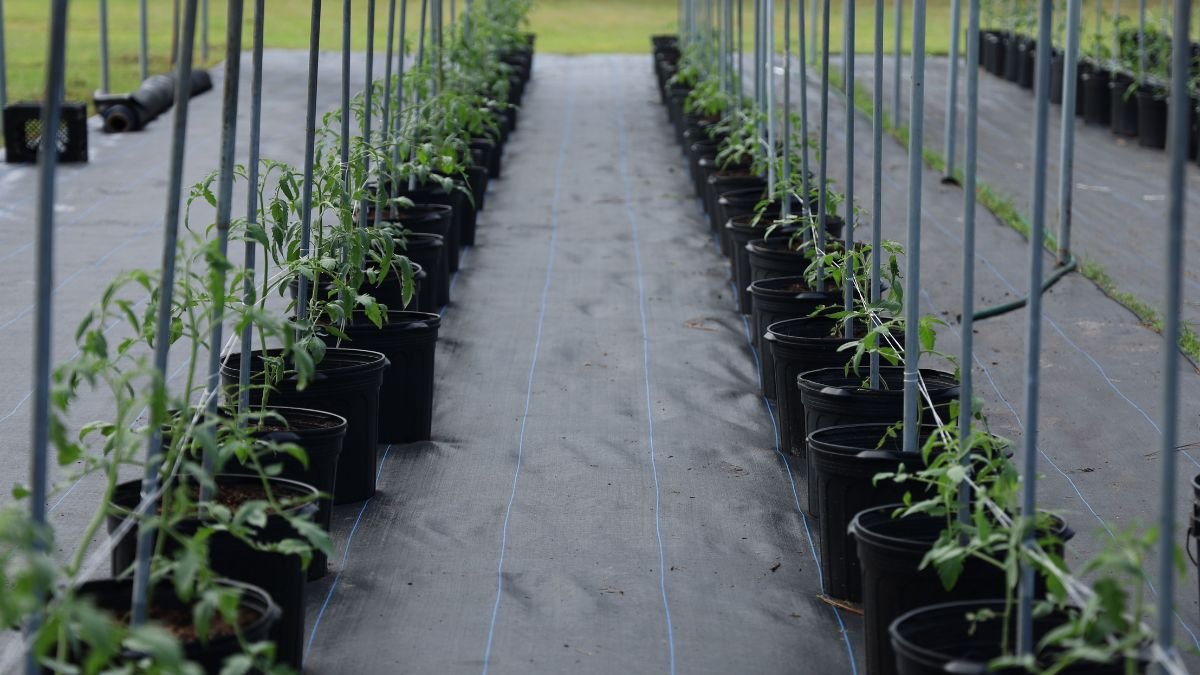
Support keeps stems upright and helps prevent fruit from resting on the soil. A cage works well for determinate tomatoes; use a stake or trellis for indeterminate varieties. Secure the stems loosely with soft string.
For indeterminate tomatoes, pruning can help keep growth manageable. Remove suckers – the small shoots that form where a leaf joins the main stem. Also remove diseased or yellow leaves and those touching the ground. Keep pruning of determinate varieties to a minimum, since removing too much growth can reduce the harvest.
Common Tomato Problems and Solutions
Tomatoes can run into problems even with regular care. These are some common issues and ways to deal with them.
Daytime temperatures over 90°F (32°C) or cold nights can make flowers drop. Our guide on why tomato flowers fall off explains the problem in more detail.
A stream of water can knock aphids off the plant. For more ways to deal with them, see our guide on how to get rid of aphids on plants. Neem oil is another option; our guide on how to use neem oil on plants explains how to prepare the mixture.
Hornworms are large green caterpillars that can eat through tomato leaves. Pick them off the plant and dispose of them.
Too much water or too few nutrients can cause yellow leaves. Check how wet the soil is before making changes.
When and How to Harvest Tomatoes
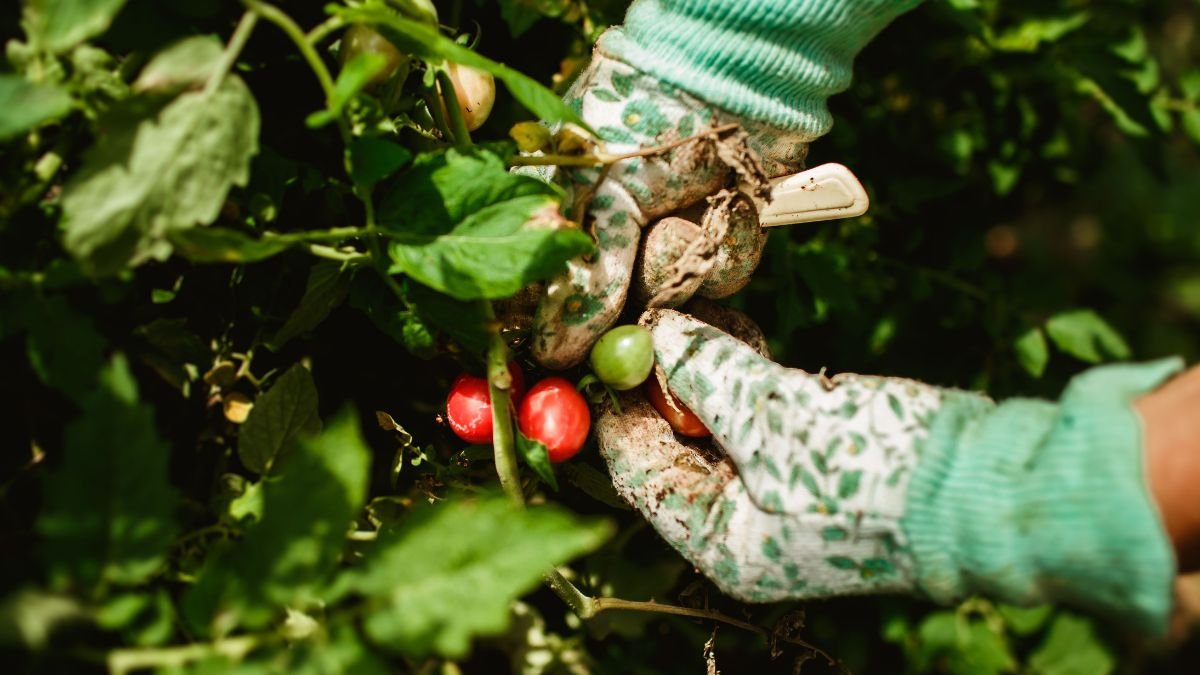
Many tomato varieties mature between 60 and 85 days after transplanting. Pick tomatoes once they have their full color and feel slightly soft. Gently twist the fruit off or cut the stem with scissors. Keep picking as fruit ripens to make the most of the harvest. If frost threatens while some tomatoes are still green, you can bring them indoors to ripen on a countertop.
Can You Grow Tomatoes in Pots Indoors?
Yes, provided they get enough light. A sunny south-facing window may work, though a grow light can be a better option. Try an LED grow light set 12 inches directly above the plant for 12 to 16 hours a day. Choose a dwarf variety such as Tiny Tim to keep the plant manageable. Indoors, the flowers lack the breeze and bees they would get outside, so gently shake the flower stem to encourage pollination.
Conclusion
A roomy pot, good potting mix, plenty of sunlight, and steady watering give tomatoes a good start. With the right conditions, a small balcony can provide fresh tomatoes over the growing season. If you would like to try another container crop, learn how to grow strawberries in pots. For a larger vegetable patch, our vegetable garden layout and spacing guide can help you plan the space.