
Gardening Basics • Beginner Guide
How to Start Seeds Indoors: A Seed Starter’s Guide to Growing from Seed Mix to Seedlings
Supplies, timing, light, watering, and hardening off, all in one simple guide.
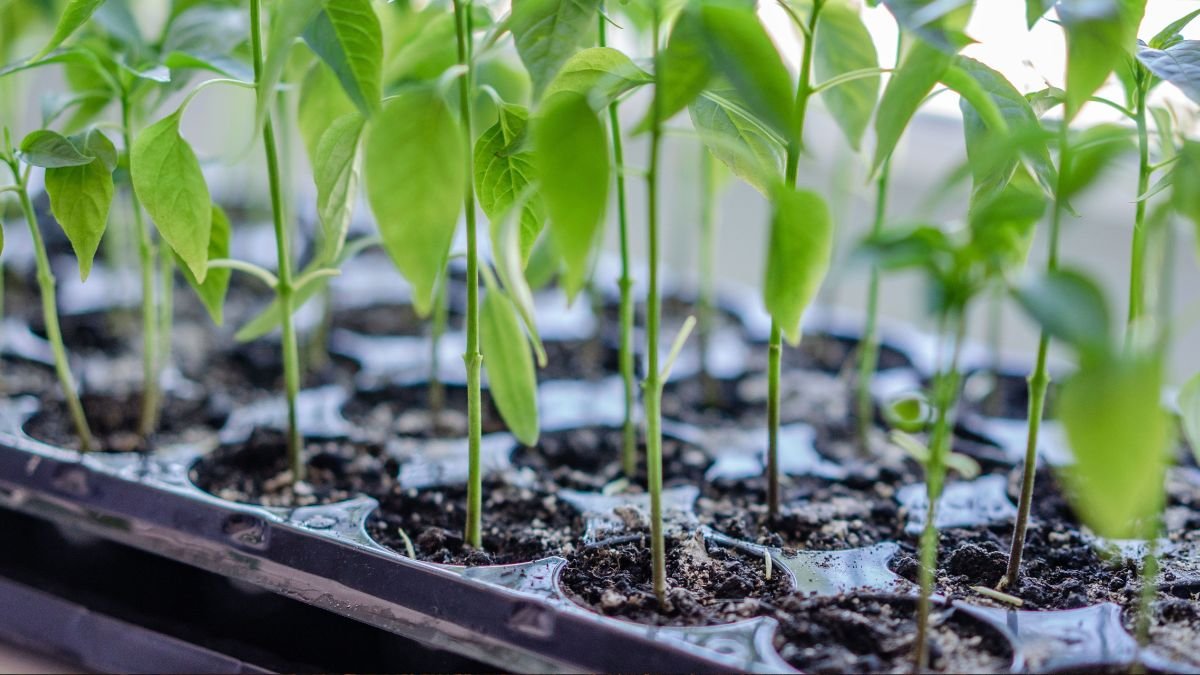
Starting seeds indoors is one of the easiest ways to save money. One packet is the price of one small plant, yet the packet can yield dozens of plants. You will also have the satisfaction of growing a variety of plants, including varieties not found at your local garden center.
Unfortunately many enthusiastic new growers find that their indoor-started plants are tall and spindly, flop over, or simply fail to germinate. The good news is that these problems almost always have simple solutions.
In this guide we will go over how to start seeds indoors from the seed mix to the seedlings. You will learn about the materials you will need to grow strong, healthy plants, when to start your seeds based on your last frost date, how to actually sow the seeds, and how to care for your plants indoors. Finally, we will go over how to harden off your plants before putting them in the ground.
Fill clean containers with damp seed starting mix, sow 2-3 seeds per cell, cover the tray, and keep it at 70-75ºF. As soon as seeds sprout, give them 12-16 hours of bright light. Water from the bottom, thin to the strongest seedling, and harden plants off for 7-14 days before planting outside.
Why Start Seeds Indoors
Starting seeds indoors is a great way to take control of your gardening and increase your yield. Here’s why:
One packet contains many seeds. These seeds can grow into dozens of plants for the price of one.
While your local garden center may carry a few tomato plants, dozens of peppers, and a handful of flowers, a packet of seeds can contain dozens of different varieties.
Starting your seeds indoors gives warm-season crops like tomatoes and peppers a head start.
You have more control over how your plants grow. You can choose what type of mix to use and what kind of fertilizer to apply.
However, not all plants are right for starting indoors. For now let’s focus on the plants that are.
What You Need to Start Seeds Indoors
The materials you need to start seeds indoors are simple. Here’s what to buy:
Containers
You can use any containers you want as long as they have drainage holes in the bottom. Seed trays with individual cells are the easiest to use, as each plant has its own little home. You can also use small pots, peat pots, and even yogurt cups with holes poked in the bottom. You will want to place your seedling containers on a waterproof tray to catch the excess water that comes out of the drainage holes.
If you are reusing old containers, be sure to clean them well. First, rinse them in warm, soapy water. Then, dunk them in a solution of 1 part bleach to 9 parts water.
Seed Starting Mix
Choose a bag of “seed starting mix” at the store. This mix is lighter and more airy than garden soil, allowing for better drainage. It is made up of peat moss or coconut coir mixed with perlite or vermiculite.
Avoid using garden soil, as it compacts too much and can contain weeds, insects, and diseases.
Don’t worry, potting soil is not the same thing as seed starting mix. Potting soil is meant to be used in larger containers and has a different texture.
Other Supplies
Get plant labels and a waterproof marker. Many new growers forget to label their plants, and a month later they have no idea what variety they are. You will also want to purchase a plastic dome or a sheet of plastic wrap to cover your seedlings while they germinate. Not all growers use a heat mat, but these handy tools speed up germination, especially for peppers and eggplants.
When to Start Seeds Indoors
The earlier date you want to start your seeds depends on your average last frost date. To find this, you can look online or contact your local extension office. Once you have this information, you can refer back to the packet of seeds you have chosen. Most packets have instructions like “start indoors 6-8 weeks before your last frost.”
Here’s a rough guide for starting dates:
| Plant | Start Indoors |
|---|---|
| Peppers & Eggplants | 8-10 weeks before your last frost |
| Tomatoes | 6-8 weeks before your last frost |
| Broccoli, Cabbage, & Kale | 4-6 weeks before your last frost |
| Lettuce & Basil | 4-6 weeks before your last frost |
| Marigolds & Zinnias | 4-6 weeks before your last frost |
| Cucumbers, Squash, & Melons | 2-4 weeks before your last frost |
It’s better to start too late than too early. Seedlings that outgrew their containers before being planted outside tend to be leggy and unhealthy. If you’re ever unsure, wait another week. Some plants shouldn’t be started indoors. Carrots, radishes, beans, peas, and corn have roots that are very sensitive to being moved, so it’s best to direct sow these. When it’s time to plant everything outside, remember to use our vegetable garden spacing guide.
How to Start Seeds Indoors, Step by Step
Now that you understand why and when to start seeds, let’s learn how. These simple steps will lead you from seed mix to seedlings in no time.
Moisten the Seed Starting Mix
The seed starting mix should be damp, not soaking wet. To wet the mix put it in a bucket and add warm water a little at a time. You want to mix until the consistency is that of a wrung out dishcloth. When you make a fist, there should be a few drops of water.
Fill Your Containers
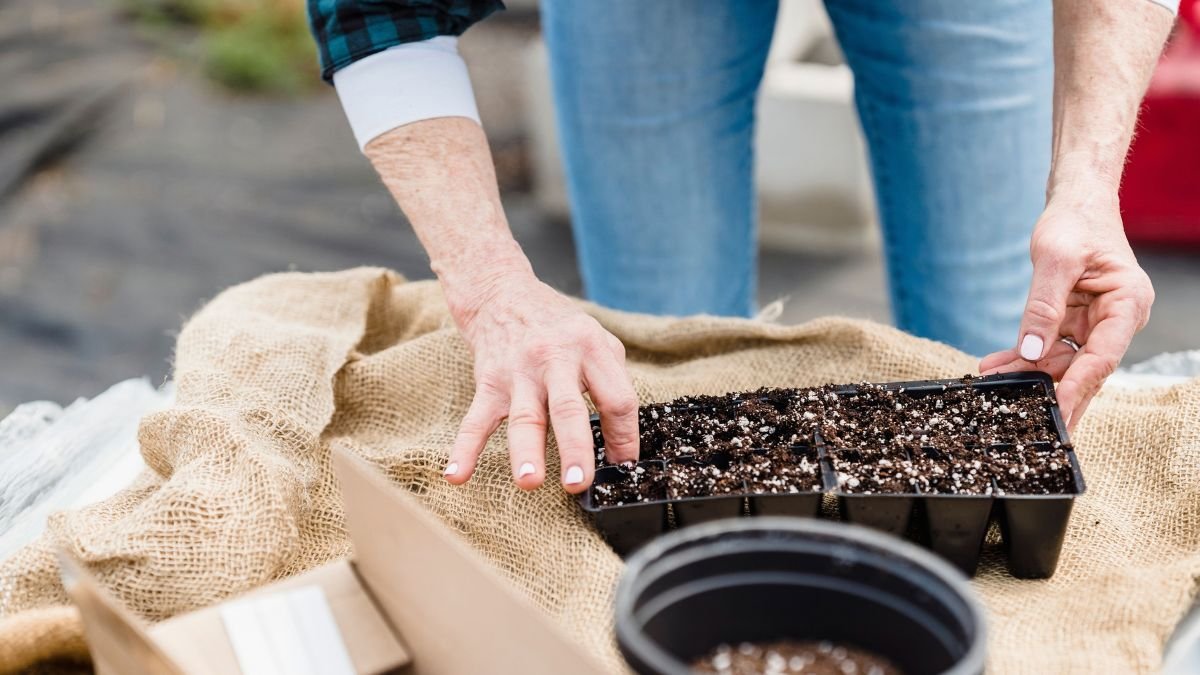
Fill each cell or pot with seed starting mix up to ½” from the top. Gently pack the mix so there are not any big air pockets, but don’t pack it too hard.
Sow the Seeds at the Right Depth
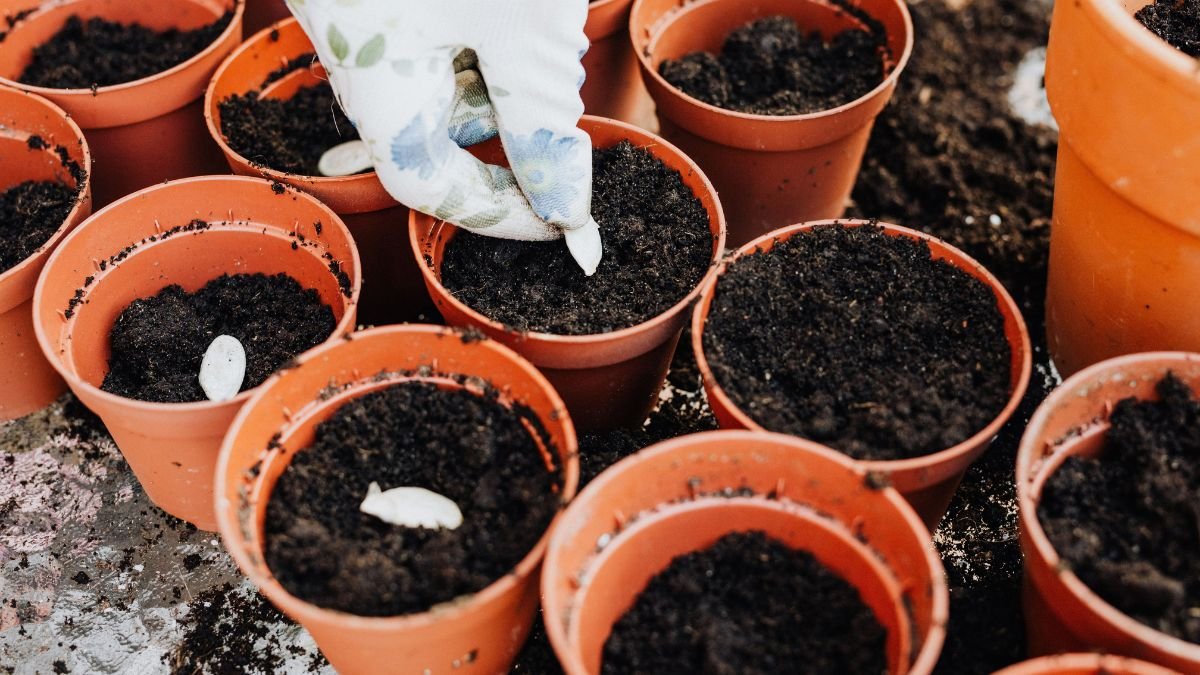
As a rough estimate, plant the seeds 2-3x deeper than the seed is wide. Tiny seeds, like those of lettuce, petunias, and snapdragons, need to be planted on the surface and not buried. Always follow the packet instructions, as some require special conditions to germinate. Plant 2-3 seeds per cell, as not all seeds are likely to sprout. Be sure to label your seedlings so you know which is which.
Cover the Tray and Warm It Up
Once you’ve planted your seeds, cover the seedling tray with a plastic dome or plastic wrap to help retain the moisture. Most seeds germinate best at 70-75ºF, so you may want to use a heat mat, especially for peppers and eggplants. Seeds do not need light to germinate, but be sure to check your seeds daily. If you planted seeds from a packet that says “direct sow,” skip to step 5.
How long do seeds take to germinate? It varies by seed, but here are some averages. Lettuce and radishes can take 3-7 days, while marigolds can take 4-7 days to sprout. Expect tomatoes and basil to take 5-10 days. Peppers and eggplants can take the longest to germinate, from 7-21 days. The colder your seed starting mix was, the longer it will take.
Remove the Cover and Add Light Right Away
As soon as you see green shoots coming out of the ground, remove the cover and put your seedlings under a bright light. Seedlings need bright light every day, and not enough light makes them leggy. Don’t wait for all your seeds to germinate before giving them light.
Thin the Seedlings
When your seedlings have their first set of true leaves, you will want to thin them out. True leaves are the second set of leaves and look like the leaves of the mature plant. Use a pair of small scissors to cut off the unwanted seedlings at the base of their stem. Do not pull them out, as this can damage the roots of the seedling you want to keep. It may seem wasteful, but thinning lets the remaining seedling have more nutrients and room to grow.
Feed Lightly
Seed starting mix doesn’t have a lot of nutrients, so you will want to feed your plants regularly. Once your plants have their true leaves, you can start fertilizing them. Dilute a liquid fertilizer to half the strength recommended on the bottle and give your plants a dose once a week. Fertilizing your seedlings is important, but it’s better to use too little than too much.
How Much Light Do Seedlings Need?
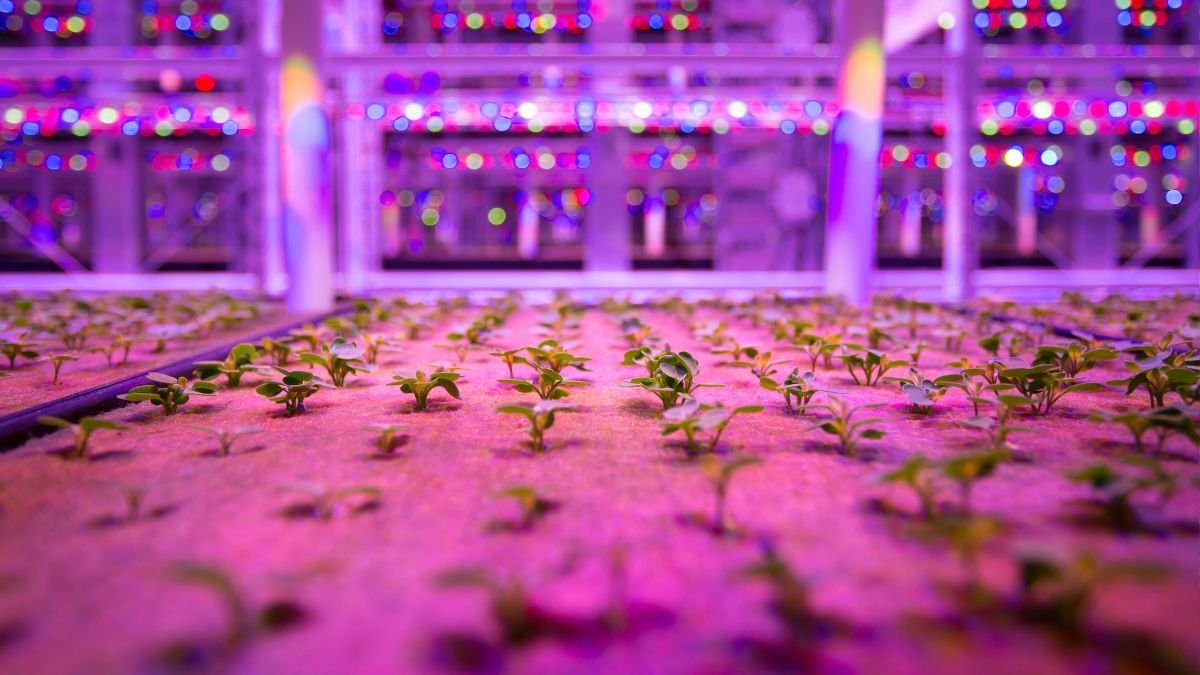
Light is the most important factor for growing healthy seedlings. Most vegetables and flowers need 12-16 hours of light with the appropriate amount of darkness. Unfortunately a sunny windowsill rarely provides enough light, especially in the winter. A grow light for seedlings is recommended. Full spectrum LED grow lights work well, but a simple fluorescent shop light will also do. Hang the light 2-4″ above the plants and move it up as the plants grow. The exact distance depends on how bright the light is, so be sure to check the manufacturer’s recommendations. Set the grow light on a timer for 14-16 hours of use each day. You won’t forget to turn it on or off!
How to Start Seeds Indoors Without Grow Lights
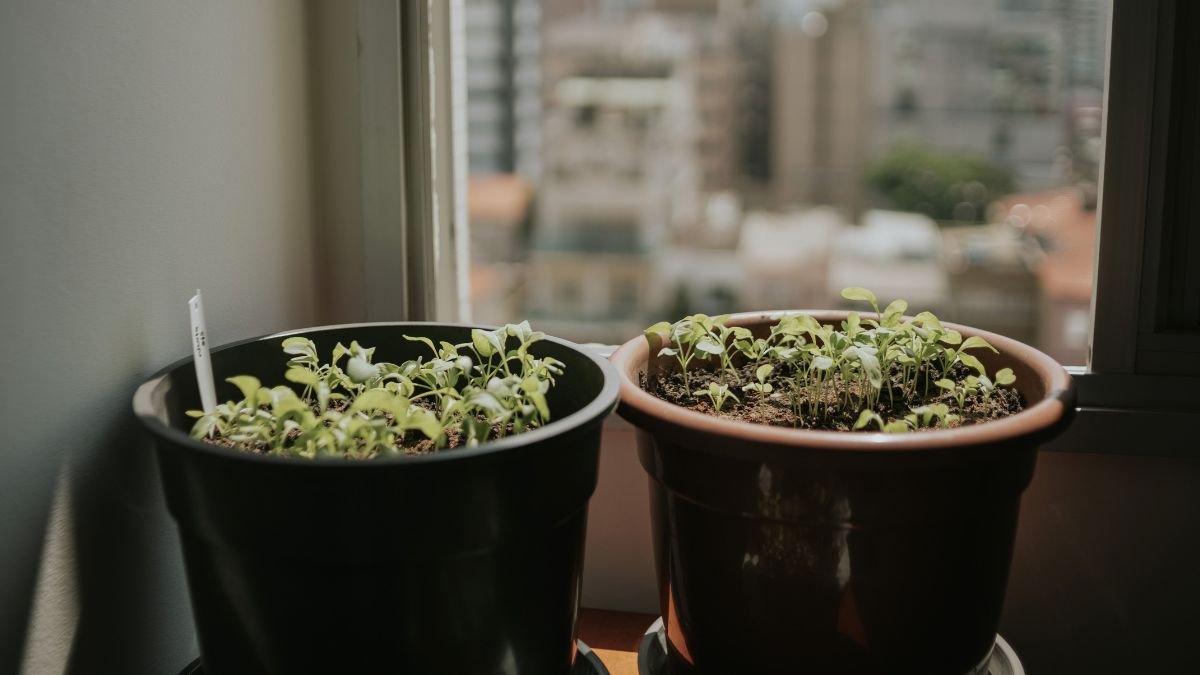
You don’t have a grow light? That’s fine. But you will need a bright window, preferably facing south. Rotate the seedlings trays a quarter turn every day so the plants don’t lean towards the light. You can also try placing a piece of white cardboard or foil behind the plants to reflect the light.
This method works well for hearty plants like lettuce, marigolds, and herbs, but tender plants like tomatoes and peppers do best with grow lights. If you’re interested in growing herbs, our guide to growing herbs in containers has plenty of information.
Wipe the window glass before you set your trays down, because dust blocks a surprising amount of light. On freezing nights, move the trays a few inches back from the glass so the cold does not chill the young leaves. Move them back to the glass in the morning, since the brightest hours of winter sun are short and every bit of light counts.
How to Water Seedlings Without Rotting Them
Soggy soil is one of the most common problems for new growers, and it causes root rot and damping off. Damping off is a fungal disease which causes seedlings to wilt at the base and fall over. The trick to watering is to keep the mix evenly moist, and not wet or dry.
Here are some tips for watering your indoor seedlings:
- Water from the bottom. Put water in the bottom of the seedling tray and let the mix absorb the water for 15-30 minutes. Then, dump out any extra water that is sitting in the tray.
- Mist the mix with a spray bottle for tiny seeds. This prevents the seeds from being washed away.
- Check the top of the mix. If it is dry, it’s time to water. If it’s still moist, wait.
- Never use cold water. Always use water that is the same temperature as the room.
- Improve airflow by using a small fan. Run it for a few hours each day to keep the top of the mix from getting too damp.
If you see white, cottony mold growing on top of the mix, scrape it off, water less, and improve airflow. It’s a fungus and can stunt the growth of your plants.
How to Fix Leggy Seedlings
Leggy seedlings are plants that are too tall and have thin, pale stems. They have a tendency to flop over easily. Don’t worry, you can fix leggy plants!
The most common cause of leggy seedlings is not enough light. Another possible cause is a warm room. Here’s what to do:
- Move the grow light closer to the plants, about 2-4″. The plants should have enough light to fill the whole container.
- Give the seedlings more hours of light each day.
- Move the plants to a slightly cooler room, around 65-70ºF, after they sprout.
- Improve airflow with a small fan. This encourages the plants to thicken their stems.
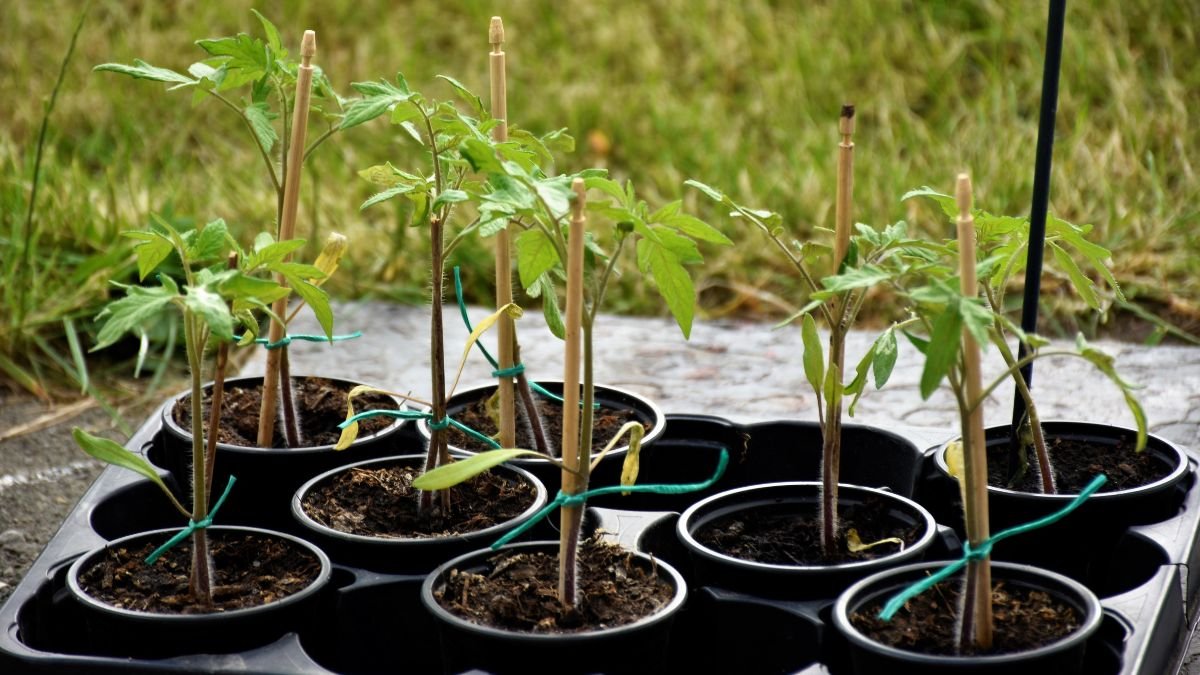
- Bury tomato stems when you transplant them. Their stems have roots growing along the sides and will create a thicker, stockier plant. Don’t do this for all your plants, though.
Unfortunately you can’t shrink leggy seedlings, but these methods will stop plants from becoming leggy in the future. The new growth will be thick and healthy.
Cheap Ways to Start Seeds Indoors
Starting seeds indoors does not have to be expensive. Here are a few ideas for cutting costs:
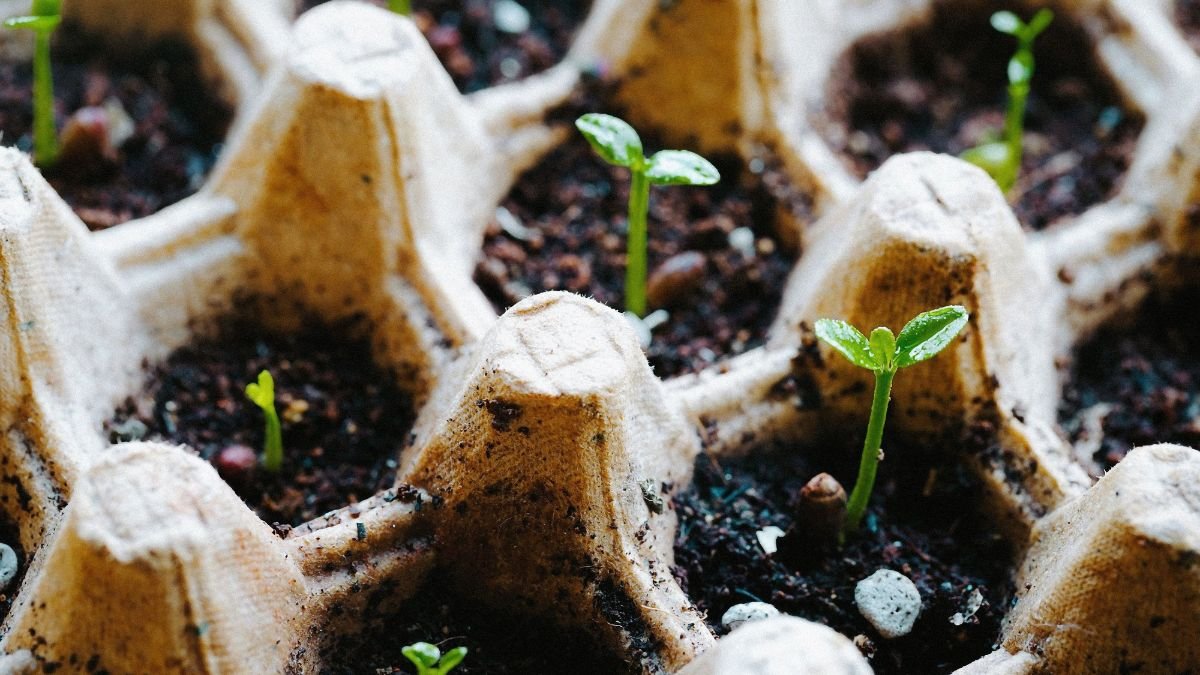
- Egg cartons. Punch a hole in the bottom of each cup. Fill each cup with seed starting mix. You will need to transplant your plants into bigger pots in 2-3 weeks, as egg cartons are small. If you used a cardboard carton, you can plant the cups directly in the ground after tearing off the bottom.
- Yogurt cups and takeout containers. Punch a hole in the bottom of each cup and you’re ready to go!
- Newspaper pots. Wrap a newspaper around a jar to make a cylinder. This makes one free pot.
- The paper towel method. This method lets you start seeds indoors without any pots or soil. Put the seeds between two damp paper towels and put them in a plastic bag. Keep the bag somewhere warm and check every day to see if roots have appeared. Once the roots are about 1/8″, plant the seeds in a pot and gently press the paper towel into the mix. This method is a good way to germinate slow seeds, like peppers.
- Homemade seed starting mix. Combine 50% coconut coir (or peat moss) with 50% perlite or vermiculite. Make sure to dampen the mix.
How to Transplant Seedlings
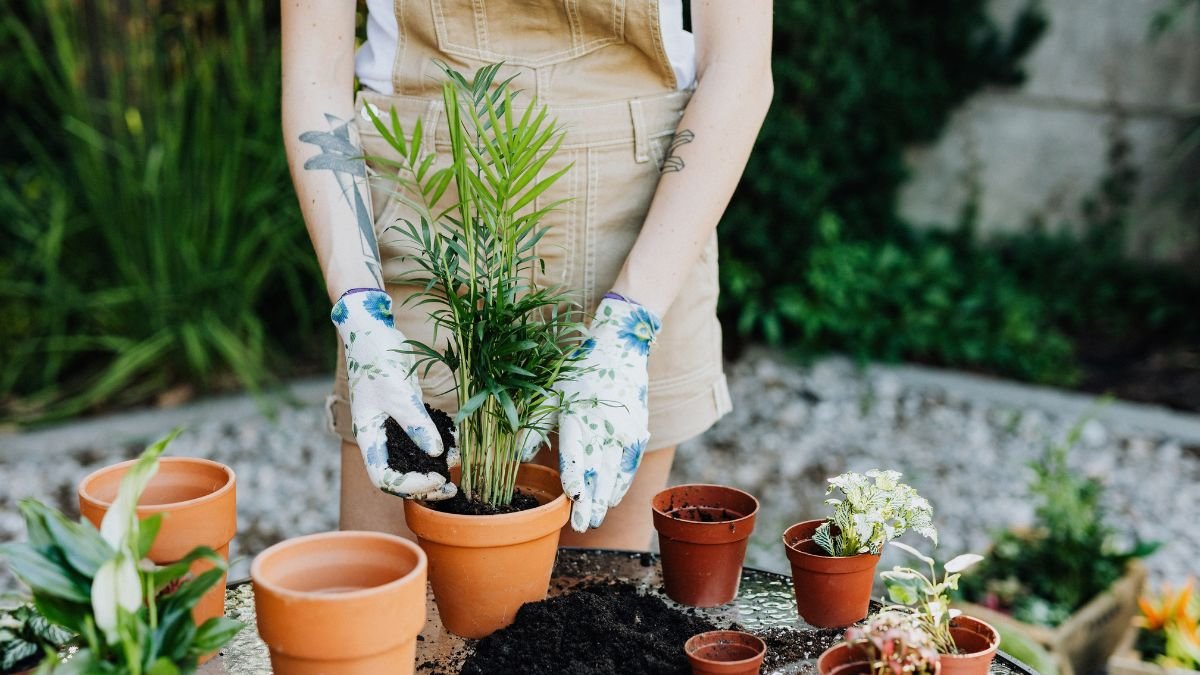
When the seedlings have 2-3 sets of true leaves and the roots are coming out of the drainage holes, it’s time to move them to bigger pots. Fill the new pot half way with potting mix. Use a spoon or a fork to loosen the roots of the seedling, then lift the plant up by one of the leaves. Never lift a plant by the stem, as this can permanently damage the plant. Place the plant in the new pot and cover the roots with enough potting mix so the top of the root ball is at the same level as the potting mix. Gently water the plant.
Water your seedlings a few hours before you move them. Damp mix holds together around the roots, so the plant has less shock when it goes into its new pot.
Later, when you plant the seedlings outside, you will want to add a handful of finished compost to the planting hole. Not sure what to compost? Check out our list of things you can compost.
How to Harden Off Seedlings
Seedlings started indoors are used to the warm, controlled environment of your home. This means they are not prepared for the harsher conditions of the outdoors. Harden off your plants to prepare them for planting outside. This should be done 7-14 days before planting.
Here’s a simple guide:
Bring the plants inside if the weather turns bad. Also, keep an eye on the forecast in the days leading up to planting. Our guide on protecting plants from frost has plenty of useful information.
Common Mistakes
Seedlings outgrow their pots and become unhealthy.
It causes poor drainage and disease.
This leads to leggy seedlings.
This results in damping off.
A month later you have no idea what variety the plants are.
Within a few days of planting outside, the plants wilt or burn.
FAQ
Do I need a grow light to start seeds indoors?
You don’t absolutely need one, but a grow light will greatly benefit your plants. Grow lights provide better light than a sunny windowsill, especially in the winter. This results in healthier, stockier plants. Tomatoes and peppers are especially benefited by the extra light.
Can I use potting soil instead of seed starting mix?
You can use potting soil, but seed starting mix has a better texture for germinating seeds. Save the potting soil for when you transplant your plants.
How long do seeds take to germinate?
Most seeds germinate within 4-10 days. Peppers and eggplants can take up to 3 weeks.
Can I reuse my seed trays?
Yes, as long as you rinse them in warm, soapy water and then in a diluted bleach solution.
Final Thoughts
Starting seeds indoors requires a little practice, but the steps are simple. Use fresh seed starting mix, give your plants lots of light, water them correctly, and harden them off before planting. Doing this will give you lots of healthy plants for a fraction of the cost. If you’re new to gardening in general, be sure to check out our gardening tips for beginners.