
AvyloHome / Vegetable Gardening
Why Are My Tomato Flowers Falling Off? Causes & Fixes
Understand tomato blossom drop, spot common causes and help the next flowers develop into fruit.
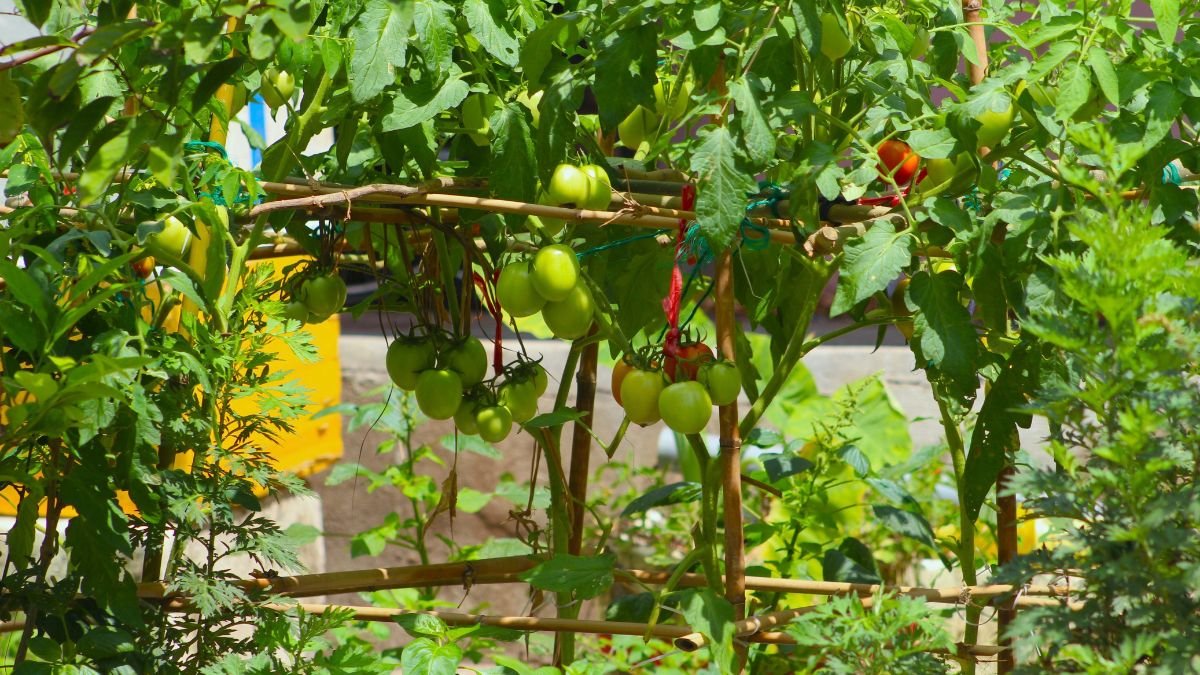
Your tomato plant seems to be doing well: nice green leaves, healthy stalks and lots of yellow flowers. So why does it fail to produce any tomatoes? Why do the flowers just fall off?
This is a common concern for many gardeners. Tomato plants can experience blossom drop, leading to flowers dying and falling off before they have a chance to produce fruit.
The good news: Blossom drop is often caused by environmental factors, such as high temperatures or poor pollination. While you can’t control the weather, there are practical steps you can take to reduce stress and help future flowers set fruit.
In this guide, you’ll find everything you need to know about tomato blossom drop: the causes and the solutions.
Quick Answer: Why are my tomato flowers falling off?
Tomato flowers drop when they’re unable to set fruit. This can be caused by extreme temperatures, dry or wet soil, poor pollination, or improper fertilization. Some causes can be improved with simple changes, while extreme weather may take time to pass. If your plant has healthy green leaves and stalks, begin by looking at the temperature and observing the soil moisture. Your plant may simply need more suitable temperatures before it can set fruit again.
There’s no need for fancy fertilizers, insect sprays or other complicated treatments.
Recognizing Tomato Blossom Drop
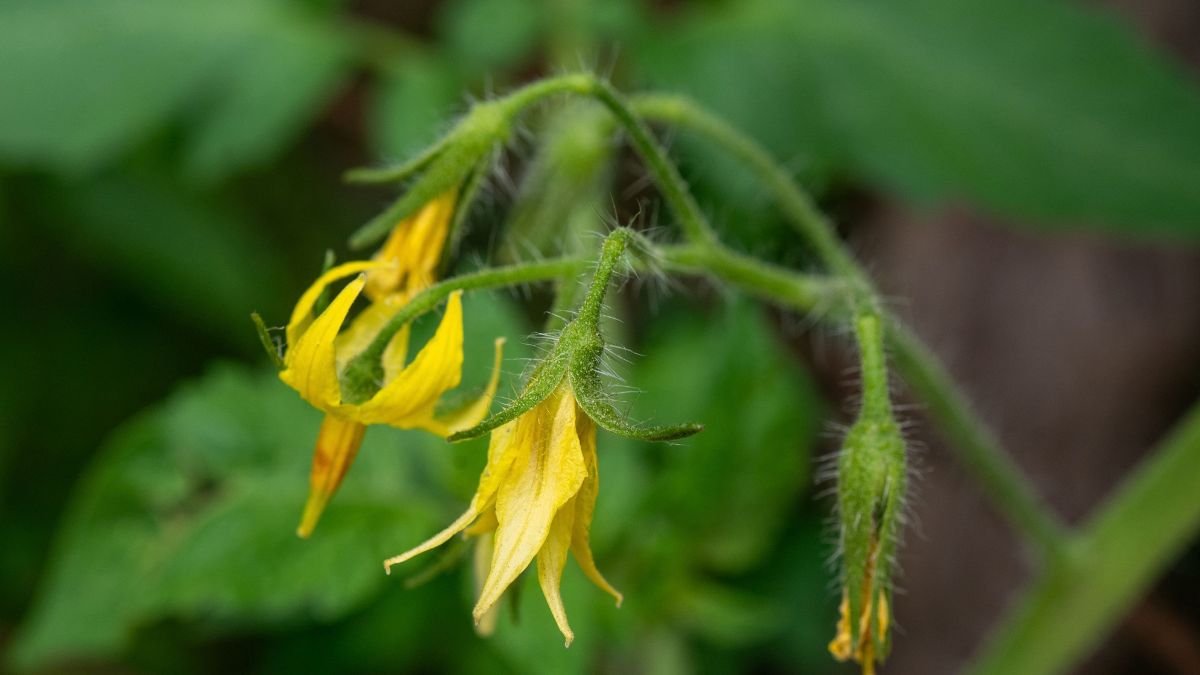
Tomato blossom drop occurs when an open flower fails to produce fruit and falls off the plant.
Yellow petals will begin to wilt and turn brown. Sometimes the small stalk holding the flower turns yellow as well. Other times the flower will seemingly disappear, leaving short, bare stems where a tomato should be growing.
It’s important to examine several clusters, as it’s normal for a tomato plant to drop a few blossoms and still have plenty of tomatoes grow later. If whole clusters are dying and you aren’t seeing any green tomatoes, you may have a problem.
Blossom drop should not be confused with blossom-end rot. Blossom-end rot causes a dark spot to form on the bottom of a developing tomato.
It should also not be confused with simply petals falling off. After successful pollination, tomato petals may dry and fall away while a tiny green fruit starts developing. If there is a small green tomato forming underneath the fallen petals, it’s perfectly normal.
The key difference is whether a small, developing tomato remains behind the flower.
6 Common Causes of Blossom Drop
There are several different environmental factors that can cause tomato blossoms to fall off. The solutions vary depending on the root issue.
1. Too Hot or Too Cold Outside
Perhaps the most common cause of blossom drop is temperature. Flowers can fall off for a variety of reasons, but high temperatures are often a culprit. While tomato plants thrive in hot weather, temperatures that are too high can cause stress and negatively impact tomato plants’ ability to reproduce.
A useful daytime growing range is about 70–85°F (21–29°C), although tomato varieties and local conditions differ.
When daytime temperatures stay above about 85–90°F (29–32°C), plants may begin to drop blossoms. Night temperatures below roughly 55°F (13°C), or above about 70–75°F (21–24°C), can also interfere with fruit set.
Tomato blossoms are sensitive to temperature and will fall off if the plant can’t sustain them.
A tomato plant can lose flowers even when its leaves look green and healthy. Do not rely on yellowing or wilting leaves alone to identify temperature-related blossom drop.
If high temperatures are to blame for your plant’s issues, there are a few different solutions depending on whether you’re growing plants in pots, in a greenhouse or in a garden bed.
For container plants, keeping the roots cool and moist is the most effective way of countering the effects of high temperatures.
You can accomplish this by using shade cloth or other materials to provide afternoon shade while still letting the plants get morning sun.
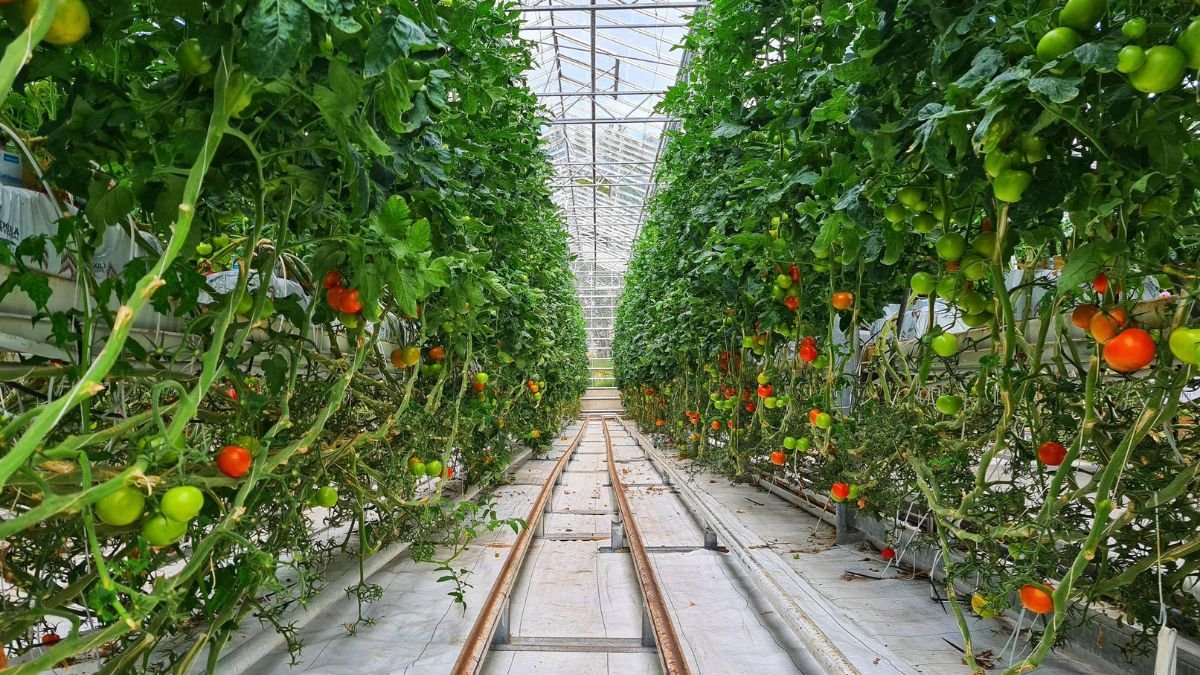
For plants in greenhouses, the best solution is to improve airflow and reduce overall heat.
If cold temperatures are the issue, make sure your plants aren’t exposed to chilly conditions before they’re ready to bear fruit.
While extreme heat is usually the biggest culprit, there are a few other potential causes of blossom drop to consider.
2. Dry or Waterlogged Soil
Tomato plants have fairly high water needs, especially when they’re bearing fruit.
If the soil is too dry, plants can go into survival mode, focusing energy on staying alive rather than reproducing.
While it’s important to keep the soil damp, be sure you aren’t over-watering the plants.
Too much water will lead to water-logging, which prevents roots from getting the oxygen they need to function properly.
The goal is to keep the root zone evenly moist without waterlogging it.
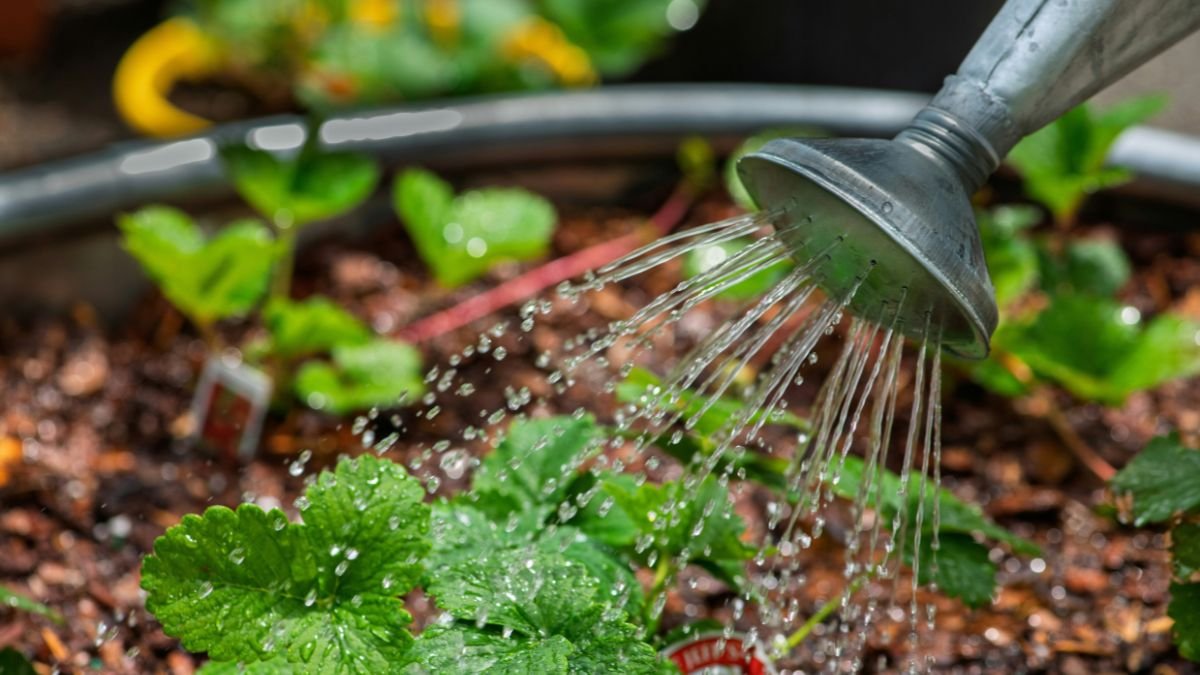
Rather than watering plants on a strict weekly basis, check the soil to see whether it needs water. Push your finger into the soil up to the second knuckle. If the soil is still moist at root depth, check it again later before watering.
When you do water, make sure to water thoroughly.
If you’re growing plants in containers, they may need to be watered more frequently than plants in a garden bed. Containers can dry out very quickly in hot, dry weather.
To help reduce the effects of hot summer weather, apply a layer of clean organic mulch around your plants.
This will help the soil retain moisture and keep plant roots from getting too hot.
Don’t forget to examine the plants themselves. Plants growing in crowded beds may also compete with nearby plants for water and root space.
Soil type can affect moisture retention. If your soil dries out too quickly, appropriate organic matter may help over time. For heavy, compacted ground, read our guide to amending clay soil.
If the video does not load, watch it on YouTube.
3. Humidity Is Too High or Too Low
Humidity levels can play a major role in a plant’s ability to reproduce. Excessively high or low humidity may prevent tomato blossoms from setting fruit by impacting the plant’s pollination cycle.
Humidity impacts the pollination process by affecting the way pollen travels from the anther to the stigma of the tomato flower.
Tomato blossoms are self-pollinating, which means that they don’t need another plant to provide the necessary pollen to begin the reproduction process. However, pollen still needs to travel from the anther to stigma in order to begin the fertilization process.
Tomato pollen often performs best at moderate relative humidity, roughly 40–70%. Very low humidity may dry the pollen, while very high humidity can make it sticky and harder to release.
High humidity levels are typically an issue for plants that are growing in greenhouses.
You can combat high humidity levels by opening doors and windows to increase airflow throughout your greenhouse.
Give greenhouse plants enough space for air to move around the leaves. If the air is already humid, adding more water will not improve pollination. Instead, focus on ventilation and comfortable growing conditions.
4. Poor Pollination
Flowers may begin to fall off if the plant fails to effectively pollinate them.
Outdoors, wind and visiting insects often help vibrate tomato flowers. In sheltered greenhouses, there may be less movement to release the pollen.
You can help increase the chances of successful pollination by gently tapping the stems of the plant or shaking the plant on a mild, dry day.
The idea is to loosen up the pollen inside the flower. The movement of the plant mimics a breeze that would normally help pollinate the plant. Don’t tap the flowers so hard that the flowers or stems fall off.
While this is a helpful technique, it won’t fix issues with the quality of the pollen.
Even tapping will only help so much if the weather has been particularly hot or cold. If weather has made the pollen nonviable, focus on plant care and wait until new flowers open under more suitable conditions.
5. Too Much Nitrogen
Fertilizers can be a great way to support plant growth, but plants don’t always need more food. More food isn’t always better when it comes to fertilizers. Too much nitrogen may encourage leafy growth at the expense of flowering and fruit production.
You may notice that your plant is producing an abundance of leaves while failing to produce flowers or fruit.
Before buying a new fertilizer, be sure to examine what you’re currently using. Some lawn fertilizers are rich in nitrogen, and applying them to plants can lead to issues. If you’ve been using a nitrogen-rich fertilizer or adding nitrogen to your soil recently, consider switching to a fertilizer that’s specifically designed for fruiting plants.
The best course of action is to apply the fertilizer recommended by the package instructions. You may also want to get a soil test performed to determine what nutrients the soil is lacking.
Once you understand what kind of nutrients the plants are lacking, you can apply the right fertilizer without hurting the plants.
Too much nitrogen can be harmful, but it’s just one of several potential culprits. If you’re still struggling to identify the issue, consider looking at other environmental factors.
6. Lack of Sunlight or General Plant Stress
Tomato plants have fairly high light needs, meaning that they require at least six hours of direct sunlight per day to thrive.
If your plant has been sitting in an area that doesn’t get enough sunlight, it may begin to struggle. Plants that receive too little light may become weak and set fewer fruits.
Plants that don’t get enough light may still be able to produce some fruit, but they’ll likely fail to produce the same amount of fruit as a plant that gets enough sunlight.
Low light can become worse when nearby plants compete for space, water and nutrients.
Poor drainage, root rot, insect infestation or a lack of nutrients can also prevent plants from thriving.
When plants experience overall stress, the blossoms may begin to fall off.
First, take a close look at the plants. Determine whether the plants appear to be healthy or whether something seems off. If you notice signs of distress in the plants, you’ll want to address those issues.
For example, if the plants aren’t getting enough sunlight, you may need to move them to a different area. If the plants have healthy foliage but appear to have poor drainage, you’ll want to improve the drainage in the garden.
Correct the specific issues you can identify without making too many changes at once. If you’re planting a new bed of plants, be sure to use the Vegetable Garden Layout Plans and Spacing guide to ensure that the plants are spaced correctly.
What Should I Do About Blossom Drop?
Now that you understand the different environmental factors that may be impacting your plants, you can begin examining your own plants to identify the issue.
Once you identify a likely cause, follow this practical recovery plan. You may not need to take drastic measures to fix the problem.
Step 1: Check the Weather
Take a close look at the weather patterns in the days or weeks leading up to the blossom drop. Was it particularly hot or cold lately? Extreme heat is typically the biggest issue when it comes to blossom drop, but unusually cold temperatures can also be a culprit.
The plants may have been unable to produce fruit during the stressful weather.
Once temperatures become more suitable, healthy plants may begin setting fruit again.
If the issue is extreme heat, make sure that you’re keeping the plants cool and moist, especially during the hottest part of the day.
Keep in mind that while a hot afternoon could stress the plants, blossom drop typically isn’t a direct result of a single hot afternoon. Plants are more likely to drop blossoms after repeated stressful weather.
Step 2: Check the Soil Before Watering
Take a look at the soil moisture before watering the plants. Push your fingers into the soil to gauge how dry or moist it is. If the soil is dry around the roots zone, it’s a good idea to water the plants.
Do not add more water when the root zone is already adequately moist.
If you’re using containers, make sure that you’re not letting the plants sit in water-filled saucers.
Containers can dry out surprisingly quickly in hot weather, even if garden-bed soil is still moist.
Avoid overwatering plants grown in soil. You can combat dry soil during hot summer months by applying a layer of clean organic mulch.
This will help keep the soil damp and lower the temperature of the roots.
Step 3: Tap Flower Clusters to Encourage Pollen Release
If the weather is right, you can gently tap the stems of the plants to encourage the release of the pollen.
Tap the stems a few times per week while the blossoms are open
The idea is to mimic the effect of a breeze brushing against the plants. Don’t tap the stems so hard that the flowers fall off.
This is an especially useful technique for plants that are growing in a greenhouse.
Tap gently only while healthy flowers are open, preferably when the weather is mild and the blooms are dry. The goal is to release pollen, not to make the flowers fall.
Step 4: Review Fertilizer Needs
Before purchasing a new fertilizer, it’s important to examine the fertilizer you’re currently using.
You may be adding too much nitrogen or providing too much food overall.
Be sure to read the package to determine how often you’ve been fertilizing the plants.
If you notice that the plants are failing to produce fruit while the leaves, stems and flowers are growing nicely, you may be giving the plants more food than they need.
Also check whether the plants receive enough direct sunlight.
Make sure that the plants are receiving at least six hours of direct sunlight per day. If the plants are growing near a particularly shady tree, they may not receive enough light to thrive.
If the plants are in containers or garden beds that are overcrowded, you may need to increase spacing.
Don’t overcrowd your plants if you’re planting another bed later in the season.
Once you’ve ruled out these possible culprits, you can move on to the next potential cause.
Step 5: Watch for New Blossoms
You won’t be able to encourage old blossoms to produce fruit, but you can watch for new blossoms to appear. Once the conditions change, healthy new blossoms will likely appear on the plants.
If the plants are healthy, the new blossoms should successfully complete the pollination cycle and begin producing fruit.
Watch the plants closely for the next week or so. If new blossoms stop falling off or the plants begin to produce tomatoes, you’ve probably successfully addressed the issue. If the plants continue to struggle despite your efforts, it may be time to examine the plants more closely to determine whether there’s an underlying issue, such as a bacterial or fungal infection.
Continue observing the plants rather than attempting to make multiple adjustments at once. Watch for other common issues, such as extreme wilting or brown spots on the leaves. These could be signs of an insect infestation or a fungal infection.
Tips for Addressing Blossom Drop in Different Settings
Container Grown Tomatoes
Plants that are growing in containers can experience rapid temperature changes in the roots zone, especially when they’re exposed to direct sunlight for much of the day.
A container that is sitting against a hot wall can be significantly warmer than the surrounding soil.
Make sure that you’re keeping the plants cool and moist, especially during the hottest part of the day. Use a larger container for plants that are growing at the edge of your garden.
If you’re struggling to water plants properly, it may be due to small container size and rapid evaporation rather than an issue with your watering schedule. If a container is clearly too small, plan to use a larger pot for the next crop, or repot carefully during mild weather if the plant can tolerate it.
Greenhouse Grown Tomatoes
Plants that are growing in a greenhouse can experience similar issues.
Greenhouse temperatures can be quite hot, which stresses the plants. Open doors and windows to improve airflow.
Take a close look at the temperature rather than estimating based on how hot or cold the greenhouse feels. Use a thermometer to get a good idea of the temperature around the plant.
Gently tapping flower clusters can help release pollen when humidity and temperature are suitable, especially where air movement is limited.
Once again, you want to avoid over-watering plants and make sure that the plants are receiving enough light and nutrients to help produce fruit.
Garden Grown Tomatoes
If you’re growing plants directly in the soil, you still want to avoid over-watering.
Plants grown in the soil typically have more space to spread out their roots, so they have better access to nutrients. Water the plants deeply if the plants have been experiencing hot summer weather.
You want to make sure that you’re not over-watering the plants. After watering, apply a layer of clean organic mulch to reduce moisture loss.
Make sure that the plants aren’t overcrowded. If the plants are healthy and producing green leaves but failing to produce tomatoes, it may be due to extreme heat.
Give the plants time and make adjustments as needed to encourage new blossoms to appear.
If the video does not load, watch it on YouTube.
Common Mistakes to Avoid
While you may be tempted to make multiple adjustments, it can be difficult to identify which changes actually helped the plants. That’s why it’s best to avoid making drastic adjustments.
Too much fertilizer can be particularly harmful to plants. Similarly, random spraying isn’t an effective way to address blossom drop.
Don’t attempt to remove the plant’s blossoms just to encourage new blossoms to grow.
Blossom-set sprays are another questionable option. These products are not a reliable fix for temperature-related blossom drop; avoid using them as a substitute for correcting growing conditions.
Even insecticides won’t help if you’re struggling with blossom drop instead of an insect issue. Address one issue at a time.
How Long Will It Take for My Tomato Plants to Bear Fruit?
After blossom drop, it can take some time for plants to begin bearing fruit again.
Healthy plants may set fruit when new blossoms open and pollination succeeds under suitable conditions.
Keep soil moisture consistent and apply fertilizer only when needed and according to the label.
If blossom drop is caused by temporarily stressful weather, plants will likely produce fruit again once the weather clears up.
The exact amount of time it takes to produce fruit will vary based on the conditions. The type of plant you’re growing plays a major role in determining how long it will take for it to produce fruit.
You may need to wait a few days to a few weeks before new blossoms appear.
A single successfully pollinated blossom can develop into one tomato. A blossom that has already dropped cannot turn into fruit, but healthy plants may produce more flowers during the growing season.
If the growing season is nearly over or the plant is seriously unhealthy, it may not have enough time to recover.
Frequently Asked Questions
Is it normal for a few tomato blossoms to fall off?
Yes. It is completely normal for a few tomato blossoms to fall off.
Plants don’t always produce fruit for every blossom.
If most of the blossoms are falling off and fruit production has stopped, examine temperature, watering schedule and overall plant health.
Why are my tomato blossoms falling off?
Tomato blossoms can fall off for a variety of reasons, but extreme weather tends to be the biggest culprit. Make sure that you’re keeping the plants hydrated and that the plants are receiving enough light.
Also, examine the plants to see if they’re experiencing any undue stress.
Why does my tomato plant have blossoms but no tomatoes?
Plants can produce an abundance of blossoms without producing any fruit if the blossoms aren’t properly pollinated or if the plants are experiencing undue stress.
Extreme temperatures can prevent tomato blossoms from producing fruit. Healthy blossoms will usually begin to produce fruit once weather conditions improve
Can I pollinate tomato blossoms by hand?
Yes.
You can gently tap the stems of the plants to encourage the release of the pollen.
Tomato blossoms typically don’t require assistance with pollination. Wind or insect vibrations often help release pollen naturally, but sheltered plants can benefit from gentle tapping.
Hand pollination techniques work best when the plants, blossoms and pollen are healthy and the weather conditions are right.
Do cherry tomato plants experience blossom drop?
Yes. Tomato plants of all varieties tend to experience blossom drop. Certain types of cherry tomatoes can handle a wider range of temperatures, but extreme conditions will still impact all plants
Will Epsom salt help my tomato plants?
Epsom salt can only help plants that are lacking specific nutrients.
This product provides magnesium and sulfur, which the plants need in certain quantities to grow
Epsom salt won’t address blossom drop caused by heat, hydration or other issues.
Final Thoughts
While blossom drop can be stressful, it isn’t always a major issue.
You’ll typically be able to address the problem by making a few easy adjustments.
If you’re growing plants in a greenhouse, the key adjustment will be to improve airflow and encourage healthy blossom growth when the conditions are right.
If your tomato plant is healthy and the weather improves, new blossoms may set fruit and give you another chance at a harvest.
Gardening References
For more detailed horticultural guidance on tomato flower drop and fruit set, see these university extension resources: