

Pothos Plant Care for Beginners: Light, Water, Soil & Easy Propagation
Simple steps to help your pothos grow well, stay healthy and develop fuller vines.
Pothos is a forgiving choice if you’re new to houseplants. It tolerates shade as well as brighter rooms, and you can let it trail from a shelf or train it up a pole. Changes in its leaves often give you a clue when it needs attention, which makes learning pothos plant care fairly straightforward.
This guide to pothos plant care covers:
- Light
- Water
- Soil
- Feeding
- Pruning
- Easy propagation
- Yellow or brown leaves
What Is a Pothos Plant?
Pothos (Epipremnum aureum) is a tropical vine with glossy, heart-shaped leaves. At home, you can let it trail from a hanging basket or shelf, or train it up a moss pole. In suitable conditions, it can grow enough to fill a corner in a year or two.
Popular varieties include:
Golden pothos
The most common type, with yellow and green leaves.
Marble queen
Green leaves splashed with white.
Neon pothos
Distinctive, bright lime-green leaves.
Jade pothos
Dark green leaves; a good choice for a spot with less light.
The care routine is much the same for all of these varieties. Patterned types need a little more light to hold on to their colors.
Pet safety: Pothos is toxic to cats and dogs if chewed. Keep it out of your pets’ reach.
Light: Where to Put Your Pothos
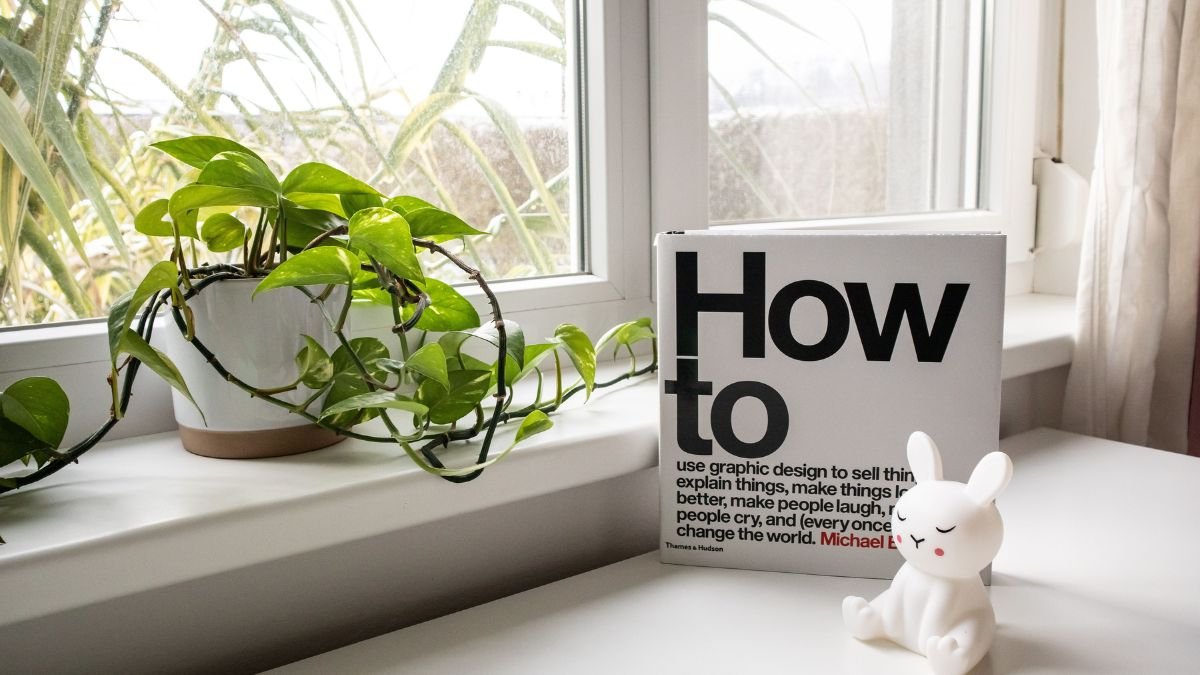
Choose a spot with bright, indirect light, where sunlight doesn’t fall directly on the leaves. An east-facing window can work well, as can a position a few feet back from a south or west-facing window. Being able to read a book there without a lamp is a rough guide to the light level.
In lower light, growth slows and leaves may be smaller or paler. Patterned varieties can lose some of their coloring, and longer gaps may develop between leaves.
Keep your pothos out of direct sun, especially in the afternoon, when the leaves can burn. Pale or brown patches may be a sign that it needs a shadier spot or a sheer curtain to filter the light. Give the pot a quarter turn every week to help it grow evenly.
Water: How Often to Water Pothos
Watering is often where pothos care goes wrong. The plant handles slightly dry soil better than soil that stays wet, so check before reaching for the watering can.
Push your finger about two inches into the soil. If it feels dry, water the plant; if it’s still damp, wait a few more days. That often works out to about once a week to every two weeks, depending on conditions in your home and the season. In winter, you’ll usually need to water less often.
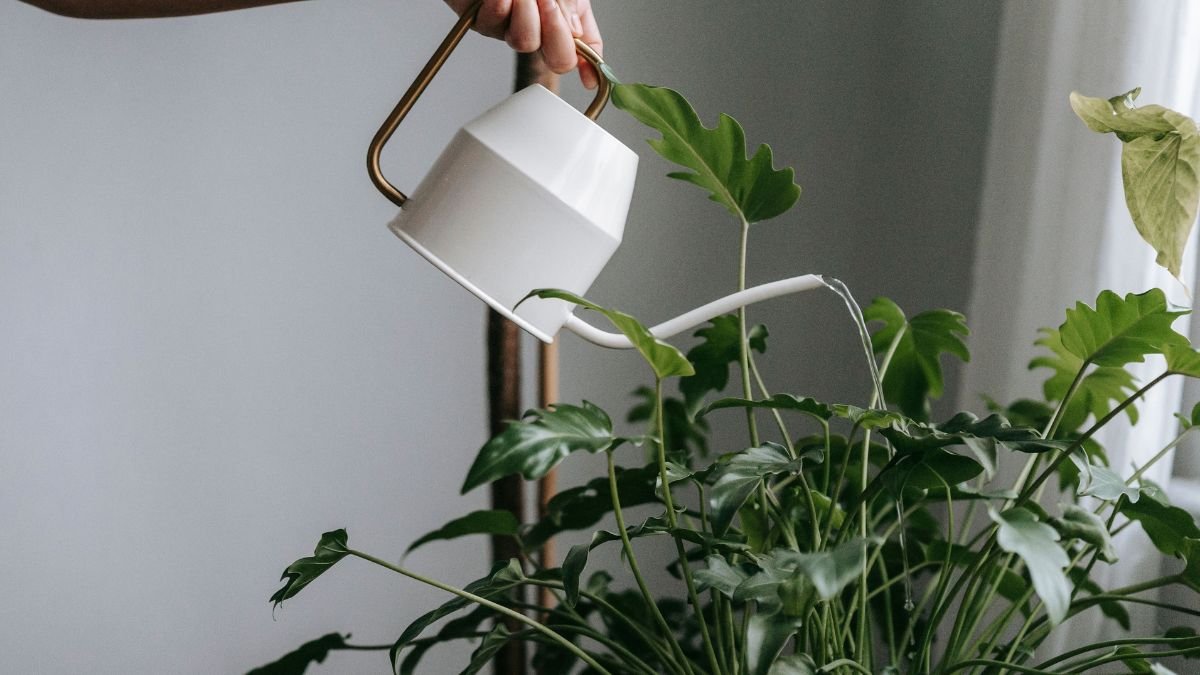
Water thoroughly, letting the excess flow out of the drainage hole and into the saucer. Once the pot has finished draining, empty the saucer. Roots need access to air as well as water, so don’t leave the pot sitting in water.
Drooping leaves can mean your pothos is thirsty. If dry soil is the cause, the leaves usually perk up within a few hours of watering. Yellow leaves, soft or blackened stems, and soil that stays damp suggest overwatering instead. If you’re unsure and the soil isn’t dry, wait another day before watering. Pothos copes better with a short dry spell than with soggy roots.
Soil, Pot and Repotting
Start with a light, well-draining potting mix. A handful of perlite or sand mixed into standard bagged potting mix can help keep it loose and allow air to reach the roots. Heavy garden soil tends to compact in a pot, so avoid using it.
A pot with drainage holes makes watering easier. If you prefer a decorative pot without holes, keep the plant in its plastic nursery pot and place that inside the larger container. Lift the nursery pot out after watering and let it drain fully before putting it back.
Pothos can manage in a slightly snug pot, so repotting every one to two years is usually enough. Roots circling the bottom or growing out of the drainage holes are signs to check whether it needs more room. Move up to a pot only one or two inches wider; excess soil holds more water and raises the risk of root rot. Gently loosen the roots, replant at the same depth and water well.
Temperature, Humidity and Feeding
Typical room temperatures of about 65 to 85°F (18–29°C) suit pothos. Keep it away from cold drafts and space heaters, and don’t expose it to temperatures below 50°F (10°C). Normal household humidity is usually enough.
In spring and summer, feed once a month with a balanced liquid houseplant fertilizer diluted to half strength. Skip feeding in fall and winter. Too much fertilizer can burn the roots, so avoid giving extra. If brown leaf tips suggest fertilizer burn, reduce feeding. An occasional wipe with a damp cloth will also keep dust off the leaves.
Pruning for a Fuller Plant
As vines lengthen, a pothos can look sparse, with wide gaps between leaves. To encourage fuller growth, use clean scissors to cut just above a node, the small bump where leaves and roots develop. New growth can emerge from the node. Remove yellow leaves as you notice them, and save healthy vine trimmings to grow new plants.
How to Propagate Pothos in Water
You can grow a new pothos from a stem cutting. Rooting it in water is a straightforward way to start:
- Take a piece of vine four to six inches long, cutting just below a node. The cutting should have at least two or three leaves.
- Remove the leaf nearest the cut to leave the node exposed.
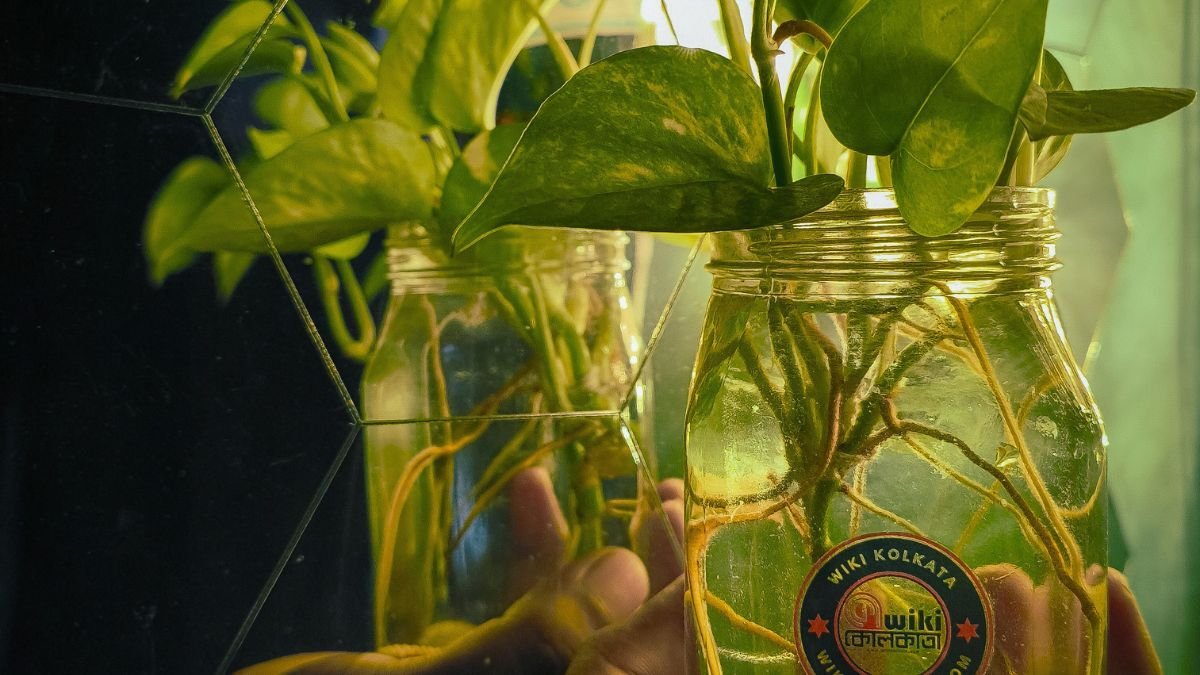
- Set the cutting in a clear jar of room-temperature water. Keep the node under water and the leaves above it.
- Keep the jar in bright, indirect light and replace the water every week.
- Root growth can take two to four weeks. When the roots are two or three inches long, plant the cutting in a pot of moist potting mix.
Keep the soil damp for the first few weeks as the roots adjust. Cuttings can also be started directly in potting mix. Some growers keep pothos in water long term, changing the water frequently and adding a drop of liquid fertilizer every month or two.
Common Pothos Plant Care Problems and Fixes
Changes in the leaves and vines can help you work out what’s wrong. These are some common problems to check for:
Yellow leaves
Overwatering is a common cause. Let the top of the soil dry out before watering again. Too little light can also be involved, while a single yellow leaf from time to time is usually normal.
Brown, crispy tips
Dry air, uneven watering or fertilizer burn may be responsible. Check the soil regularly to keep watering consistent. Every few months, flush the soil by running water through it for about a minute.
Brown or pale patches
Sunburn may be the cause, especially after exposure to direct sun. Try a shadier spot.
Long, leggy vines
Long gaps between leaves often point to too little light. Move the plant closer to a sunny window, keeping it out of direct sun, and prune to encourage new growth.
Pests: Mealybugs, spider mites and aphids can sometimes trouble pothos, especially when it’s stressed. You can wipe the leaves with mild soapy water or use neem oil. Our guide on how to use neem oil on plants explains how to mix it. For help spotting aphids, see our post on how to get rid of aphids on plants.
Pothos Plant Care at a Glance
Final Thoughts
Pothos plant care starts with three basics: bright, indirect light, careful watering and a pot that drains well. These help your plant produce healthy vines year after year. If you’d like to add another houseplant to your collection, browse our list of easy indoor plants for beginners for more plants with straightforward care needs.