
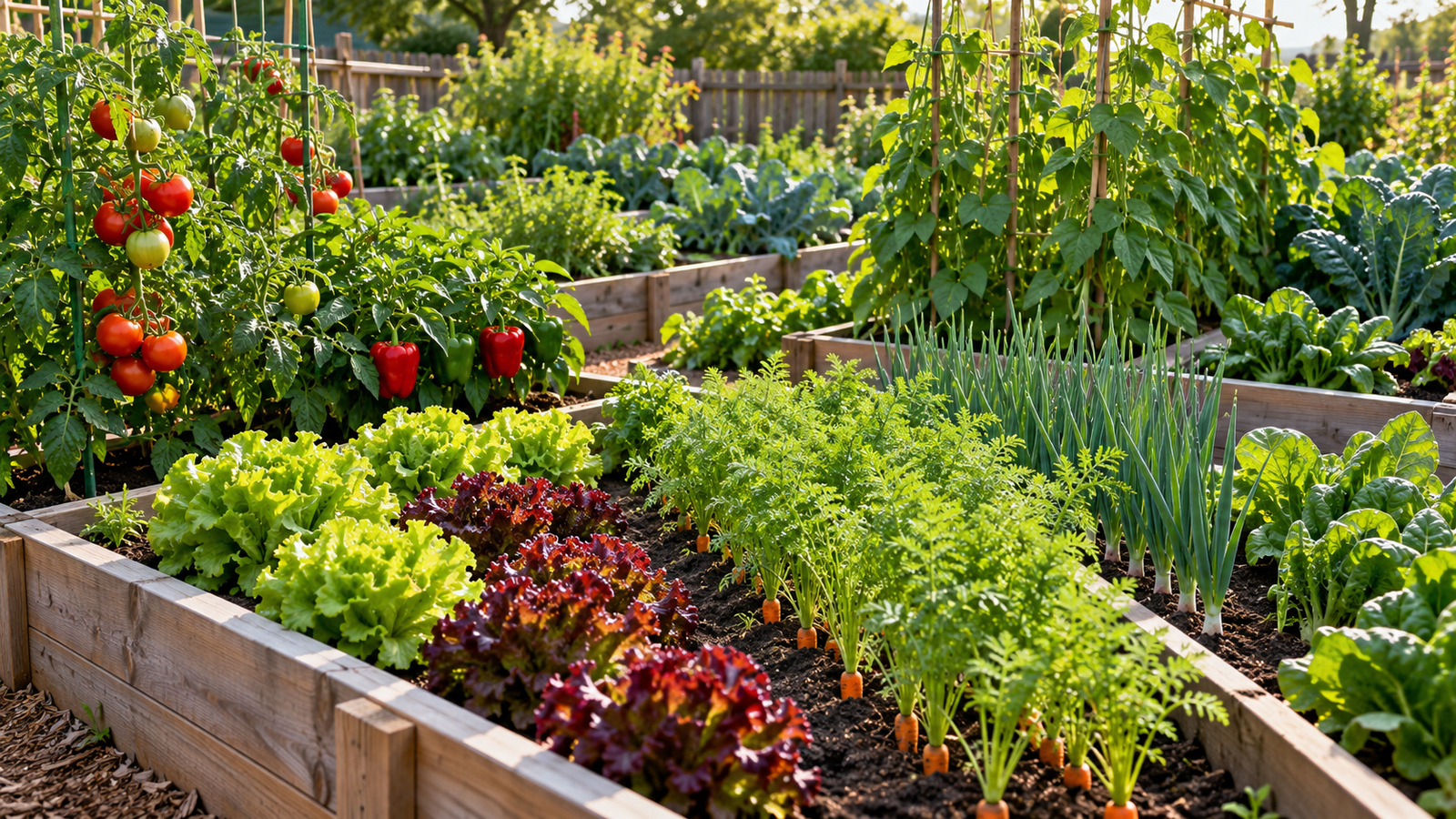
Vegetable Garden Layout Plans & Spacing: The Complete Companion Planting Guide
The right spacing chart and the right neighbors decide more of your harvest than almost anything else you do. Here’s exactly how far apart to plant, and what to plant next to what.
What’s in this guide
- Vegetable Garden Spacing Chart
- Tomato Spacing & Companions
- Pepper Spacing & Companions
- What Not to Plant With Cucumbers
- Carrot & Onion Companion Planting
- Broccoli Companion Plants
- Beans Companion Plants
- Zucchini Companion Plants
- Lettuce Spacing
- The Three Sisters Method
- Vegetables That Should Not Be Planted Together
- Tips for Raised Beds & Small Gardens
- FAQ

Every vegetable garden layout plan starts with two questions: how much room does each plant actually need at full size, and which plants help each other when grown side by side? Get both right and you’ll see fewer pest problems, better airflow, and a noticeably bigger harvest from the same square footage. This guide covers the full vegetable garden plant spacing chart first, then walks through companion planting — vegetable by vegetable — so you can plan your whole bed in one sitting.
Vegetable Garden Spacing Chart
Bookmark or screenshot this vegetable garden spacing chart — it’s the fastest way to plan a layout, whether you’re working with traditional rows or a raised bed.
| Vegetable | Spacing Between Plants | Spacing Between Rows | Best Companions |
|---|---|---|---|
| Tomato | 18–36 in | 36–48 in | Basil, marigold, carrot, onion |
| Pepper | 18–24 in | 24–36 in | Basil, onion, spinach |
| Cucumber | 24–36 in | 48–60 in | Radish, nasturtium, corn, beans |
| Carrot | 2–4 in | 12–18 in | Onion, leek, rosemary, tomato |
| Onion | 2–4 in | 12–18 in | Carrot, beet, lettuce, strawberry |
| Broccoli | 18–24 in | 24–36 in | Dill, thyme, sage, beet, onion |
| Beans (bush) | 2–4 in | 18–24 in | Corn, squash, cucumber, radish |
| Beans (pole) | 4–6 in | 24–36 in | Corn, radish, summer savory |
| Zucchini / Squash | 24–36 in | 48–60 in | Corn, beans, nasturtium, marigold |
| Lettuce | 6–12 in | 12–18 in | Carrot, radish, cucumber, chives |
Tip: this table doubles as a printable companion planting guide — save it to your phone or print it to keep by your garden beds.

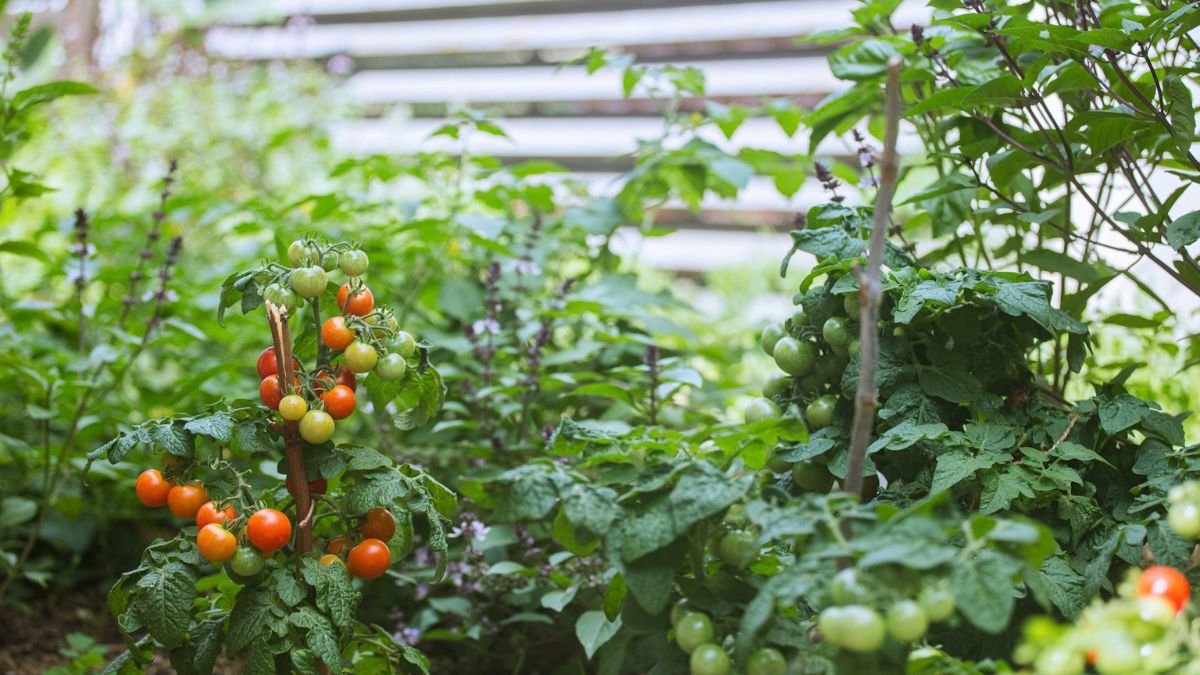
Tomato Plant Spacing Chart & Companion Planting
🍅 Tomatoes
How far apart to plant tomatoes — staked, caged, and raised bed spacingStaked or caged tomatoes: 18–24 inches apart. Sprawling, unstaked varieties: 36 inches. Rows: 36–48 inches apart. In a raised bed, use the tighter end of the range (18 inches) since airflow between beds compensates for closer in-row spacing.
- Basil — repels aphids and hornworms, and is said to improve flavor
- Marigold — deters nematodes and whiteflies
- Carrot and onion — make efficient use of root space below the tomato
Avoid: cabbage family, corn, potatoes, fennel, and dill nearby — corn attracts the same pest (the tomato fruitworm is also the corn earworm), and tomatoes and potatoes share blight susceptibility.
Pepper Plant Spacing & Companion Plants for Peppers
🌶️ Peppers
Bell pepper plant spacing and companion plants for peppers18–24 inches between plants, with 24–36 inches between rows. Bell peppers and sweet peppers follow the same range; hot pepper varieties (like jalapeño) can be spaced slightly closer, around 16–18 inches, since the plants stay more compact.
- Basil — the same aphid and thrip protection it gives tomatoes
- Onion and spinach — shallow roots that don’t compete for space
- Marigold — general pest deterrent
Avoid: fennel and kohlrabi, which stunt pepper growth through root competition and allelopathic effects.
What Not to Plant With Cucumbers
Cucumbers are easygoing about spacing but picky about neighbors. Give vining types 48–60 inches between rows (or grow them up a trellis to cut that in half), and 24–36 inches between plants along the row.
🥒 Cucumbers
Good and bad companions for cucumbers- Radish — deters cucumber beetles
- Nasturtium — traps aphids and pulls them away from the vine
- Corn and beans — classic trellis-sharing combination
- Dill — attracts predatory insects that eat cucumber pests
- Potatoes — both are prone to blight, and cucumbers can make potato harvest more difficult
- Aromatic herbs like sage — can slow cucumber growth and affect flavor
- Melons and squash in tight spacing — same pests (squash bugs, cucumber beetles) concentrate in one area
Carrot and Onion Companion Planting
Carrots and onions are one of the most reliable companion planting for vegetables and herbs combinations in any garden — and both are compact enough to tuck into small spaces.
🥕🧅 Carrots & Onions
Why this classic pairing worksCarrots: 2–4 inches apart, rows 12–18 inches apart. Onions: 2–4 inches apart, rows 12–18 inches apart. Because both are narrow and shallow-rooted, they can be interplanted in the same row without competing for space.
The onion’s strong scent masks the smell that attracts carrot rust flies, while carrots loosen the soil for the onion’s shallow roots. Add rosemary or sage nearby for extra carrot fly protection. Keep dill away from carrots — dill can cross-pollinate and stunt carrot root development.
Broccoli Companion Plants & Spacing
🥦 Broccoli
Spacing and companions for broccoli and other brassicas18–24 inches between plants, 24–36 inches between rows. Broccoli needs consistent moisture and full sun, so avoid crowding it under taller plants.
- Dill and thyme — repel cabbage moths and loopers
- Beet, onion, and celery — don’t compete for the same nutrients
- Nasturtium and marigold — trap crops for aphids and beetles
Avoid: tomatoes, strawberries, and pole beans, which compete heavily with brassicas for nutrients.
Beans Companion Plants & Spacing
🫘 Beans
Bush and pole bean spacing plus companionsBush beans: 2–4 inches apart, rows 18–24 inches apart. Pole beans: 4–6 inches apart, rows 24–36 inches apart, with a trellis or support for climbing.
- Corn and squash — the classic Three Sisters trio
- Cucumber and radish — share space and pest-deterrent benefits
- Summer savory — improves bean flavor and repels bean beetles
Avoid: onions, garlic, leeks, and chives — the allium family suppresses the nitrogen-fixing bacteria beans rely on.
Companion Plants for Zucchini
🎃 Zucchini & Summer Squash
Spacing and companion plants for zucchini24–36 inches between plants, 48–60 inches between rows — zucchini vines sprawl wide, so give it more room than most other vegetables in this chart.
- Corn and beans — Three Sisters combination
- Nasturtium and marigold — draw squash bugs away from the fruit
- Buckwheat — attracts beneficial insects that eat squash-bug eggs
Avoid: potatoes nearby — both compete for the same nutrients and are prone to overlapping pest issues.
Lettuce Plant Spacing
🥬 Lettuce
Spacing for loose-leaf and head lettuce6–12 inches between plants, 12–18 inches between rows. Loose-leaf types can go on the tighter end; head lettuce varieties need the full 12 inches to form properly.
- Carrot and radish — different root depths, no competition below ground
- Cucumber — lettuce enjoys the light shade cucumber vines provide in hot weather
- Chives and strawberries — compact, low-competition neighbors
The Three Sisters Planting Method
The three sisters planting method is one of the oldest companion planting systems, developed by Indigenous farmers in North America: corn, pole beans, and squash grown together in the same mound.
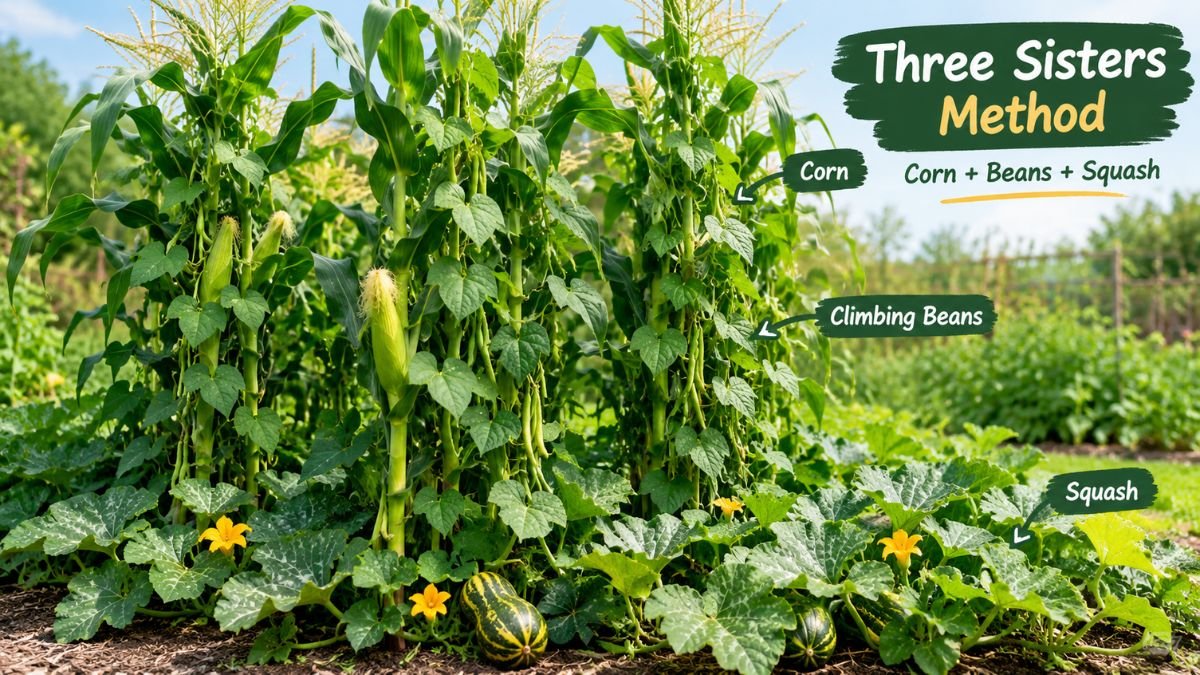
Each plant does a job the others can’t do for themselves:
- Corn grows tall first and becomes a natural trellis for the climbing beans.
- Beans fix nitrogen in the soil, feeding the heavy-feeding corn and squash.
- Squash spreads wide, low leaves that shade the soil, suppressing weeds and holding in moisture.
To plant it: sow corn first, then once it’s about 6 inches tall, plant beans around the base of each corn stalk, and squash around the outer edge of the mound. Space each mound roughly 3–4 feet from the next.
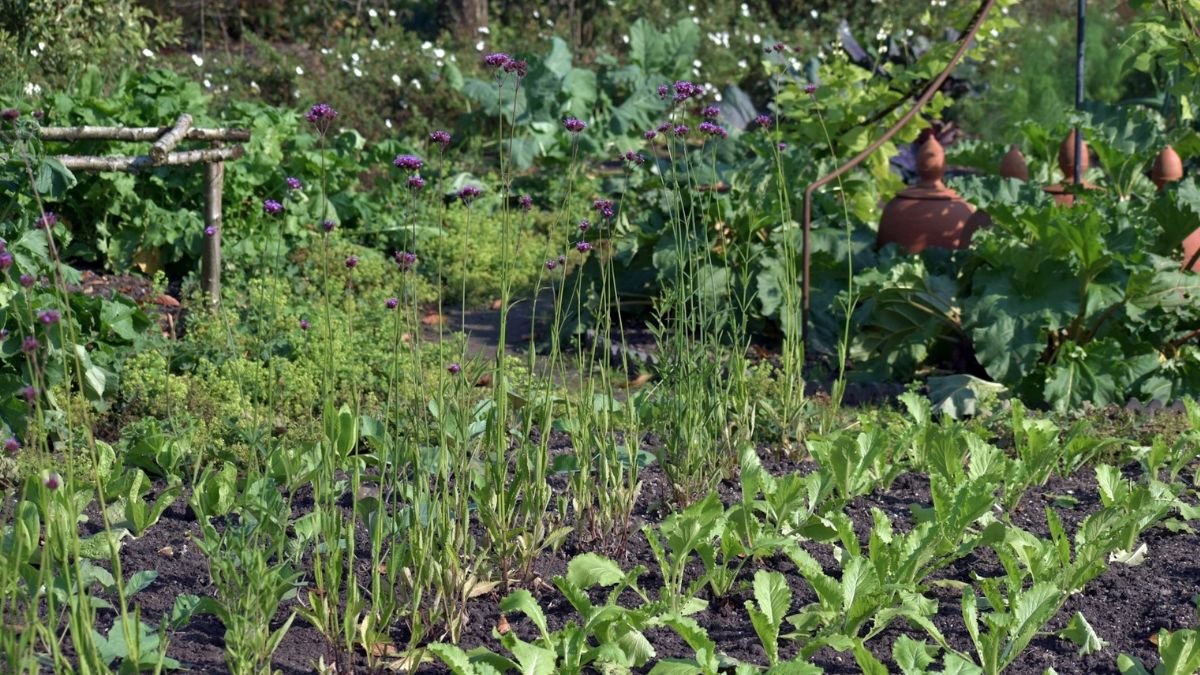
See how spacing and companion planting come together in a real garden layout:
Vegetables That Should Not Be Planted Together
Just as important as good pairings is knowing which vegetables should not be planted together. These combinations either compete for the same nutrients, attract shared pests, or actively stunt each other’s growth.
| Vegetable | Avoid Planting Near | Why |
|---|---|---|
| Tomato | Potato, corn, fennel | Shared blight risk and shared pests (fruitworm/earworm) |
| Beans | Onion, garlic, leek, chive | Alliums suppress the nitrogen-fixing bacteria beans need |
| Carrot | Dill | Cross-pollination and stunted root growth |
| Cucumber | Potato, aromatic herbs (sage) | Competing growth needs and shared blight risk |
| Broccoli / Cabbage family | Tomato, strawberry, pole beans | Heavy nutrient competition |
| Squash / Zucchini | Potato | Compete for nutrients, overlapping pest issues |
Tips for Spacing Vegetables in a Raised Bed or Small Garden
- Plan on paper first — sketch your vegetable garden layout plan before you plant, using the mature spacing from the chart above, not seedling size.
- Use the tighter end of the spacing range in raised beds — raised beds have better soil and drainage, so plants can sit slightly closer than in traditional rows.
- Group companions, not just compatible spacing — plant tomato-basil-marigold or carrot-onion clusters together rather than spreading companions across the whole bed.
- Go vertical where you can — trellising cucumbers, pole beans, and vining squash cuts their footprint by half or more.
- Leave a buffer between unrelated families — a foot of space or a row of herbs between brassicas and nightshades reduces shared pest pressure.
- Rotate crops each season — even with perfect companions, planting the same family in the same spot year after year builds up soil-borne pests and disease.
Frequently Asked Questions
How far apart should I plant vegetables in a raised bed versus a row garden?
In a raised bed, use the shorter end of the plant-spacing range since the soil is looser and better draining, letting roots access nutrients from a smaller area. In traditional rows, stick to the wider end of the range and use the full row spacing to leave room for a hoe or foot traffic between rows.
Can I use square foot gardening spacing instead of this chart?
Yes. Square foot gardening is simply a denser version of the same spacing principle — instead of rows, you divide a bed into 1-foot squares and plant a set number of a given vegetable per square (for example, one tomato per square, but sixteen carrots). Use this chart’s plant-to-plant spacing to calculate how many will fit in each square foot.
Does companion planting actually work, or is it just folklore?
Many of the pairings in this guide — like basil repelling aphids from tomatoes, or the nitrogen-fixing benefit beans give corn — are backed by university extension research and agricultural studies, not just tradition. Others, like flavor improvement from certain herb pairings, are less scientifically proven but widely reported by gardeners and carry no real downside to trying.
What vegetables should never be planted next to each other?
The most consistent conflicts are tomatoes with potatoes or corn, beans with any allium (onion, garlic, leek, chive), and brassicas like broccoli with tomatoes or strawberries. See the full table above for the reasoning behind each pairing.
How far apart should I plant tomatoes in a raised bed specifically?
18 inches apart is usually enough in a raised bed if you’re staking or caging the plants, since raised beds allow roots to spread more efficiently in richer soil. In open ground, give tomatoes closer to 24–36 inches, especially for sprawling, unstaked varieties.