
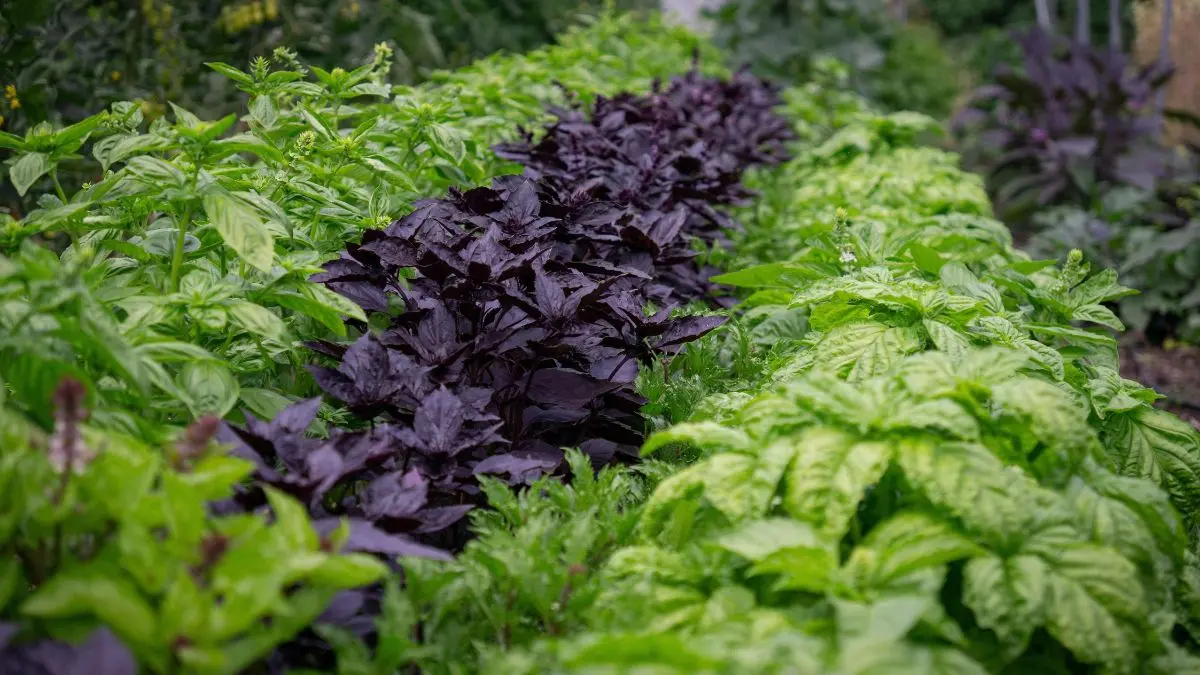
Learn how to grow basil in pots, in the ground or on a sunny windowsill, plus how to prune and harvest it so it stays bushy all season.
Fresh basil elevates nearly any meal. This easy to grow herb provides leaves for making pasta, salads, pizza and sauces all season long. However, many beginners face challenges growing their basil. Their plants tend to get leggy, wilt and die after several weeks.
This guide will show you how to grow basil from seed or cuttings, in the ground or in pots, outdoors or indoors. You will also learn how to prune and harvest your basil so it stays bushy and keeps producing. If you are new to growing your own herbs, we have a guide to growing herbs in containers that can help you get started too.
Quick answer: Give basil six to eight hours of sun, keep it warm (above 50°F / 10°C), water when the top inch of soil is dry, and pinch it back above a pair of leaves every week or two. Never cut more than one third of the plant at a time.
What Basil Needs to Grow Well
Basil likes plenty of warm sun, and a few simple requirements will get you bountiful harvests in no time.
Basil needs six to eight hours of direct sunlight per day. Plants without enough light will be spindly and have small leaves.
Basil is a tender herb and prefers warm weather. It will suffer through chilly nights, and frost will kill it outright. Read our guide on how to protect plants from frost if you think a cold night is in your future.
Choose a rich, loamy soil that drains well. Basil prefers consistent moisture, but it’s a bad idea to let the ground around your plant get too soggy. Adding some compost to your garden or potting soil is an easy way to enrich the dirt. Need some ideas on what to put in your compost pile? We have a list of what to compost here.
Leave ten to twelve inches between your basil plants.
How to Grow Basil from Seed
Seeds are an inexpensive way to start your basil plants, and they germinate fairly quickly.
Begin by sowing the seeds in a small pot or seed tray that has been filled with moistened seed starting mix. Spread the seeds out on top of the soil and cover them with about a quarter inch of dirt. Then put them in a warm, sunny location. Most basil seeds should germinate within five to ten days in an area with temperatures around 70 degrees Fahrenheit.
When your seedlings have two sets of true leaves, thin them out so that each seedling has plenty of room to grow. Make sure to keep the soil moist but not saturated. If you would like more information on getting your seeds off to a good start, we have a detailed guide to starting seeds indoors here.
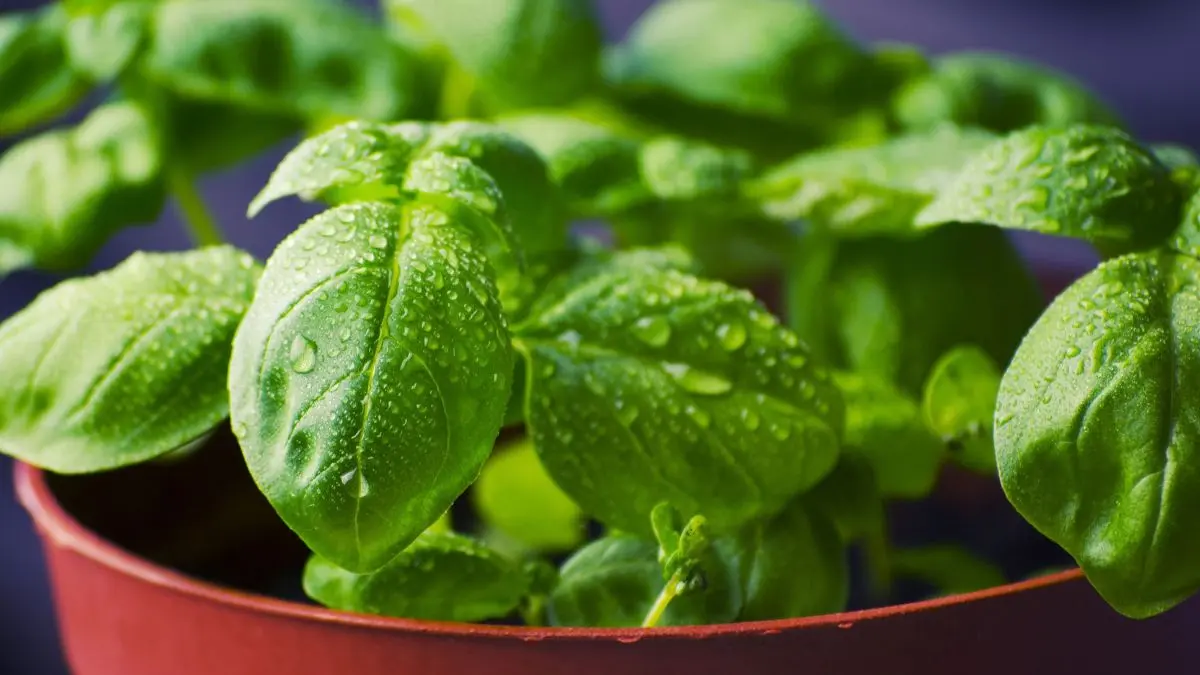
After the last frost date, and once nighttime temperatures stay above 50 degrees, you can begin hardening off your plants to get them used to the outdoor conditions. This consists of spending a few hours outside each day for about a week, to gradually acclimate them to the sun and wind.
How to Grow Basil from Cuttings
Cuttings are an easy way to get a jump on the growing season. Besides, if you have a particularly nice basil plant, or find one at the store, you can take cuttings and have multiple plants for the price of one.
Take a four inch piece of stem from your desired basil plant just below a leaf node. Remove the leaves from the bottom of the cutting and place it in a glass of water. Keep the glass in a sunny window, but out of direct sunlight. New roots should form within one to two weeks. Once the roots on your cutting are an inch or two long, you can plant it in a pot with fresh potting soil.
Growing Basil in a Pot or in the Ground
Basil plants thrive in both mediums. It is really a matter of choosing whichever you have room for.
Choose a pot that is at least eight inches across, with drainage holes in the bottom. You can fit one plant in an eight inch pot, or two small plants in a 12 inch pot. Pots heat up quickly, which is not a bad thing for basil. You can also bring potted basil plants indoors with the onset of cold weather. However, it is a good idea to check the soil more frequently as pots tend to dry out faster than the ground.
Choose a sunny, well drained spot to plant your basil. Work a few inches of compost into the dirt prior to planting. Tomatoes, peppers and basil are a good combination to plant together, and our guide to vegetable garden layout and companion planting can help.
How to Grow Basil Indoors
You don’t need a greenhouse to grow basil. A simple windowsill is all you need for a steady supply of fresh basil leaves. Indoor basil plants also allow you to enjoy fresh herbs year round.
Make sure to choose a south or west facing window that gets at least six hours of sunlight per day. If you only have a north facing window, or if your house doesn’t get much sun, consider investing in a grow light. Install your light six to twelve inches above the plant, and run it for ten to twelve hours per day.
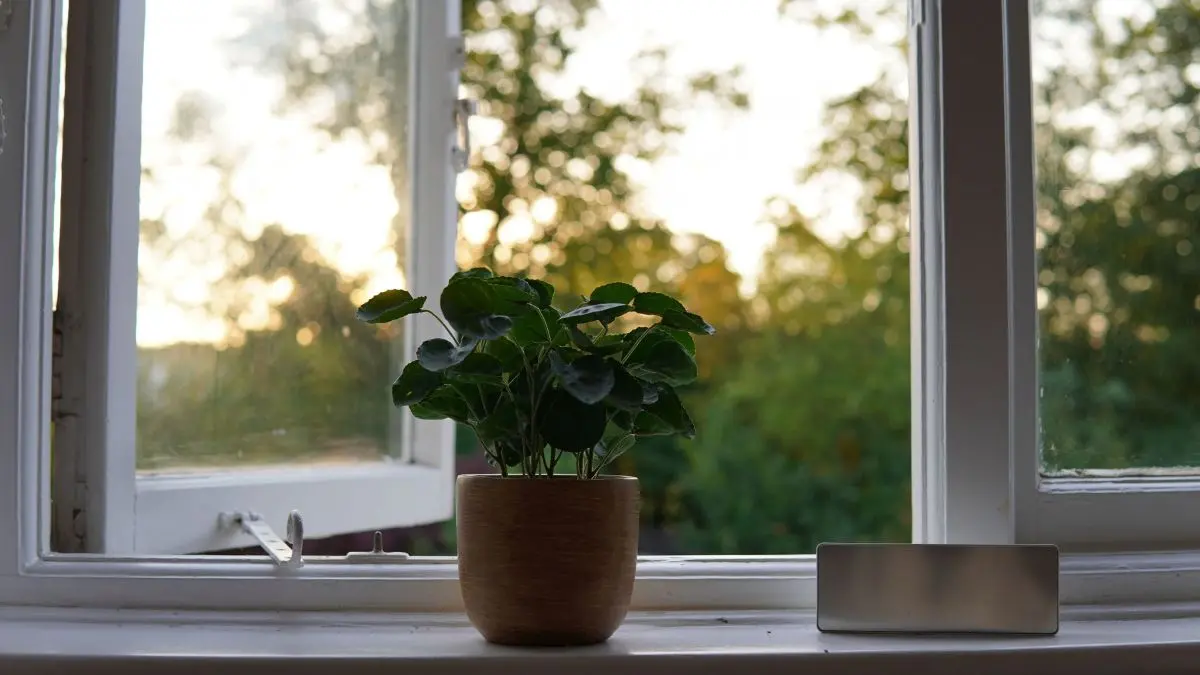
Keep your plant away from drafty areas, and make sure to rotate the pot every few days so that it doesn’t lean towards the window. Water when the top inch of soil is dry, and always empty out the saucer beneath your plant.
Indoor basil plants are particularly susceptible to tiny pests called aphids. Fortunately, we have a guide on how to get rid of aphids on plants to help you remove them.
Watering and Feeding Basil
Consistent watering is the key to growing healthy basil. Water the basil when the top inch of soil is dry, and always water the ground rather than the leaves. Wet leaves encourage disease, and the morning is the best time to water.
Basil plants need very little fertilizer, so a good liquid fertilizer at half strength every three to four weeks is all they need. Too much fertilizer can actually cause plants to become less aromatic.
Watch the Process Step by Step
This short video walks you through the entire process from planting to harvesting, so you can see exactly what to do.
How to Prune Basil for a Bushy Plant
Pruning is the step most beginning growers skip, and it makes a huge difference in the overall health and appearance of your basil plant. Plants that aren’t pruned properly tend to grow up and flower prematurely, resulting in bitter tasting leaves.
When your basil plant is six inches tall with at least three sets of leaves, it is time to begin pruning. Find a pair of small, budding leaves coming off the main stem of the plant. Cut just above these leaves with a pair of scissors. This encourages new growth, and you will notice two new stems coming off the point where you made the cut. In effect, you’ve doubled the number of stems on the plant.
Repeat this every one or two weeks, and you will notice your plant becoming much bushier. Always cut off no more than one third of the plant at a time, as it needs the leaves to continue growing.
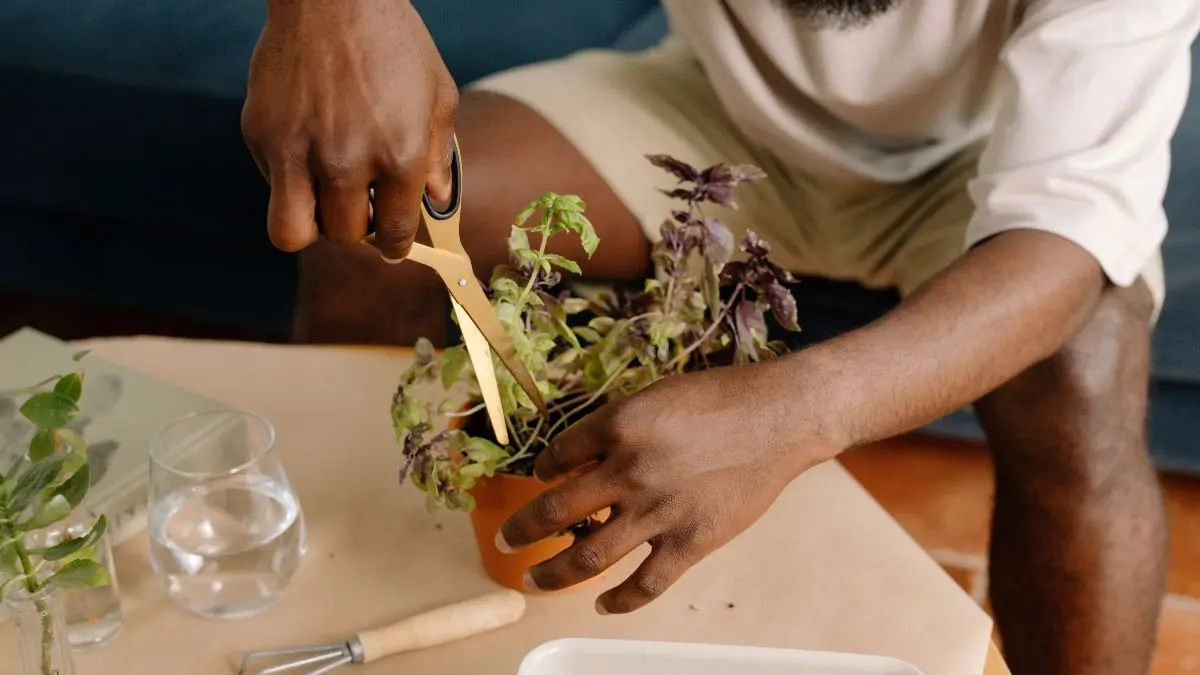
Another thing to watch for when pruning your basil is the formation of buds at the top of the plant. Pinch these off right away so that the plant keeps producing leaves rather than flowers. Once a basil plant begins to produce flowers, the leaves become less aromatic and the plant starts to slow down its overall growth. Constant pruning will keep your basil plant in a perpetual state of leaf production.
How to Harvest Basil So It Keeps Growing
Good news! Harvesting basil is virtually the same as pruning. Each time you take leaves from your plant, you are also encouraging new growth.
You can begin harvesting your basil when the plant is six to eight inches tall. The best time to harvest is in the morning, when the leaves have had a chance to collect moisture. Cut the stems of basil leaves about a quarter inch above a set of leaves. Avoid snipping individual leaves off the bottom of the plant as this will leave a bare stem that will not grow new leaves.
To ensure continued growth of your basil plant, always leave at least two sets of leaves on the stems you cut, and avoid taking more than one third of the plant at a time.
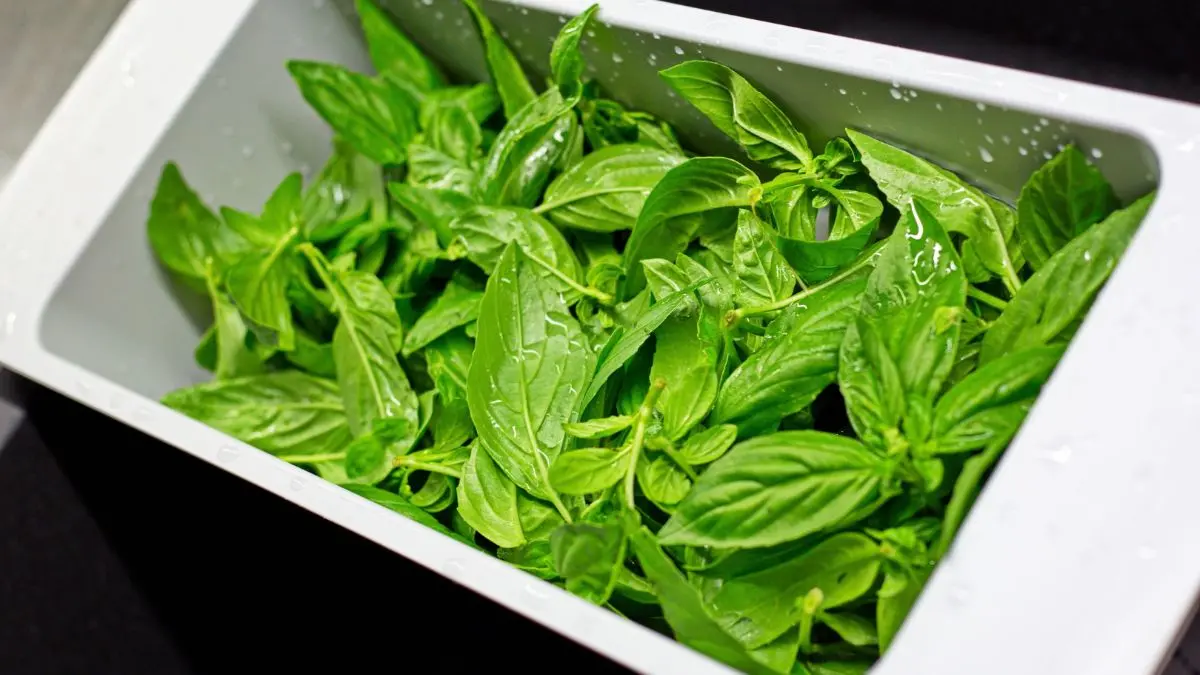
At the end of the growing season, it is a good idea to take the entire plant. Cut off the stems and use what you can right away, saving the rest for drying or freezing. Basil tends to blacken when exposed to cold weather, so it is a good idea to get your harvest in before the first frost date.
How to Keep Basil Alive: Common Problems
Even the hardiest plants have their problems, and basil is no exception. Fortunately, most issues plaguing your basil plant can be easily dealt with.
This is a common sign that a plant either needs more water, or has too much. If the leaves are soft and limp, check the soil. You will either need to give the plant more water, or make sure it is draining properly.
These indicate that a plant is suffering from too much water, poor drainage, or lack of light. Try moving the plant to a sunnier location and reducing the amount of water you give it.
Exposure to cold temperatures and frost can cause leaves to blacken. Black spots can also be an indication of disease, so make sure your basil plant is warm and remove any affected leaves.
This means your plant is not getting enough sunlight, or hasn’t been pruned in a while. Move your plant to a sunnier location, and begin pinching it back.
These are the handiwork of pests such as aphids, slugs, and beetles. A spray of neem oil can help deter these unwanted visitors, and our guide to using neem oil on plants will tell you how much to dilute the oil and how safely to apply it.
Frequently Asked Questions
How long does basil take to grow?
From seed, you can expect to be able to harvest small leaves in about six to eight weeks. Basil cuttings tend to produce harvestable leaves quicker.
Can basil grow in water?
Yes, cuttings root readily in water. However, you should move them to soil when the roots reach an inch or two in length, as basil plants grow better in soil.
Does basil come back every year?
Basil is a tender annual in most climates, so it will die in winter. It is important to save seeds or take cuttings from mature plants before the cold weather arrives, so you can replant in the spring.
Why is my basil turning black?
Cold temperatures are the most likely culprit. Make sure your plants are not exposed to night frost, or living near cold windows.
Final Thoughts
Growing basil isn’t difficult once you are familiar with the basics. Just follow these simple instructions and you’ll have a thriving basil plant that keeps producing leaves all season long. Whether you choose to plant your basil in the ground, in a pot, or on your windowsill, you will be rewarded with fresh leaves to enjoy. After your basil plant has matured, try drying the leaves or freezing them in bags to have fresh basil all year round.