
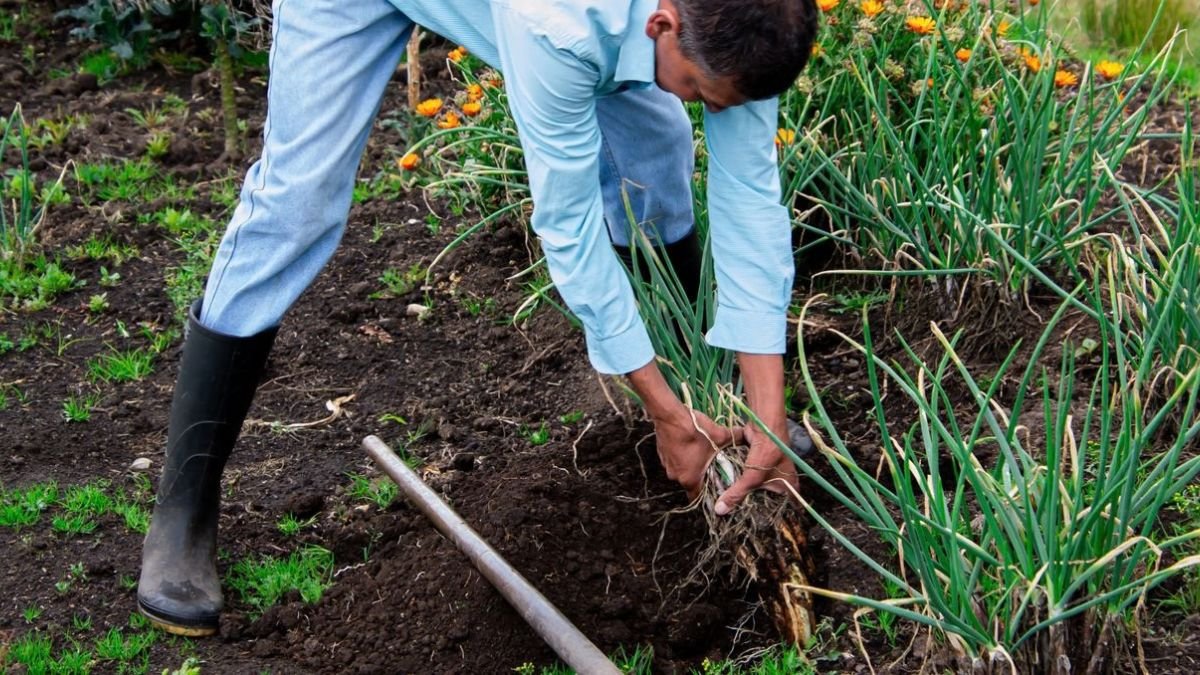
When to Plant Garlic: Best Time by Region + How to Plant It for Big Bulbs
Plant in fall, harvest next summer. Here is the timing, depth, spacing and care that give you big, firm bulbs.
If you are wondering when to plant garlic, the short answer is fall. Garlic is one of the few vegetables you plant in the autumn and reap the rewards the following summer, and the timing is key to growing large bulbs.
Plant too early and the cloves will produce tall green shoots which are damaged by the winter, while planting too late means the roots get little time to establish themselves before the ground freezes. By planting at the right time, the garlic will remain resting in the soil during the winter and wake in the spring to grow into large, firm bulbs.
In this guide you will learn the best time to plant garlic where you are, the step by step process of planting it, how deep and far apart the cloves need to be, which variety to plant, and how to look after it from the depths of winter to your summer harvest. You will also learn how to grow garlic in pots. All of it is written in simple language so that even first time gardeners can understand.
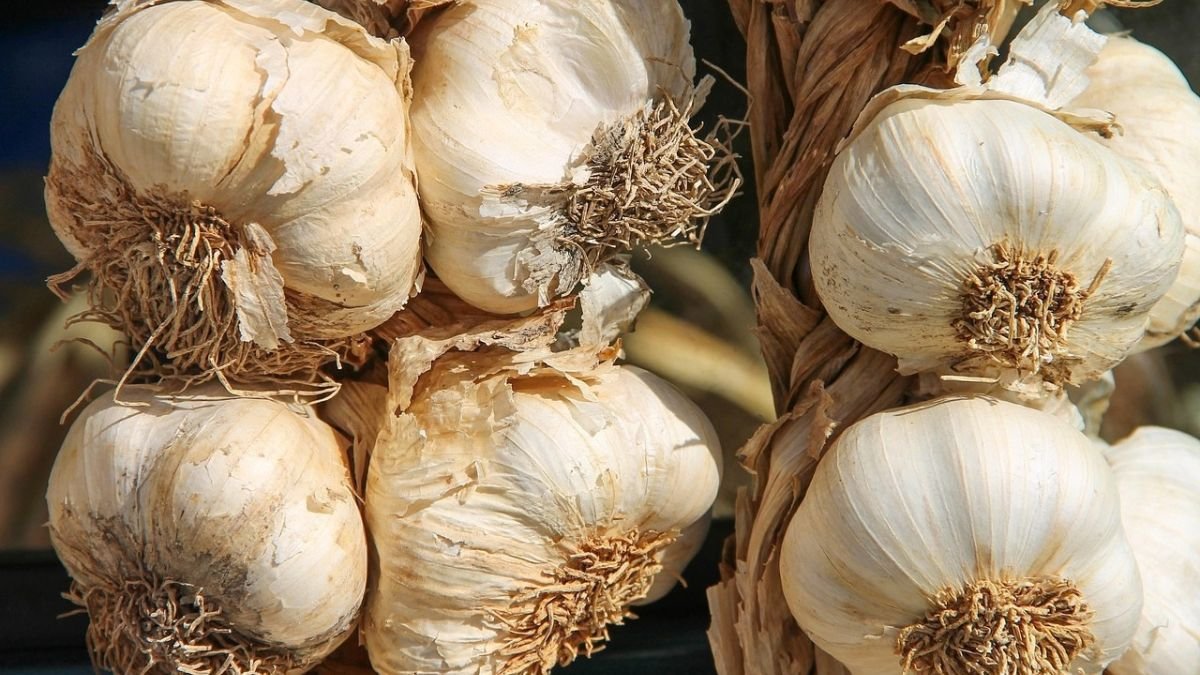
The Short Answer: When Is the Best Time to Plant Garlic?
For most of us, the best time for planting garlic in the fall is between 4 to 6 weeks before the ground freezes. In most of the U.S. that is October to early November.
A simple rule of thumb is to plant when the soil has cooled to around 60 °F or less but is not too wet or hard to work. At this point the cloves will have time to grow roots, but the weather is still too chilly to produce much in the way of leaves.
The reason garlic needs to be planted in the fall is that it needs a period of cold weather to form a proper bulb with all the cloves. The roots grow in the fall, the plant rests during the winter, and then it grows leaves in the spring and finishes maturing the bulb over the summer. If you miss this period of cold weather, you will end up with a small bulb that has not formed proper cloves.
When to Plant Garlic According to Your Area
Your local climate plays an important role in deciding when to plant garlic. Colder areas should plant earlier, while warm areas should wait until it starts to get cooler. Here is a brief guide for each region:
Cold Northern Areas
Late September to mid October
Most of Wisconsin, Michigan, Minnesota, Iowa, northern New York and the higher areas of Colorado.
Middle States
Early October to early November
Most of Ohio, Indiana, Illinois, Pennsylvania, New York, Connecticut, Massachusetts, Missouri, Kansas and the Front Range cities in Colorado.
Upper South
Mid October to mid November
Most of Tennessee, Virginia and Kentucky.
Deep South
Late October to early December
Most of South Carolina, Georgia and north Texas.
Hot Areas
November to January
Florida and south Texas. In these areas garlic is best suited to softneck varieties, and it is best to chill the cloves in the fridge for 4 to 6 weeks before planting.
These are only guidelines, as the weather can change from one year to the next. The ground usually freezes a few weeks after the first frost date, so it is a good idea to check your average first frost date. If you are not sure about your zone, you can find it by entering your ZIP code in the USDA Plant Hardiness Zone Map.
Can You Plant Garlic in the Spring?
Yes, it is possible to plant in the spring, but the bulbs will tend to be smaller as they do not have enough time to form a good sized bulb before the summer heat sets in.
If planting in the spring is your only option, these pointers will help:
- Plant as early as possible, as soon as the ground can be worked without it being too wet or frozen.
- If possible, use softneck garlic, as it can handle a light period of cold better than hardneck varieties.
- Chill the cloves in the fridge for 4 to 6 weeks before planting, as this simulates winter dormancy.
- Expect a smaller harvest, which will be ready in late summer.
If you missed the fall planting window, it is still possible to plant in early winter so long as the ground is not frozen. Make sure to cover the bed with a thick layer of mulch and the garlic should do well.
Hardneck vs Softneck Garlic: What to Plant
Before you plant, it is a good idea to know that there are two main types of garlic.
Hardneck Garlic
Develops a tough flower stalk at the center of the bulb, called a scape. It handles cold weather better and has a more robust flavor, with large cloves that are easier to peel. The downside is that it only stores for a short time (4 to 6 months).
Popular varieties: Music, German Extra Hardy and Spanish Roja.
Softneck Garlic
Has a softer stalk, which is why it can be braided for storage. It stores well (8 to 12 months or more) and is good for warmer climates. The cloves are smaller, but there are more of them per bulb.
Popular varieties: California Early, California Late and Inchelium Red.
Here is a quick recap so you know which one to choose:
- Cold weather areas: plant hardneck.
- Warm weather areas: plant softneck.
- Storing garlic is a priority: plant softneck.
- You want scapes and more flavor: plant hardneck.
- You are not sure: plant a little bit of each and see which one you like.
A note on elephant garlicIt looks like a large garlic bulb, but it is more closely related to leeks and has a milder flavor. It is planted in the same season and has very large cloves.
Where to Get Garlic Bulbs for Planting
When shopping for garlic bulbs to plant, always look for “seed garlic,” which is sold specifically for planting. You can find it at your local nursery, farmers market or trusted online seed companies. Popular varieties sell out fast, so it is a good idea to order your seed garlic in late summer or early fall.
Garlic from the grocery store is usually imported, may have been treated so that it will not sprout, and may carry diseases that you do not want in your soil. It is possible that it will grow, but it may not be worth the risk. Garlic from a local organic farm is a safer bet.
When choosing bulbs, always go with large, firm, rounded ones with tight skin. Avoid loose, moldy, shriveled or bruised bulbs. If you are new to planting garlic, it is a good idea to start small. One or two bulbs of each variety should be enough, as one bulb can have anywhere between 4 to 20 cloves depending on the variety.
Preparing the Planting Site
Garlic is not picky, but there are a few things you need to do before planting.
- Sun: Choose a sunny area that receives at least 6 to 8 hours of sunlight per day.
- Soil: Garlic prefers loose, well-drained soil. The cloves will rot in heavy, wet soil. To improve heavy clay, consider a raised bed or add a good amount of compost to it. The soil pH should be between 6.0 and 7.0.
- Compost: Add 2 to 3 inches of compost to the top 6 to 8 inches of soil. If you do not have any compost, our guide on what to compost will help you get started. Avoid fresh manure, as it can burn the cloves and introduce weed seeds.
- Weeds: Make sure to clear the site of all weeds.
- Rotation: Do not plant garlic where you planted garlic or other alliums in the past 3 years.
Garlic grows well with tomatoes, carrots, beets and lettuce, but not with peas or beans. See our vegetable garden layout and companion planting guide for more information.
How to Plant Garlic Step by Step
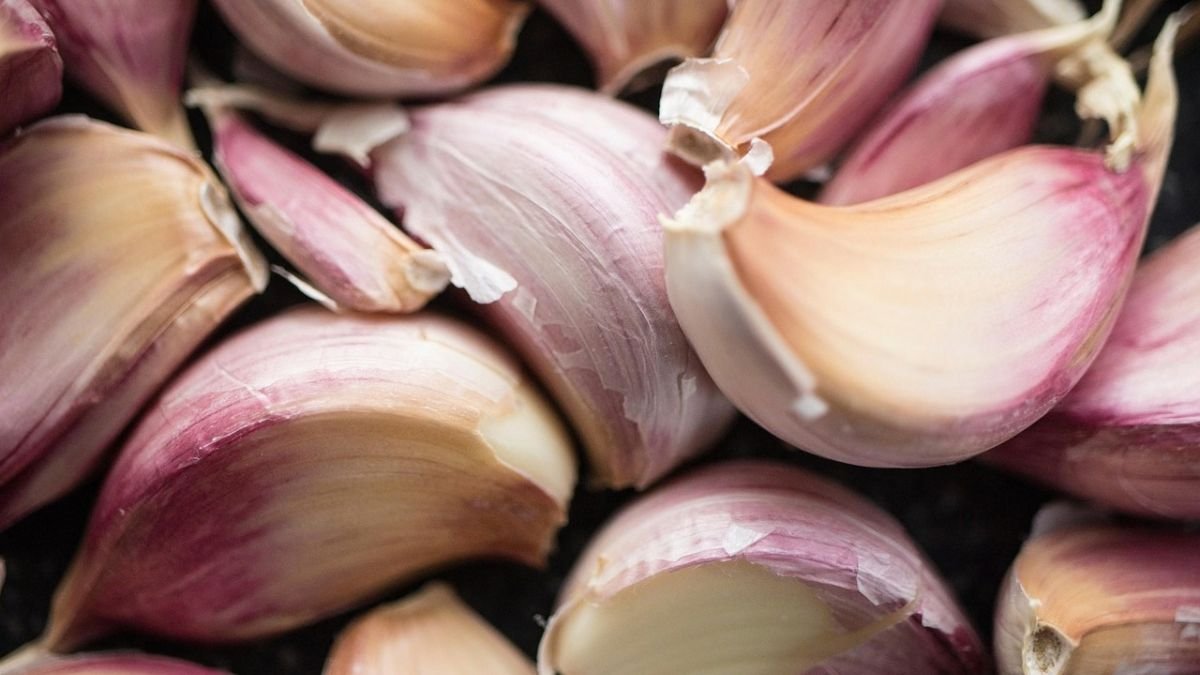
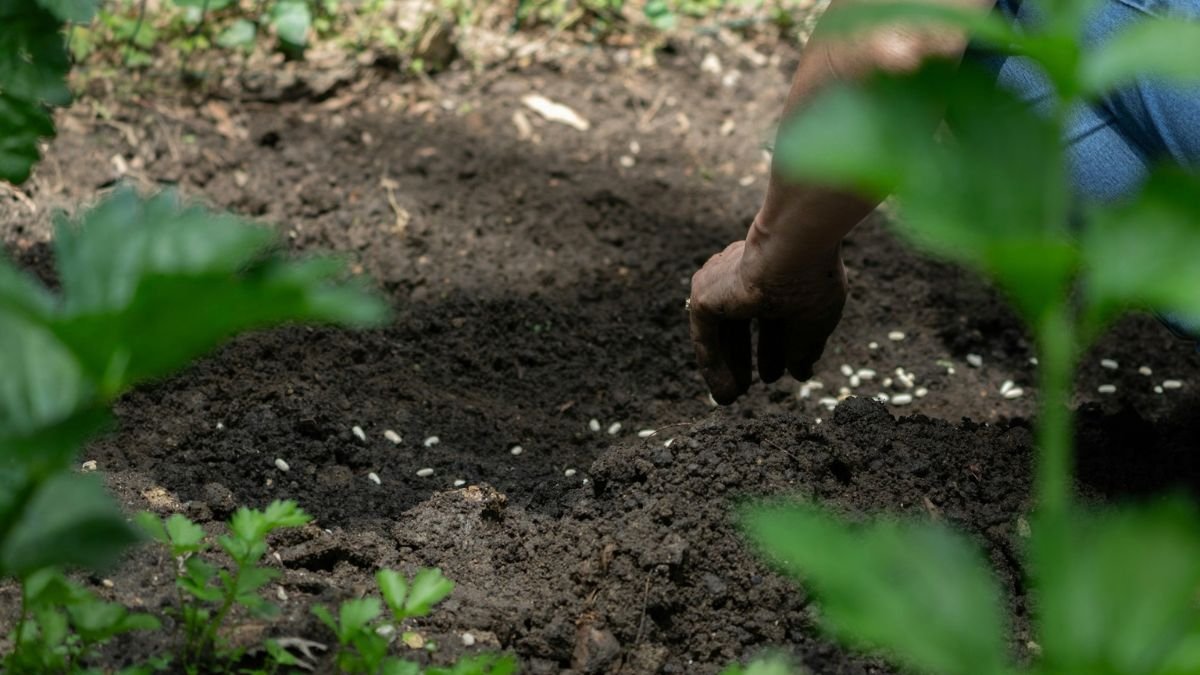
Separate the cloves. Break the bulb into individual cloves 1 or 2 days before planting and keep the dry, papery skin on. Always use the larger cloves, as they will yield a bigger bulb. Save the smaller ones for the kitchen.
Prepare the bed. Use a garden fork to loosen the soil to a depth of 8 inches and then smooth it with a rake.
Decide on the depth. How deep to plant garlic? Plant the cloves about 2 inches deep, measured from the tip of the clove to the soil surface. If you have very cold winters, you can plant them up to 3 inches deep.
Plant the cloves pointy side up. The pointy end should face up and the root side should face down. Cloves planted upside down will still grow, but it takes longer and can result in a smaller, weaker bulb.
Decide on the spacing. How far apart to plant garlic? Plant the cloves 6 inches apart with rows 12 inches apart. In a raised bed, a 6-inch grid is a good guide. Avoid planting them closer than 6 inches, as you will end up with small bulbs.
Cover and water. Fill the holes with soil, press down gently and water lightly so that the soil settles around the cloves.
Label the bed. Write down the garlic variety and planting date, especially if you are planting more than one variety.
Quick Recap
- Best planting time: 4 to 6 weeks before the ground freezes
- Depth: 2 inches (up to 3 inches in very cold areas)
- Spacing: 6 inches apart with rows 12 inches apart
- Direction: pointy end up
- Sun: 6 to 8 hours of sunlight
Watch: how to plant garlic step by step
Mulching and Winter Care
Mulch acts as a blanket for your garlic bed. Apply a layer of 3 to 6 inches of straw or shredded leaves after planting. Avoid using hay, as it often contains weed seeds.
There are three main reasons for mulching:
- It protects the cloves from extreme cold and temperature swings.
- It helps the soil retain moisture.
- It suppresses weeds.
For more ideas on how to cover your plants on a cold night, see our guide on how to protect plants from frost.
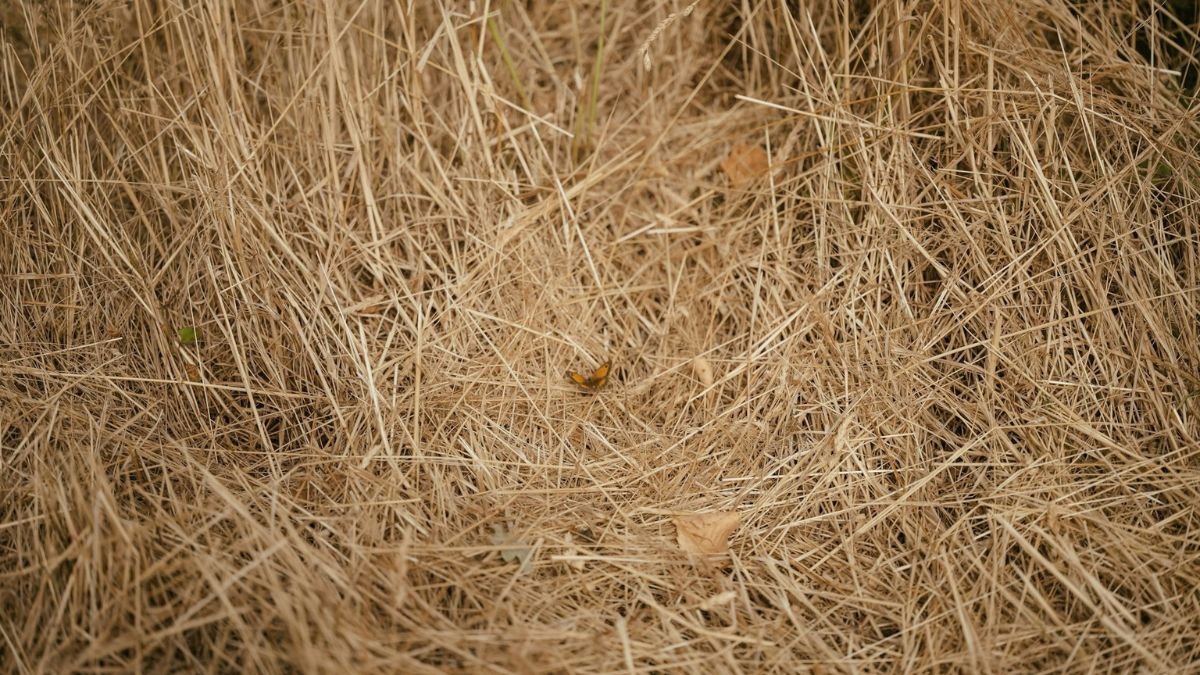
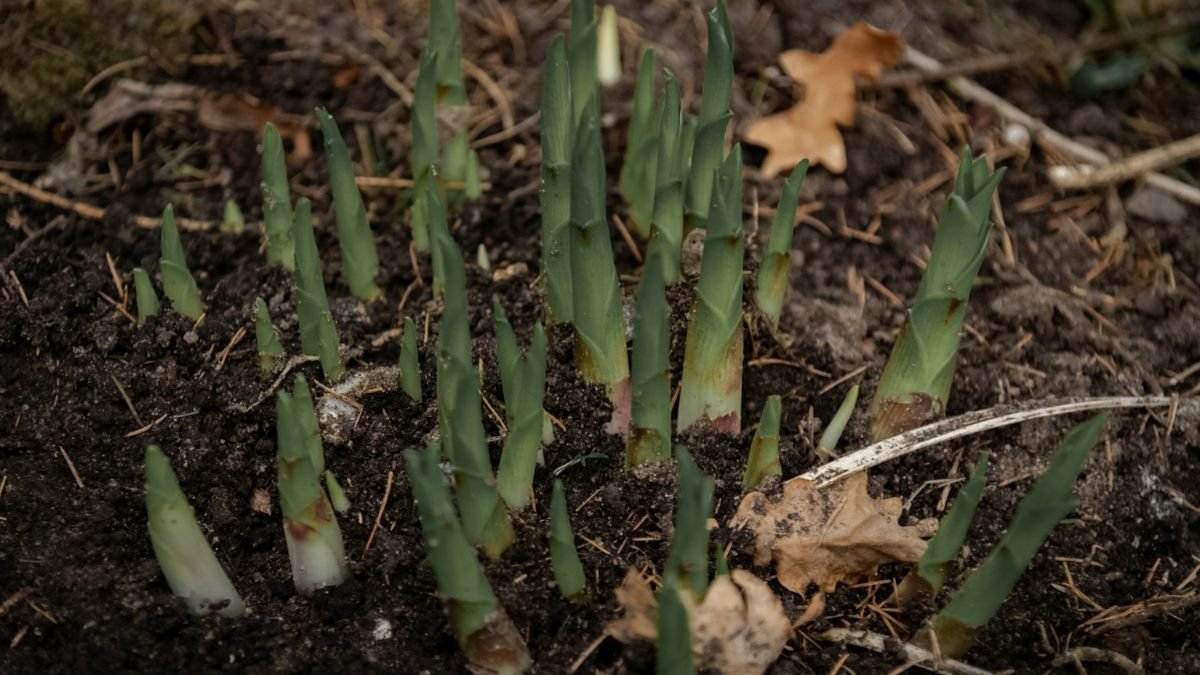
Green shoots before winter?Do not worry if green shoots 2 to 4 inches tall appear. This is completely normal, especially if you have a warm fall. The mulch will protect the shoots and the plants will do fine during the winter. Water the plants only if the ground is exceptionally dry and not frozen.
Spring Care: Water, Fertilize and Weed
As the plants start to show signs of new growth, remove any thick mulch and leave a thin layer to help retain moisture and prevent weeds.
- Water: Provide about 1 inch of water per week if it is not raining. Garlic has shallow roots and will suffer in dry conditions. Keep the soil evenly moist but not soggy. Stop watering 2 to 3 weeks before the harvest.
- Fertilize: Apply a nitrogen-rich fertilizer such as compost, fish emulsion or blood meal in early spring. You can repeat it once more in 3 to 4 weeks. Stop fertilizing in late May or early June, when the bulbs start to swell. Feeding after that point encourages leaf growth and smaller bulbs.
- Weeding: Hand weeding is the best option for removing weeds. Garlic has shallow roots, and digging or hoeing around the plants can damage them.
If you planted hardneck garlic, you will see curly stalks start to form in early summer. These are called scapes and should be cut off when they form one or two loops. This redirects the plant’s energy into the bulb rather than the flower. Scapes are edible and mildly garlicky, and they are a good addition to pesto, stir-fries or scrambled eggs.
Growing Garlic in Pots and Containers
Even if you do not have a garden, you can still grow garlic in pots. Here is how:
- Pot size: Go with a pot that is at least 10 to 12 inches deep and 12 inches wide with good drainage. The bigger the pot, the bigger the bulb.
- Soil: Use a good potting mix with added compost.
- Planting: Plant the cloves 2 inches deep and 4 to 6 inches apart, pointy end up.
- Location: Keep the pot outside in a sunny location with at least 6 hours of sun per day. Garlic will not form bulbs without the cold winter weather. In very cold areas, you can cover the soil with mulch and place the pot against a sheltered wall.
- Watering: Water when the top inch of soil is dry to the touch. Pots tend to dry out faster than the garden.
- Expectation: Expect a slightly smaller yield from pot-grown garlic than from garlic grown in the ground.
If you are new to growing in pots, our guide to growing herbs in containers has helpful information on the type of soil to use, drainage and watering.
Can You Grow Garlic Indoors or in Water?
If you put a clove of garlic in a glass of water or a pot of soil on your windowsill, it will start to sprout green shoots. However, it will not form a bulb, as it needs the cold of winter combined with lots of sun to do so. The shoots can be used like chives. Simply snip them and use them in salads, soups and eggs.
When and How to Harvest Garlic
Garlic planted in the fall is ready to be harvested 8 to 9 months later. That is to say, between late June and August, depending on where you are, and a little earlier in warmer areas.
There are a few signs that will tell you it is time to harvest. The lower 3 or 4 leaves have turned brown and dried up, while the top 5 or 6 leaves are still green. If you harvest too early, the bulb will be too small, while waiting too long can split the bulb open and cause the papery skin to loosen.
Harvest the bulbs by digging them up. Avoid pulling the plants, as this can loosen the bulb and damage it. Use a garden fork to loosen the soil and gently lift the bulbs out. Make sure to brush off the dirt.
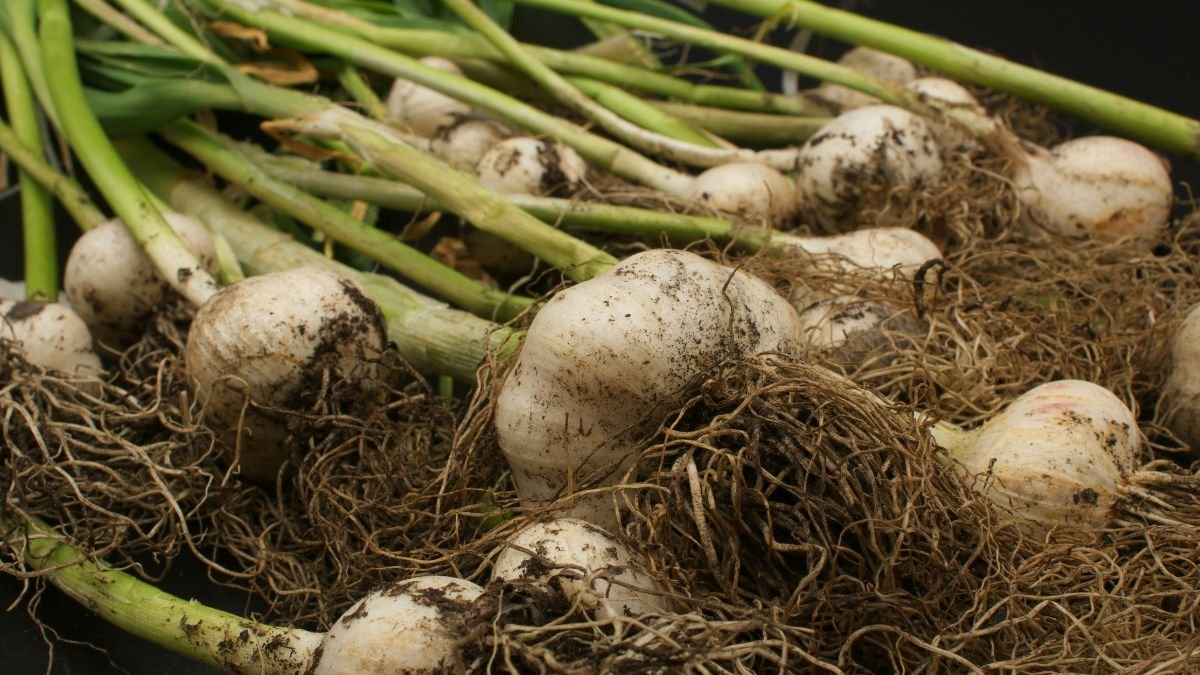
Curing and Storing Garlic
Garlic needs to be cured before storing. Bundle the plants in small bunches or lay them out on a rack in a shady, well-ventilated area for 2 to 4 weeks. Once the necks have dried up and the outer skin is papery, cut off the roots and stems and store the bulbs in a cool, dark, dry place with good air circulation. Hardneck garlic will store for 4 to 6 months and softneck for 8 to 12 months.
A great way to save moneyKeep the largest and best bulbs you have and save their cloves to plant next season. Over time your garlic will acclimatize to your local conditions, and you will never have to buy seed garlic again.
Watch: how to harvest and cure garlic
Common Mistakes to Avoid
- Planting too early: Warm weather will cause the cloves to produce lots of green shoots that will be damaged by the winter.
- Planting too late: The roots will not have enough time to grow before the ground freezes.
- Planting too shallow: The cloves can be pushed out of the soil or damaged by frost.
- Planting cloves upside down: The shoots will take longer to appear and the bulb can be weaker.
- Soggy soil: Cloves planted in soggy soil will rot. Raised beds or adding compost to the soil will help.
- No mulching: Exposed cloves are more susceptible to temperature changes, frost and weeds.
- Planting small cloves: Small cloves usually produce small bulbs.
- Crowding the plants: Cloves need room to grow into bulbs.
Frequently Asked Questions
What is the best month to plant garlic?
Most of the U.S. is best suited to planting garlic in October. In cold northern areas it should be planted in late September, while in the South it is best to plant in November or even early December.
How deep should I plant garlic cloves?
Cloves should be planted about 2 inches deep, or deeper (3 inches) in areas with extremely cold winters.
How far apart should I plant garlic?
Plant the cloves 6 inches apart with rows 12 inches apart.
Which way up do I plant garlic cloves?
The cloves should always be planted pointy side up.
Can I plant garlic from the grocery store?
While it may grow, it is better to get seed garlic from your local nursery or a reputable online seed company, as store bought garlic may have been treated to prevent sprouting and may carry diseases.
Do I need to water garlic after planting in the fall?
Water once after planting to make sure the soil has settled around the cloves. In the fall or winter, water only if the ground is exceptionally dry and not frozen.
What happens if I plant garlic too early?
The cloves may produce lots of green shoots before the winter. With a thick layer of mulch they will usually survive the winter, but the plants may become weaker.
Final Thoughts
Garlic is one of the easiest vegetables to grow, and the key to success is to plant it in the fall. Plant the cloves 2 inches deep and 6 inches apart, cover them with a thick layer of mulch, water them in the spring and harvest them the following summer.
If you are new to growing vegetables, our gardening tips for beginners will give you some basic pointers. Plant a few cloves of garlic this season and next summer you will be harvesting your own homegrown garlic.