
Vegetable Gardening · 9 min read
A beginner-friendly guide to planting, growing and harvesting potatoes in the ground, in a bucket or in a grow bag.
Growing potatoes at home isn’t as difficult as most people think. All you really need is somewhere sunny, some loose soil and a few seed potatoes. You can even grow potatoes in a bucket on your balcony!
This guide shows you when to plant potatoes in your area, how to plant seed potatoes and how deep to plant them. You will also learn how to hill, water and harvest your potatoes. Everything is written for beginners.
How Long Do Potatoes Take to Grow?
How long potatoes take to grow depends on the variety you plant. Early potatoes are ready to harvest in around 70–90 days. Mid-season potatoes need 90–110 days, and late-season potatoes need 110–135 days. If you want small, tender new potatoes, you can start digging them up around 2–3 weeks after the plants have flowered.
Seed Potatoes
Seed potatoes are just small potatoes that have been grown to be planted. The best option is to buy certified seed potatoes from your garden centre or a trusted online seller. This means they have been tested and are free of common diseases, which gives you stronger plants and better yields.
Can you plant potatoes from the grocery store? Yes, you can! Many people plant potatoes from the ones they already have at home. However, some store potatoes have been treated so they won’t sprout, and there’s also a risk of disease. If you want to try it, go for organic potatoes that have already started to sprout. Don’t plant them in the same bed where you grew tomatoes or peppers.
If your seed potatoes are larger than an egg, cut them into pieces. Make sure each piece is around 2 ounces and has at least 1–2 ‘eyes’. Eyes are the small indentations where the sprouts grow from. This is how to grow potatoes from eyes. Let the cut potatoes dry for 1–2 days so a protective layer forms on the cut area. This reduces rot after planting.
Chitting Potatoes
Chitting your potatoes is optional, but it can give your plants a head start. It simply means letting your seed potatoes sprout slightly before planting.
- 1Place your seed potatoes in an egg box or shallow tray with the eyes facing upwards.
- 2Put them in a bright, cool location. Aim for 50–60°F, such as the windowsill of an unheated room. Keep them out of direct sunlight.
- 3Leave them for 2–4 weeks. You want short, thick sprouts, around ½–1 inch long.
If you have weak, thin, white sprouts, your potatoes aren’t getting enough light. Move them to a brighter, cooler location.
When to Plant Potatoes
As a general rule, plant your potatoes 2–4 weeks before your last frost in spring. The soil should be at least 45°F. Potatoes grow best in cooler weather, so if you plant too late you’ll get lower yields. The leaves can be damaged by frost, so you may want to protect them from frost if a late cold night is forecast.
When to plant potatoes by USDA zone (approximate):
When to plant potatoes by state (approximate):
Soil test: These dates are only a guideline, and local weather will affect them. Find out when your average last frost is. If the soil feels cool and crumbly when you grab a handful, you’re ready to plant.
How to Plant Potatoes
If you have heavy clay soil, add some compost or follow our guide on how to improve clay soil. Potatoes need loose soil to develop good tubers.
- 1Find a sunny spot with good drainage. Don’t plant where you’ve grown tomatoes, peppers or eggplants in the last 3 years.
- 2Dig over the soil to a depth of 8–10" and add a few inches of compost.
- 3Dig a hole or trench 3–4" deep. This is how deep to plant potatoes.
- 4Place your seed potato pieces in with the sprouts or eyes facing upwards. Space them around 12" apart and leave 30–36" between rows.
- 5Cover with 3–4" of soil and water gently.
- 6Wait for green shoots. This usually takes 2–4 weeks.
If your potatoes have developed long sprouts, be careful when planting because the sprouts snap easily. Place them in with the sprouts facing up. If they have very long, weak sprouts, rub off the thin ones and leave 2–3 strong ones.
How to Grow Potatoes in Containers, Buckets and Grow Bags
Don’t have any garden beds? Don’t worry! How to grow potatoes in containers is one of the most popular questions gardeners ask, and it works great on patios and balconies.
What you’ll need:
- A container that’s at least 10–12" deep. A 5-gallon bucket fits 1–2 seed potato pieces. A 10-gallon container or fabric grow bag fits 3–4.
- Drainage holes. This is very important, otherwise your potatoes will rot.
- Light, loose potting mix mixed with compost.
How to grow potatoes in a bucket or grow bag:
- 1Fill the bottom of your container with 4–6" of soil mix.
- 2Add your seed potato pieces with the eyes facing up and cover them with around 3" of soil.
- 3Once your plants have grown to 6–8", add more soil to fill the container.
- 4Water when the top inch of soil feels dry. In hot weather you may need to water daily.
Fabric grow bags drain better and won’t overheat the roots. A large laundry basket with holes will also work. You can grow potatoes indoors near a very bright window or under a grow light, but you’ll usually get a smaller harvest.
How to Hill Potatoes
Hilling potatoes means mounding soil around the base of the plants. This gives the potatoes more space to develop along the stem and keeps the tubers covered. If potatoes are exposed to light, they’ll turn green and can become bitter and unsafe to eat.
- 1Wait until your plants are 6–8" tall.
- 2Fluff up some soil, compost or straw and mound it around the stems. Leave the top few inches of leaves showing.
- 3Repeat every 2–3 weeks, 2–3 times in total. Aim for a mound of 8–12".
In containers, you simply add more soil as the plant grows. In a raised bed, mound the soil around the row.
How Often to Water Potatoes
How often to water potatoes depends on the weather and soil type, but aim for 1–2 inches of water a week. This can come from rainfall or watering. Potatoes need consistent watering. Without it, you’ll get cracked, hollow or knobbly tubers.
Water more during flowering, because this is when the tubers develop the fastest. Water deeply at the base of the plant, and try not to get the leaves wet as this encourages disease. Potatoes in containers dry out quicker, so you may need to water daily in hot weather. Stop watering about 2 weeks before you harvest, once the leaves start to die back.
It’s also important that the soil is well drained. If it’s too wet, the potatoes will rot.
How to Feed Potatoes
Potatoes are hungry plants, but too much nitrogen gives you large leafy plants and small potatoes. When planting, add some compost to the soil, or use a balanced fertilizer as per the instructions on the packet. When you hill for the first time, add a little more compost. If you want ideas on how to make your own, see what can be composted. In containers, use a liquid feed every 2–3 weeks.
Why Are My Potato Leaves Turning Yellow?
There are a few reasons why your potato leaves may be turning yellow:
- Natural dying back. Towards harvest time the leaves turn yellow and die back. This is normal.
- Overwatering. The roots need air.
- Underwatering. The soil is drying out and stressing the plant.
- Low nitrogen. The older leaves turn a pale yellow first.
- Disease. Early blight causes brown spots with ring patterns. Late blight causes dark, damp-looking patches and spreads quickly in cool, damp weather.
- Pests. Aphids, flea beetles and Colorado potato beetles nibble or suck the leaves.
If you have aphids, see how to get rid of aphids on plants.
To avoid most diseases on your potato plants, use certified seed potatoes, water at the base and give them room for airflow. Rotate your crops too, and don’t plant potatoes in the same spot more than once every 3 years.
When to Harvest Potatoes
If you want new potatoes, you can start digging them up around 2–3 weeks after the plants have flowered. These will be small and tender. If you want full-sized potatoes that will store well, wait until the leaves have turned yellow and died back. Then wait another 1–2 weeks so the skins can harden.
If you’re growing them in containers, the same applies. Tip the container onto a tarp once the leaves have died back.
How to Harvest Potatoes
- 1Choose a dry day.
- 2Using a garden fork, dig around 6–8" away from the stem.
- 3Gently lift the soil and collect the potatoes. Dig around again, as some may be hidden.
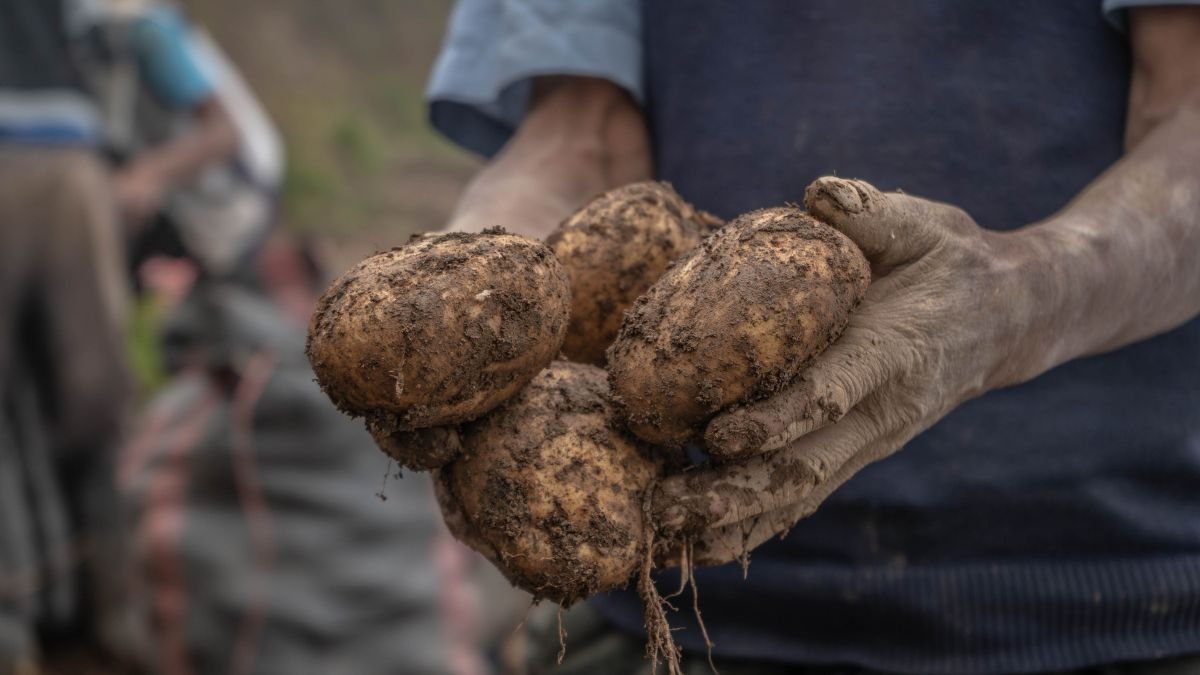
- 4Don’t wash them. Just brush off the excess soil.
How to Store Potatoes After Harvest
First, cure your potatoes. Place them in a single layer in a cool, dark place at around 50–60°F with a moderate amount of humidity. Leave them for 1–2 weeks. This hardens the skin and heals any small cuts.
Once cured, store them in a cool, dark place with good airflow, at around 40–50°F. This could be a cellar, garage or closet. Don’t store them in the fridge, as they’ll turn starchy. Don’t store them with apples either, because apples give off a gas that makes potatoes sprout. Check them every few weeks and remove any that are going soft or sprouting. Throw away any that are green or smelly.
Potato Growing FAQs
Can I grow potatoes from potatoes?
Yes! Chop them into pieces, making sure each has at least 1 eye. Let them dry and plant as above. Seed potatoes are a safer option.
Can I grow potatoes in water?
You can grow a sprout, but it won’t produce a crop. Plant sprouted potatoes in soil.
How deep should I plant potatoes?
Plant your seed pieces 3–4" deep. Add soil as they grow by hilling.
How long do potatoes take to grow?
Around 70–135 days, depending on the variety.
Can I grow potatoes indoors?
Yes! Use a bucket or grow bag near a very bright window or under a grow light. You’ll get a smaller harvest.
What’s the best container to grow potatoes in?
A fabric grow bag or a 5–10 gallon bucket with drainage holes.
Can I plant potatoes in the fall?
If you live in a warm area with no harsh frosts, then yes. If you live in a colder area, spring is best.
Top Tips for Growing Potatoes
Use healthy seed potatoes, plant at the right time for your zone, keep the soil loose, hill as they grow and water consistently. If you’re new to gardening, our beginner gardening tips will help. Our vegetable garden layout guide will help you plan the spacing of your rows and the plants around them.