
How to Grow Strawberries in Pots: A Beginner’s Guide
Grow, care for and pick fresh strawberries, even in a small outdoor space.
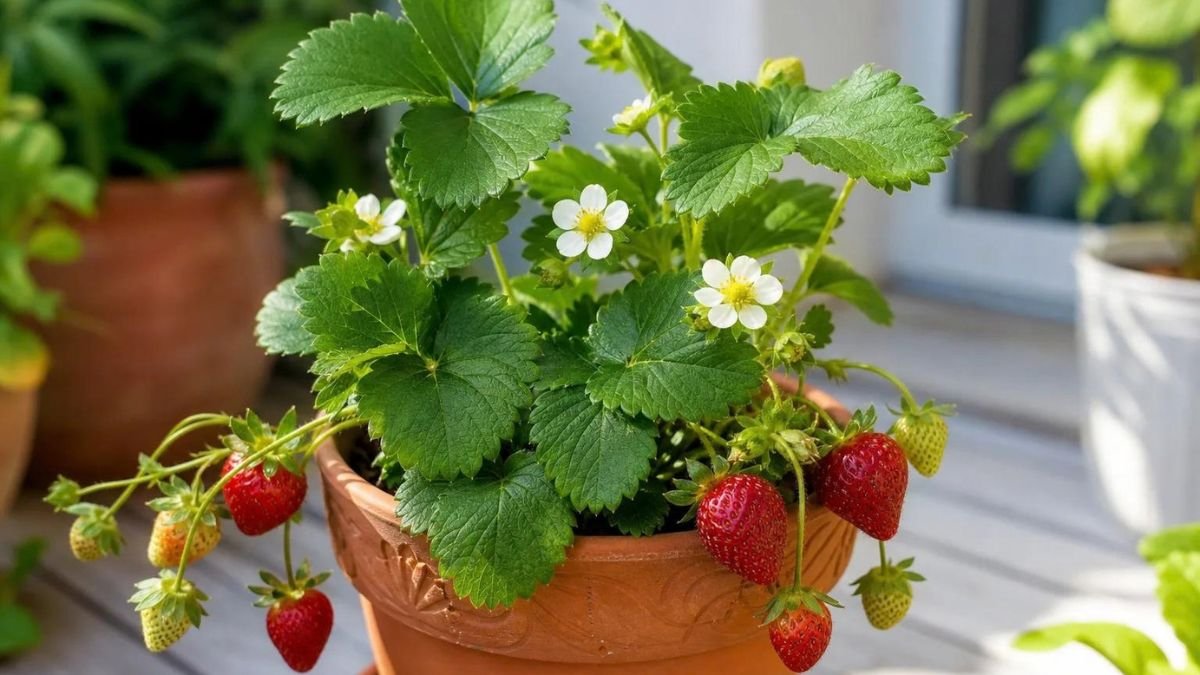
A sunny balcony, patio or doorstep is enough to start growing strawberries. A couple of pots can give you fresh fruit without a garden bed.
Their white flowers, glossy leaves and red berries look good in containers. They need regular care, especially when pots dry quickly.
A roomy pot, correct planting depth and regular care give them a good start.
Can you grow strawberries in pots?
Yes. Strawberries have shallow roots and grow well in containers, including ordinary flowerpots, hanging baskets and window boxes.
Keeping pots nearby makes weeding and moisture checks easy.
Keep the mix moist, with good drainage. Roots need air as well as water.
1. Choose the best varieties of strawberries
Choose a variety suited to your climate and preferred harvest pattern.
The three main types have different cropping patterns:
June-bearing strawberries give you one main crop in late spring or early summer, depending on your climate. Everbearing strawberries usually crop in early summer and again later in the season. Day-neutral strawberries can keep producing through the growing season while temperatures are suitable.
Day-neutral or compact everbearing plants are useful choices for a first container crop.
June-bearing varieties suit a bigger harvest for jam. Day-neutral plants let you pick small amounts regularly. Ask a local nursery which varieties grow reliably nearby.
Nursery plants are easier than seeds for beginners. Look for healthy green leaves and well-developed roots.
2. Choose the best pots
Shallow roots still need room, so avoid a tiny pot.
Start with a pot at least 12 inches wide and 8 inches deep. In larger containers, leave about 8 inches between plants, following the variety’s spacing instructions.
Plastic, terracotta, hanging baskets and window boxes can all work.
Plastic holds moisture longer. Terracotta dries faster, so check it more often in warm weather.
Drainage holes are essential: roots left sitting in water are more likely to rot.
Wash reused pots and unblock drainage holes. Use pot feet or a free-draining surface. Empty any saucers after watering, including those used indoors.
3. Choose the best type of soil
Use fertile potting mix that holds moisture but lets excess water drain through.
Garden soil can compact in pots, leaving too little air around the roots.
Peat-free multipurpose potting compost is a practical, ready-to-use option.
Strawberries prefer slightly acidic conditions, with a soil pH of about 5.5 to 6.8.
Add a little well-rotted compost if needed; our guide to what you can compost explains what to use. Check the mix for added fertilizer before feeding.
Moisten dry mix first so it absorbs water evenly. Fill loosely, without packing it down hard; those small air spaces matter for root growth.
4. How to plant strawberries in pots
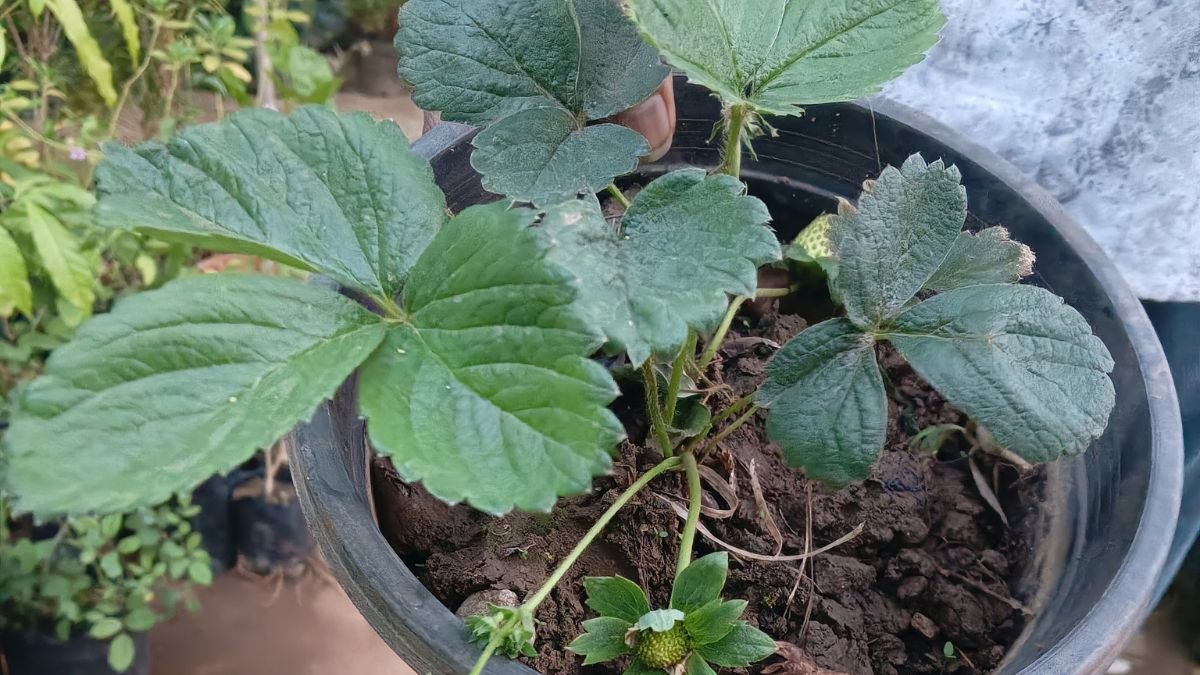
Have your pot, damp potting mix and strawberry plant ready before you begin.
Step 1: Prepare the pot
Clear the drainage holes, then add moistened potting mix. Leave an inch below the rim for watering.
Step 2: Remove the plant
Slide the plant from its nursery pot and gently loosen roots circling the root ball.
Step 3: Position the plant
Make a planting hole. Set the crown, where leaves and roots meet, at the compost surface. Burying it can cause rot.
Step 4: Fill in the compost
Fill around the roots and gently firm the compost. Leave the crown exposed.
Step 5: Water well
Water until it runs from the bottom, then let the pot drain fully.
Step 6: Place in sun
Put the pot in a sunny spot. If the plant was grown indoors, introduce it to outdoor sun gradually.
Once the compost settles, cover any exposed roots without burying the crown.
Check moisture closely for the first week. Slight drooping after repotting should ease; if it persists, check watering and drainage. Let the plant settle without repeatedly moving it or adding unnecessary fertilizer.
5. How much sunlight do strawberries need?
Aim for at least six hours of direct sunlight daily to support flowers and fruit.
A sunny balcony, patio or garden corner works well. Shade may give you plenty of leaves but fewer berries.
If the harvest is poor, check how much direct sun reaches the leaves.
In very hot climates, afternoon shade can protect plants from excessive heat.
If needed, move the pot somewhere with morning sun and afternoon protection.
Turn pots occasionally if walls or railings shade one side. During heatwaves, check for wilting and overheated containers; plants may need more afternoon protection.
6. How often should I water my strawberries?
Water when the potting mix starts to dry, aiming to keep it evenly moist.
Containers dry out faster than garden beds, especially in hot or windy weather.
Push a finger about an inch into the mix to check below the surface.
If it feels dry there, water. If it’s still damp, wait and check again later.
Small pots may need daily summer watering; larger pots dry more slowly. Water the mix until it drains, avoiding the crown and fruit where possible.
Morning is a useful time to water because any splashed leaves or berries can dry during the day.
Don’t leave pots in standing water or let roots dry completely. Uneven watering can affect flowering and developing fruit.
A light pot or compost pulling from the sides can signal dryness. Water slowly in stages. Clean straw beneath berries reduces splashing, but keep it clear of the crown.
7. How do I fertilize potted strawberries?
Potted plants have limited nutrients and may need feeding during active growth.
Too much nitrogen-rich fertilizer can produce leafy growth at the expense of fruit.
Check for feed already in the compost and how long it should last.
When flower buds appear, a suitable high-potassium liquid feed can support flowering and fruiting.
The Royal Horticultural Society recommends feeding container strawberries every two weeks during the growing season.
Use the dilution and feeding frequency on your product’s label, since fertilizers vary.
Making the solution stronger won’t make up for missed feeds.
If leaves are lush but berries are scarce, check fertilizer type and sunlight before feeding again. Healthy roots and consistent watering matter too.
8. Should I remove strawberry runners?
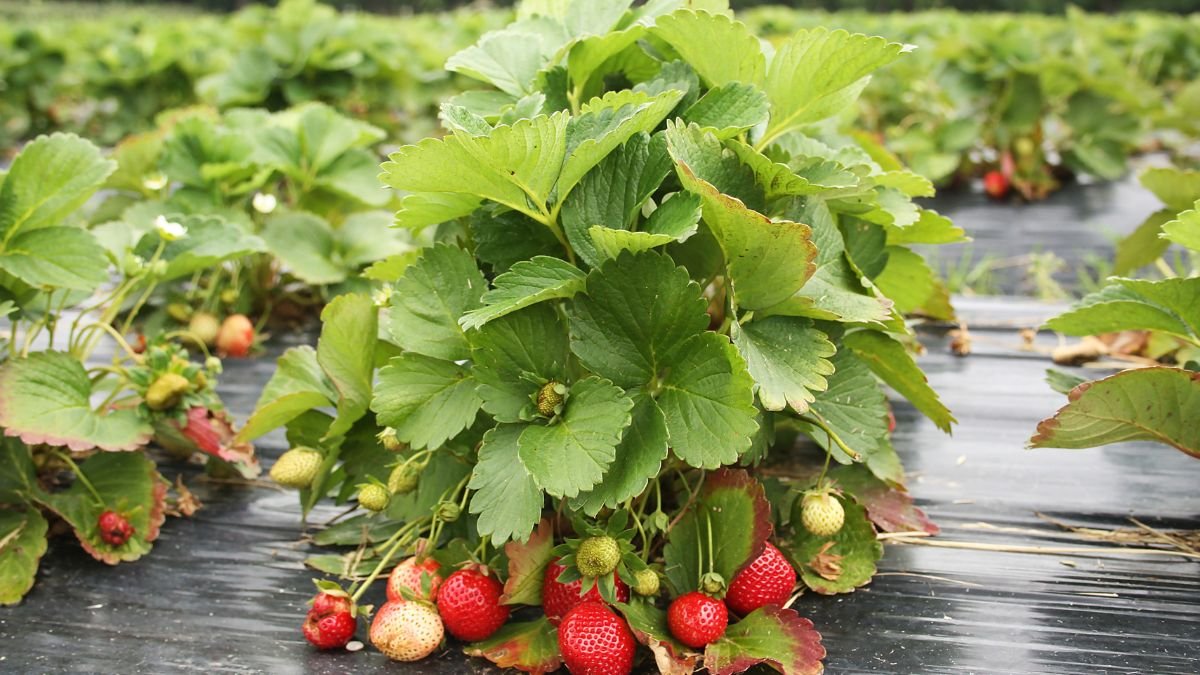
Those long stems stretching away from a strawberry plant are called runners.
They carry small plantlets that can root and grow into separate plants.
In a small pot, remove unwanted runners before they crowd the main plant.
Snip them with clean scissors rather than pulling them off.
Growing runners takes energy. Removing most of them during summer lets the plant put more into its flowers and fruit.
To grow more plants, pin a few healthy runner plantlets onto moist compost in small pots. Keep them attached and watered until rooted, then cut the connecting stems.
9. What are the common problems with growing strawberries in pots?
Changes in leaves or fruit can point to a problem with growing conditions.
Use these signs to decide what to check first:
Yellow leaves
Both overwatering and underwatering can cause yellowing. Feel the compost before changing your routine.
Poor drainage and nutrient problems are other possibilities. Older leaves also yellow naturally.
Check that water drains freely before assuming the plant needs fertilizer.
Flowers but no fruit
Poor pollination, frost-damaged flowers or unsuitable conditions can limit fruit. Most strawberries are self-fertile, but bees help move pollen around flowers.
Small strawberries
Some varieties naturally have small berries. Otherwise, check for uneven watering, overcrowding or poor pollination.
Rotting strawberries
Damp conditions encourage grey mould. Remove affected berries and give leaves and fruit room for air to circulate.
Aphids and other pests
Check beneath the leaves for aphids while you water. If you find them, our guide to how to get rid of aphids on plants explains ways to deal with them.
Check weekly, remove fallen berries and keep foliage uncrowded. If several symptoms appear together, review watering, drainage and recent weather before assuming pests are responsible.
10. When and how should I harvest my strawberries?
Let the berries ripen on the plant for the best flavour.
For most red varieties, wait until the whole berry is red. Strawberries gain little sweetness after picking.
Pinch or snip the stem just above the fruit. Pulling the berry can damage it or tug at the plant.
Check plants frequently once the first berries ripen.
Pick ripe fruit promptly so pests and rot have less chance to spoil it.
Eat berries soon or refrigerate them unwashed. Rinse just before eating, leaving the green caps on until then to help preserve their quality.
11. How do I care for strawberry plants in winter?
Strawberries are perennials. With suitable care and winter protection, the same plants can return for several years.
Roots in pots have less protection from freezing temperatures than roots in the ground.
In colder regions, shelter the pots and insulate them against hard freezes. Our guide to how to protect plants from frost explains protective covers and wraps.
Dormant plants need less water, but check occasionally so the roots don’t dry out completely.
Keep drainage holes clear through winter, particularly during wet weather.
A heated room isn’t a suitable winter resting place for dormant plants.
In mild climates, pots may stay outdoors with little extra protection.
Replace older plants every few years if their harvests have declined.
Wrapping pots helps buffer temperature changes around roots, though insulation alone may not protect them in severe winters. Don’t let pots stand in pooled rainwater. Wait for spring growth before judging dormant plants. For other seasonal jobs, see our simple fall checklist to winterize your garden.
12. Can I grow strawberries inside?
Yes, although getting a worthwhile crop indoors takes more attention.
Light is the main difficulty. A windowsill may need a grow light for reliable flowering and fruiting.
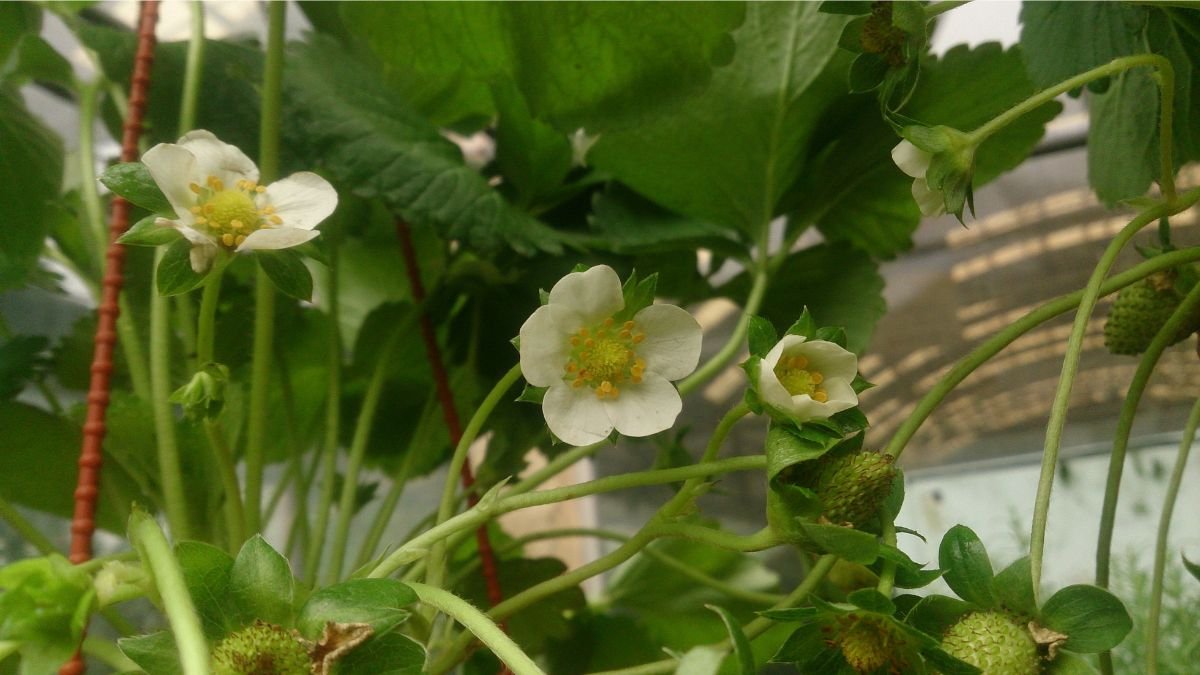
Without visiting insects, gently brush pollen around each open flower and between flowers with a soft brush.
Choose a compact or day-neutral variety and give it your brightest suitable spot.
For your first attempt, a sunny outdoor spot is usually easier to manage.
13. Growing strawberries from seeds vs plants
You can use seeds or nursery plants, depending on your patience and budget.
Seeds generally cost less upfront. They take patience to germinate and grow into established plants.
Check the packet for special germination requirements. Our guide to how to start seeds indoors covers trays, seed mix and light.
Nursery plants give more predictable results, though variety and climate still affect harvest timing.
Some day-neutral and everbearing plants can produce berries in their first year.
If you’re new to fruit gardening, healthy young plants make the first season simpler.
FAQs
How many strawberry plants can grow in one pot?
One or two plants are a manageable start in a 12-inch pot. Compact varieties may fit more, but follow the spacing on the plant label.
What is the best month to plant strawberries in a pot?
There isn’t one best month everywhere. Spring is common in cold climates; check local planting advice for your region and variety.
Do strawberries grow back every year in a pot?
Yes, they can return for several years if the roots stay healthy and get the winter protection your climate requires.
Can strawberries grow in hanging baskets?
Yes. Hanging baskets save space, but their compost dries quickly, so check moisture regularly.
How long does it take to grow strawberries in a pot?
It depends on the variety, growing conditions and whether you start with seeds or plants. Some nursery plants fruit within a few months.
Why aren't my potted strawberries producing fruit?
Check sunlight, pollination, fertilizer use and any recent frost. Young plants may simply need more time to establish before they crop.
Final thoughts
A couple of plants are enough to get started with growing strawberries in pots.
Choose a container with drainage holes, good potting compost and a sunny position.
Keep watering consistent, leave room between plants and follow the feeding instructions.
A small first harvest is still useful: notice how your plants respond to the light, weather and care.
When you’re ready for another project, explore our easy fruit trees to grow at home, or find more practical advice in our gardening tips for beginners.