
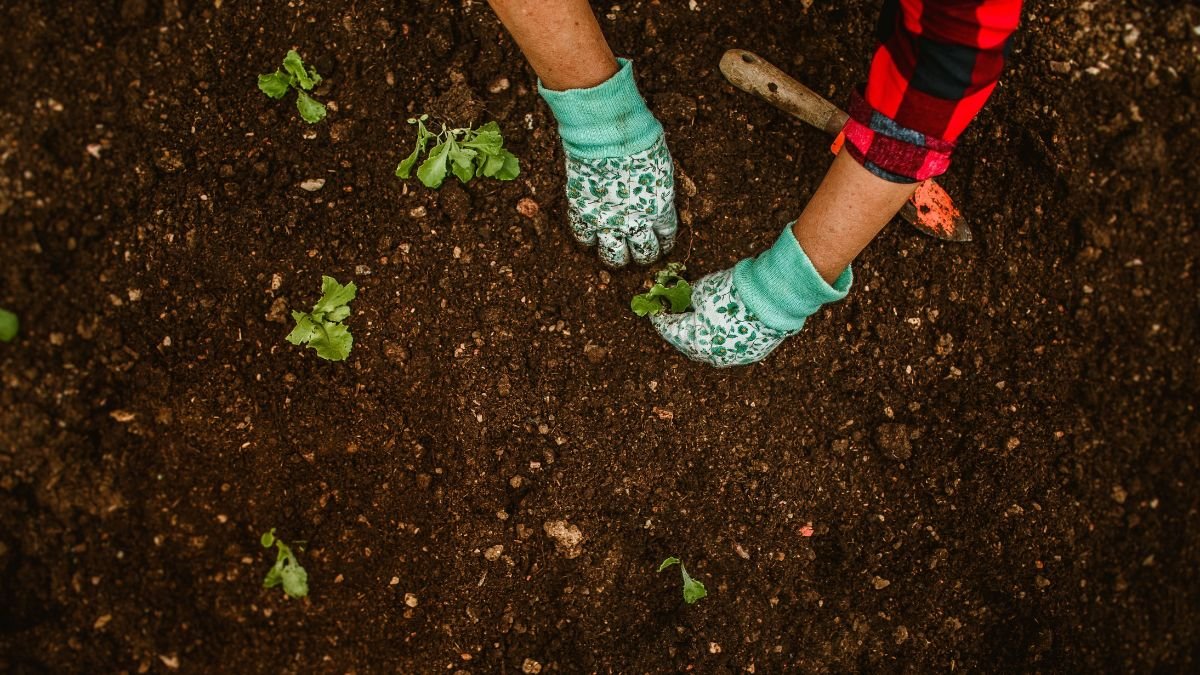
Learn how to amend clay soil with compost, better drainage and a few simple tests, so heavy, sticky ground turns into healthy garden beds.
Clay soil vexes many a gardener. It clings to spades like glue after a rain and then turns to cracked dust in a summer drought. It holds water like a sponge, suffocating plant roots. The frustrated gardener buys a bag of sand and a shelf of amendments. Most remedies prove largely ineffective, a few make the situation far worse.
The good news is that clay is rich in nutrients and holds on to them more tightly than light sandy soils. Clay needs only a little help to make a vast difference in its ability to support plants.
This guide covers how to amend clay soil in detail. We’ll walk through checking your soil, what to add to clay soil and what to avoid amending clay soil. We’ll also discuss how to improve drainage for vegetables, flowers and lawns.
To amend clay soil, incorporate 2-3″ of compost into the top 8″ of soil and add a fresh layer of compost each year. Avoid sand, avoid working with wet soil, and allow two or three seasons of improvements before judging the results.
How to Tell If You Have Clay Soil
Test the soil before buying any bags of amendments. These two simple tests take only a few minutes.
Squeeze test
Take a small amount of moist (not wet) soil and form a ball. Break it apart with your fingers. If it is clay soil, it will hold together in a ball. Clay soil also holds a ribbon of soil when you run your thumb and forefinger together. Sandy soil breaks up into small granules, while loamy soil holds a loose ball that crumbles when poked. The more the soil clings together, the more it is likely to be clay.
Jar test
Put about a third of soil from your garden in a clear jar. Fill the jar nearly full with water, add a teaspoon of liquid dish detergent, and shake the jar thoroughly. Set the jar down and observe how long it takes for the soil to settle. Sand settles to the bottom within minutes; silt takes a few hours; clay takes days or weeks. If the soil in your jar is mostly clay, you will see a thick band of soil at the bottom of the jar after 48 hours. The more the soil sticks together, the more clay it is.
If you have puddles in your garden that last for days, clods of hard clay when the weather is dry, a spade that comes out of the ground with a layer of sticky clay on it, or plants that refuse to thrive despite your best efforts, you probably have clay soil.
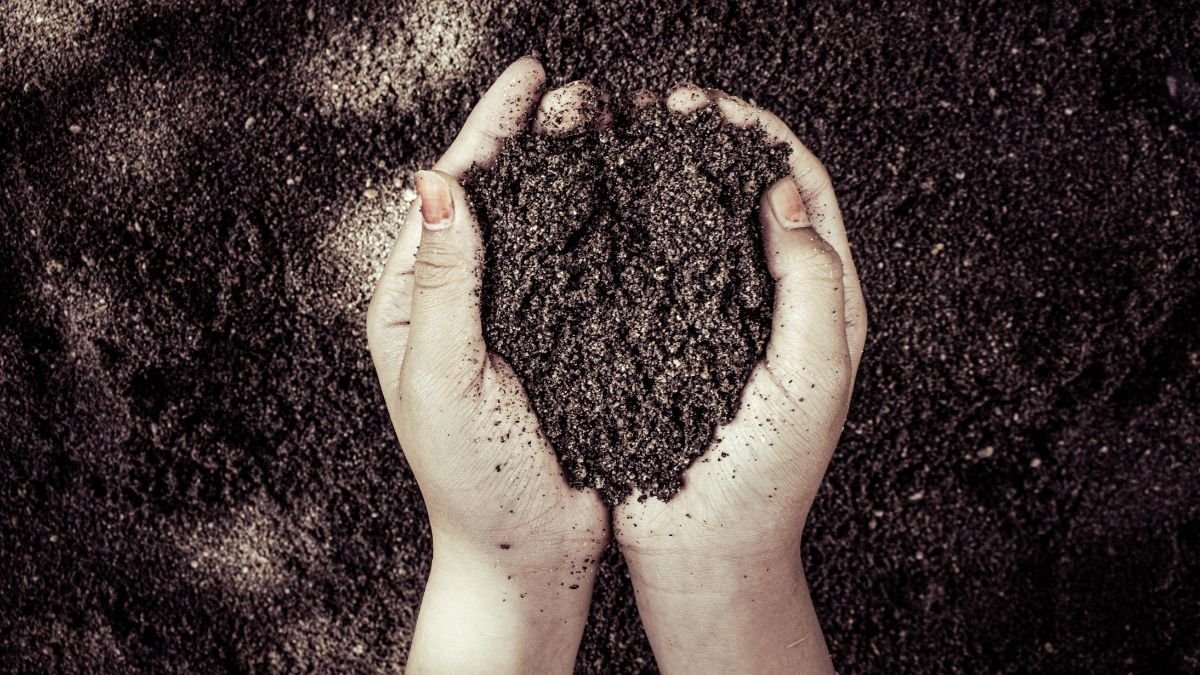
Why Clay Soil Is a Problem
The particles in clay soil are the tightest of any type of soil. This causes only the tiniest spaces to form between the particles. Water and oxygen can barely get through.
Plant roots need both oxygen and water to survive, but clay soil can’t provide a steady supply of either. Plants grow poorly and often develop root rot, a condition that causes the roots to decay and eventually kill the plant. Clay holds water like a sponge, restricting the amount of oxygen that can reach plant roots.
During periods of dry weather, clay soil becomes even more of a problem. The fine particles of clay absorb the last traces of moisture, leaving the soil as hard as a rock during warm weather. Many gardeners find that clay soils stay cold later into the growing season than other types of soil.
Despite its reputation as a “bad” soil, clay has its advantages, too. It holds onto nutrients and provides them to plants’ roots. Once you have improved the structure of clay soil, you may find it produces healthier plants with less fertilizer than other types of soil.
What to Add to Clay Soil
The goal of adding materials to clay soil is to improve its structure. Adding organic matter breaks up the tight clay particles, creating pockets of air and room for water to drain through. Organic matter feeds earthworms and beneficial microbes in the soil, which help to further aerate and improve the consistency of clay soil. Compost is the best choice when it comes to adding organic matter to clay soil.
Whether you are looking for the best compost for clay soil or a budget-friendly alternative, finished compost has proven benefits. The best compost is dark and crumbly and has an earthy scent. Bagged compost works well, or try your hand at making your own compost. If you’re a newbie, our guide to what can be composted shows you what to toss in your compost bin.
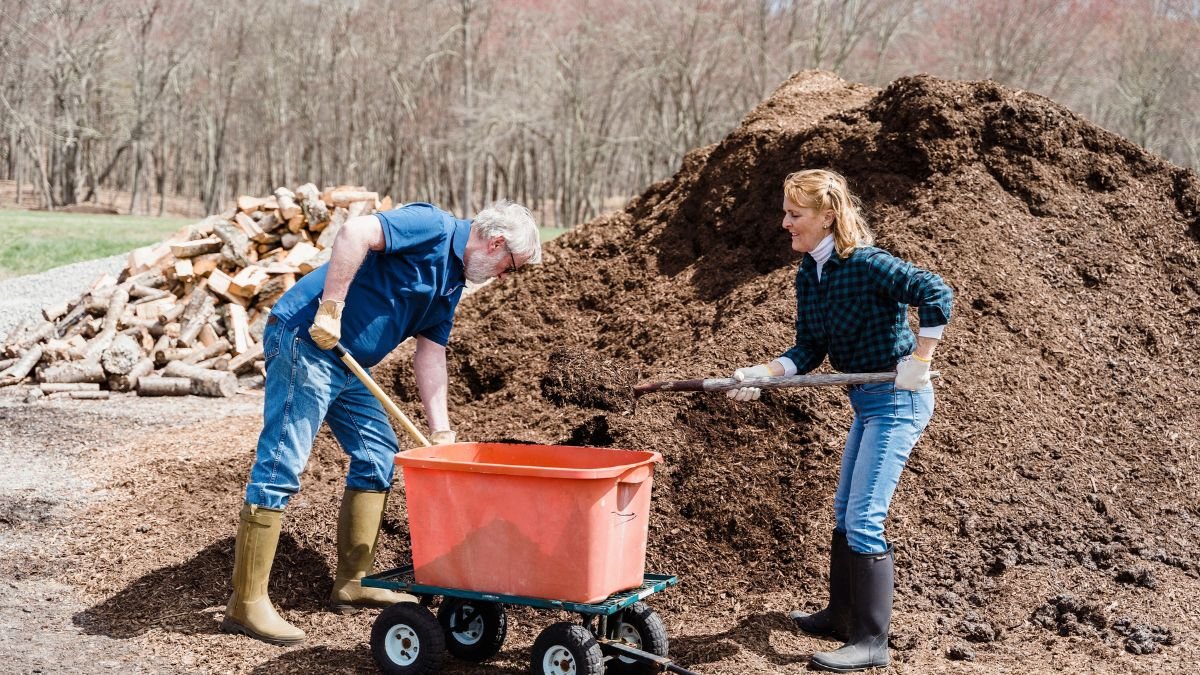
Other great options for adding organic matter include:
Aged manure
Cow, horse, chicken, and other manures can be used in the garden, but it’s important to use aged (not fresh) manure. Fresh manure can burn plant roots and contain weed seeds that will germinate in the garden. Aged manure has lost its potency and will not harm plants or add unwanted weeds to your garden. Chicken manure has the most nutrients but should be used in smaller quantities than other types of manure.
Leaf mold
Leaf mold is decomposed leaves. It makes a wonderful soil amendment and is virtually free. To make leaf mold, simply gather up leaves and shred them (if they aren’t already shredded), then allow the mixture to break down for 1 or 2 years. Leaf mold is fantastic for adding nutrients and improving the texture of clay soil.
Composted bark
You can buy finely ground bark that has been composted and will add bulk to clay soils. Don’t use composted bark as a mulch; instead, work it into the top several inches of the soil to help improve the structure of the clay. Avoid using fresh wood chips, sawdust, or shavings because they rob the soil of nitrogen while decomposing.
If you’re starting with a new bed, apply 2-3″ of compost to the bed and work it into the top 8″. If you’re improving an existing bed, apply 1-2″ of compost and work it into the top 2-3″ of soil each year.
What to Skip: Sand and Peat Moss
Many resources recommend sand for clay soil, but you should skip it. While a small amount of sand can be mixed into clay soil, the resulting consistency is more like concrete than soil. You would need to add a large amount of sand in order to improve the texture of the soil, and that would be prohibitively expensive.
Peat moss is another common recommendation for improving clay soil, but it is not the best option. Peat moss is significantly more expensive than compost and doesn’t provide as many benefits. Peat moss is highly acidic and shouldn’t be used in most gardens. It also has the potential to repel water, which could lead to water runoff, especially if you’re only addressing a small area.
While aeration is important, rototilling is too harsh on clay soil.
Does Gypsum Help Clay Soil?
Gypsum for clay soil is one of the most searched queries, so we thought we’d address it directly. Gypsum is calcium sulfate. It helps to break up one particular type of clay: clay with high concentrations of salt. Salt-laden clay is often found in the American West and around roads where salt is used to treat icy roads.
Research from several land grant universities has shown little benefit in the use of gypsum to amend clay soil, unless there has been a soil test that indicates high concentrations of salt. If the salt level is high, follow the instructions on the package for the amount of gypsum to use per square foot.
Some people ask about the difference between lime and gypsum. The short answer is that neither is a complete soil amendment, but each has a specific purpose. The addition of lime to soil raises the soil’s pH. Always test the pH of the soil before adding lime; lime is only necessary if the soil is acidic.
How to Amend Clay Soil Step by Step
Here’s how to turn a heavy clay bed into a garden fit for growing.
Time to amend
The best time to amend clay soil is in the fall, when the ground has frozen and thawed, breaking up the heavy clods. Early spring is the second best time to amend heavy clay soil. It’s a good idea to test the soil’s moisture level before beginning. Squeeze a handful of soil in your hand, then poke it with your finger. It should crumble; if it doesn’t, allow the soil to dry out a little more before you begin. Working with wet clay results in large clods that refuse to break up.
Clear the bed
Remove any existing weeds, rocks, and roots. Be sure to remove any perennial weeds as their roots will continue to grow through the fresh compost.
Apply the compost
Spread 2-3″ of finished compost over the bed.
Break up the clods
Using a garden fork, loosen the top 8-10″ of soil. Work in the compost amendments as you go, taking care not to destroy the soil structure. This technique breaks up the clods and aerates the soil, without destroying the consistency of the soil.
Smooth and settle
Rake the soil to smooth it, and water it to allow it to settle.
Mulch
Cover the bed with a layer of 2″ of shredded leaves or wood chips to mulch the bed and add nutrients. The mulch will also help prevent the pounding of raindrops from compacting the soil.
Avoid walking on the bed
If you do, you will compact the soil again, creating the same problem. Make beds narrow enough to reach across, or make paths of wood chips or boards on the bed.
Amending the soil in a hole
If you amend only the hole where you’re going to plant, you will create a bowl that will hold water. Amend the entire bed, or at least a wide band around the planting hole.
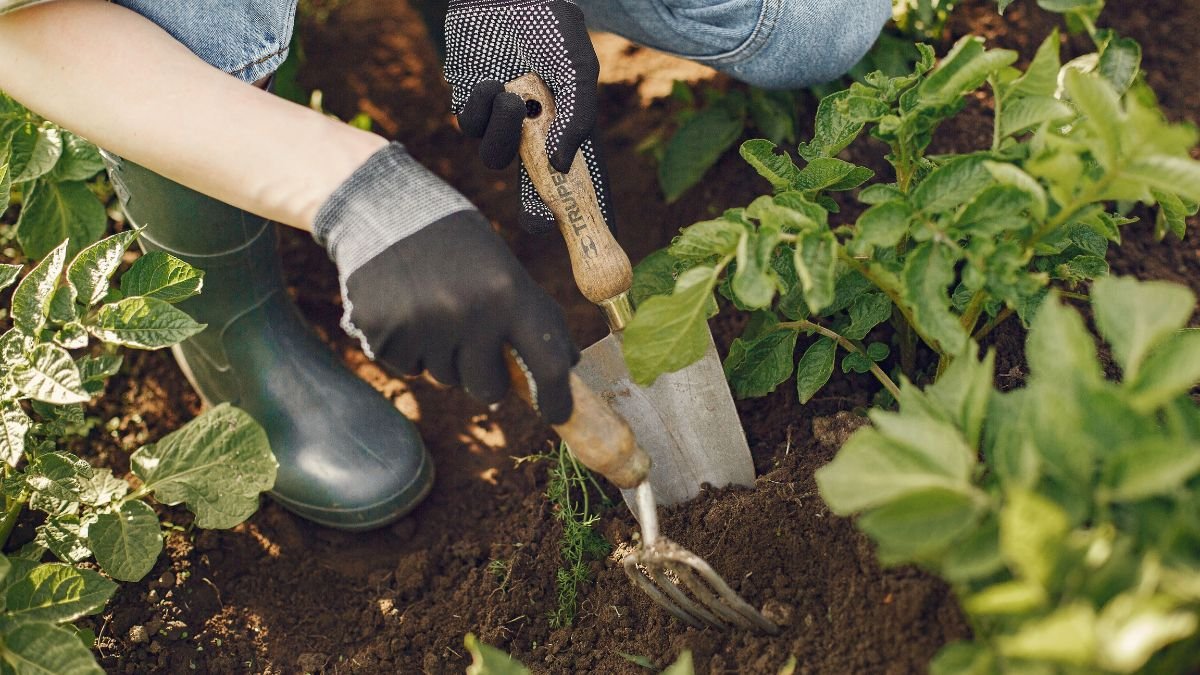
How to Amend Clay Soil Without Tilling
Tilling destroys the root systems of nearby plants, so it’s a bad idea in established lawns, shrub beds, or perennial gardens. Another good reason to avoid tilling is that the process only lasts a few minutes, after which the soil settles into hard clods. This is especially true for heavy clay soil.
To amend clay soil without tilling, apply 1-2″ of compost in the fall and spring. Water the compost into the soil, and it will gradually work its way into the clay. Mulch the surface of the soil with 2-3″ of mulch to protect the soil.
If you’re starting a new bed on top of lawn or weeds, try using sheet mulching. Lay a sheet of cardboard on the ground, then soak it and cover it with 4-6″ of compost and mulch. In one year, the cardboard will be broken down by worms, and the weeds will be dead. You can plant directly into this mixture.
If you have clay soil underneath a lawn, rent a core aerator and use it to remove small plugs of sod. You can spread a thin layer (about ¼” to ½”) of compost on the grass and rake it into the plugs. The best time to do this is in the fall. The same time of year is a good time to overseed a lawn, a process we describe in more detail in our guide to overseeding.
How to Improve Clay Soil Drainage
Improving clay soil drainage is one of the biggest challenges facing most gardeners, so test your drainage before doing anything else. Dig a hole 12″ deep and fill it with water. After the water has drained, fill the hole a second time. After the second filling, the water should drain at the rate of about 1″ per hour. If the water has not disappeared after 24 hours, your drainage needs improvement.
The following items will help to improve the drainage in clay soil:
Build beds
Raised beds are the best solution, and they only need to be 10-12″ high. Fill them with a mixture of good topsoil and compost, and don’t fill them with clay from the bottom of the hole.
Create mounds
Mounding the soil when planting shrubs and trees keeps the roots above the spongy, poorly draining soil.
Use cover crops
Cover crops such as crimson clover, winter rye, and daikon radish have deep roots that will break up the compacted soil, creating passageways for water. Cut them down before they flower and leave the residue on the bed.
Deal with low spots
If there’s a depression in the ground that holds water, you need to address it. It might help to slope the ground slightly so the water runs away from the house and the plants, or you could install a ditch or a French drain.
Avoid walking on wet soil
Compacted soil will be far more difficult to work with than loose, turned soil.
Tips for Vegetables, Flowers and Lawns
Clay soil for vegetables
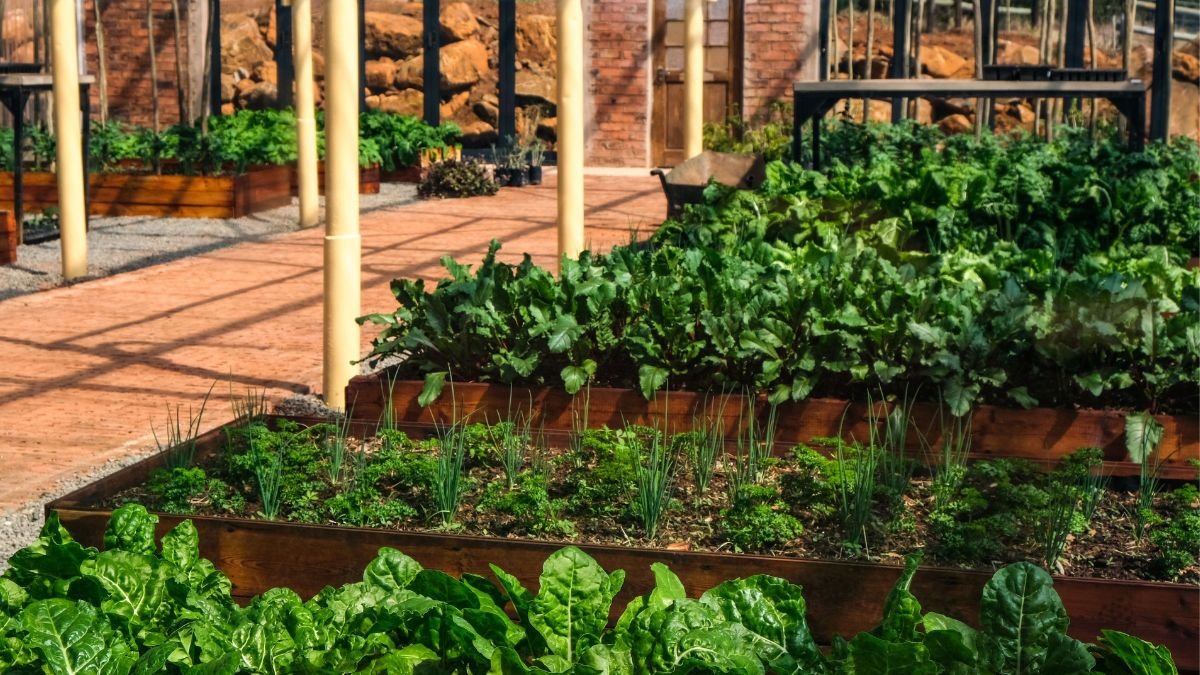
Raised and wide beds are the best option for growing vegetables in clay soil. Add compost before you plant each year. Broccoli, cabbage, kale, beans, and peas are all good choices for clay soil, but carrots tend to be more challenging to grow in this type of soil. Choose short, stubby carrots such as Chantenay and avoid trying to grow carrots in heavy clay. Our vegetable garden layout and spacing guide can help you plan your beds when the soil is ready to be planted.
Clay soil for flowers
Most perennials and annuals such as daylilies, coneflowers, asters, and black-eyed Susans tolerate clay soil, but roses require rich, heavily amended soil in order to thrive. Most bulbs can’t tolerate soggy clay soil, so plant them in well-draining areas and follow our guide to planting tulip bulbs, which includes detailed instructions.
Lavender requires excellent drainage, so it should be planted on a mound of soil that has been amended with a little gravel.
Clay soil for lawns
Core aerate once a year, top dress with a little compost, and overseed in the fall. With a little time and effort, your lawn will develop deep roots and be far more drought-resistant and tolerant of heavy rains.
Common Mistakes to Avoid
Most mistakes in working with clay soil stem from a few common causes.
Working wet soil
This is the cardinal rule of working with clay soil. Always wait until the soil is crumbly.
Adding sand
This will produce a sandy-clay mixture that is even harder to work with.
Amending only the planting hole
Water will collect in the planting hole and drown the plant’s roots.
Overusing a tiller
This breaks up the soil structure and makes it far more difficult to work with in the future. Use a tiller only when necessary.
Using fresh manure
Fresh manure burns plant roots and can contain weed seeds that germinate in the garden.
Looking for miracles
It takes two or three seasons of adding compost for clay soil to truly improve.
Final Thoughts
Learning how to amend clay soil takes time and patience, but the process itself is simple. Check the soil, add compost every year, protect the soil from compaction, and keep it mulched. Avoid adding sand to clay soil, and use gypsum only if a soil test indicates a problem.
Try amending one bed this fall and see what happens. By next spring, you should see the soil breaking up more easily and holding water for a shorter period of time. Earthworms will appear, and in just a few years, you’ll be able to grow a thriving vegetable garden in the same place where you had difficulty growing a single tomato plant.