
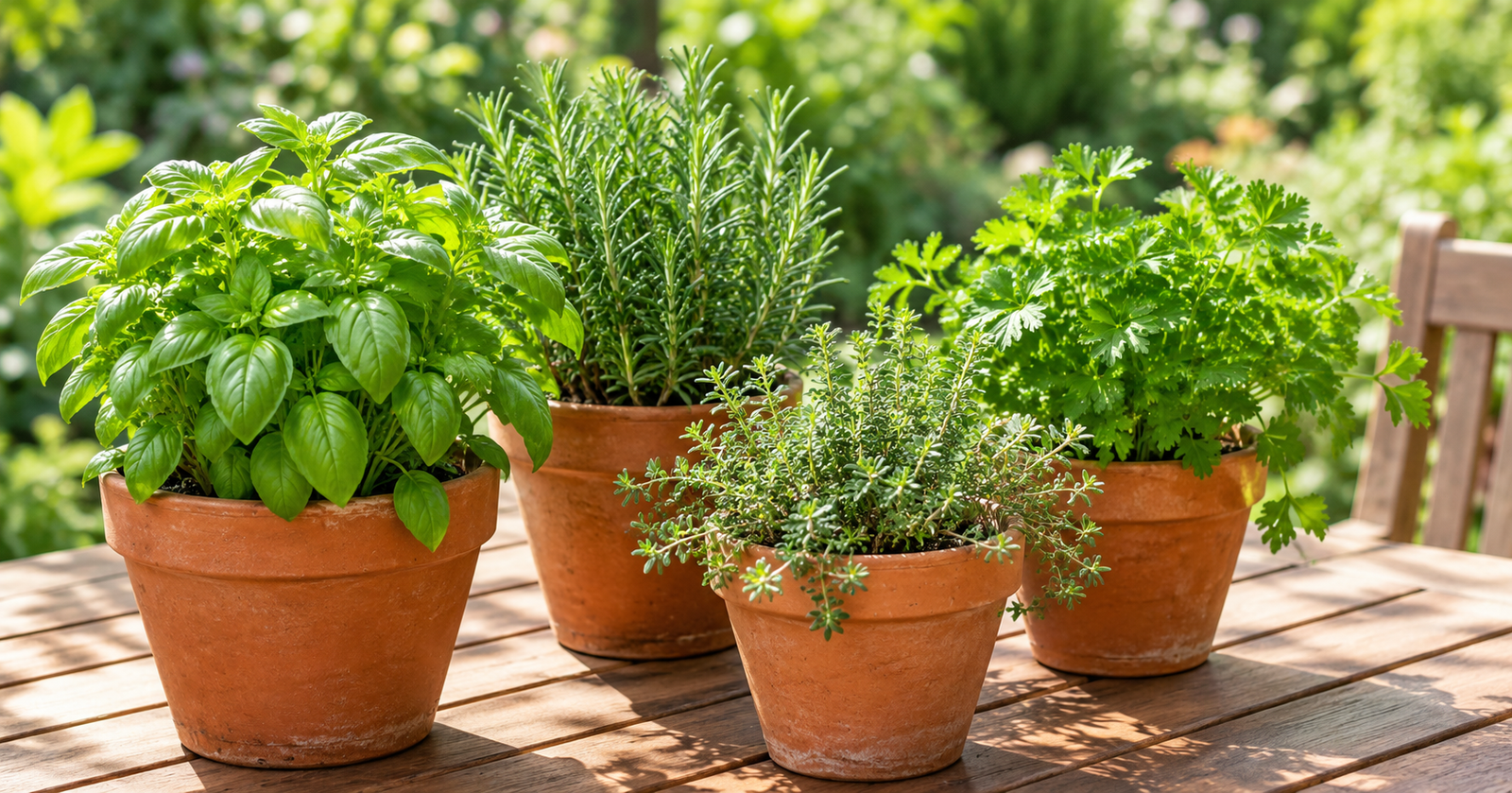
Growing Herbs in Containers: A Beginner’s Guide to Soil, Sunlight & Watering
Which herbs to pick, which pots and soil to use, how to plant them, and how to water and harvest so your herbs keep coming back.
What’s in this guide
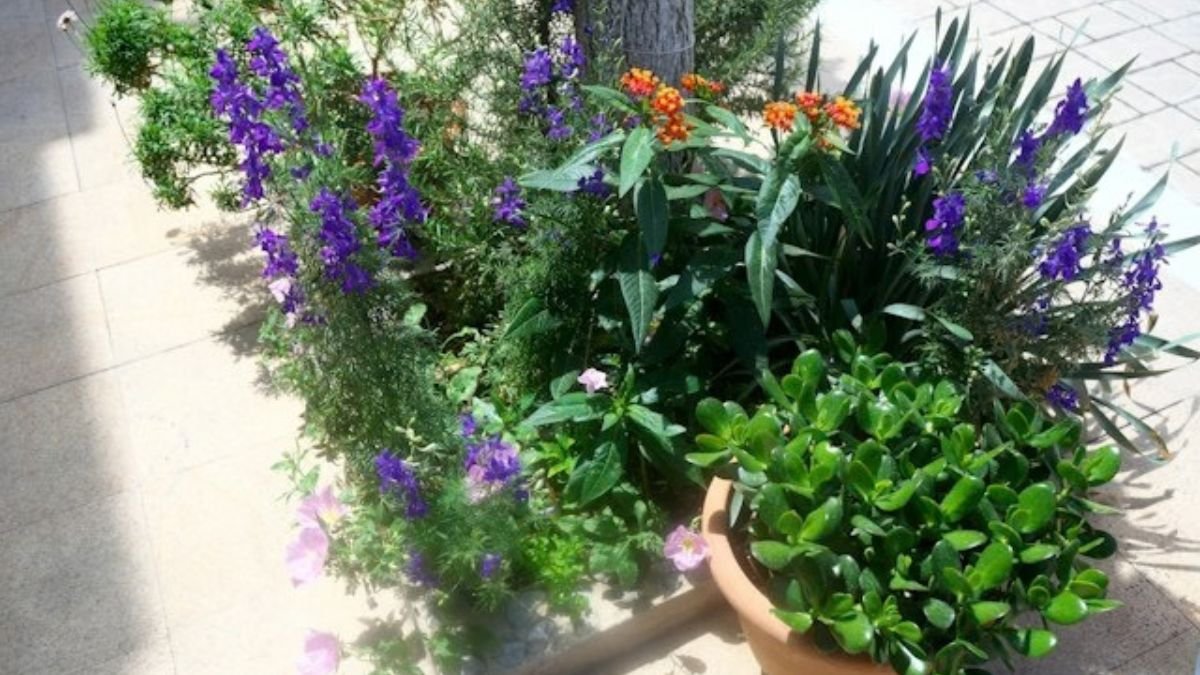
You don’t need a garden bed to grow your own herbs. A few pots on a patio, balcony, doorstep or sunny step can give you fresh leaves for cooking, salads and tea for most of the year. Containers also give you control: you choose the soil, you can move the pots to follow the sun, and you can stop fast spreaders like mint from taking over.
The catch is that pots behave differently from garden soil. They dry out faster, roots have limited room, and a pot with no drainage can drown a plant in a few days. This guide covers those details in the order you will need them: which herbs to choose, which pot and soil to use, how to plant, which herbs can share a pot, and how to water and harvest.
Answer these 3 questions before you buy anything
- How much direct sun does my spot get? Watch the spot for a day and count the hours of direct sun. Six or more is ideal. Four to six is enough for some herbs.
- How often will I remember to water? If you travel or forget, choose rosemary, thyme and oregano, which prefer to dry out between waterings.
- What do I actually cook with? Grow the herbs you will use every week. A pot of basil you use beats a pot of sage you ignore.
Why Growing Herbs in Containers Works So Well
- It fits small spaces. A balcony, a patio table or a doorstep is enough.
- You control the soil. Garden soil can be heavy, poor or full of weeds. A bag of potting mix gives every herb a clean start.
- You can move the pots. Follow the sun in spring, shade the pots in a heatwave, or bring tender herbs inside before frost.
- Spreaders stay contained. Mint and oregano can take over a bed. In a pot they behave.
- Harvest is easy. Pots close to the kitchen door mean fresh herbs are a few steps away.
Best Herbs to Grow in Containers
The secret to success is to sort herbs by how thirsty they are, not by how they look. Some herbs come from dry, sunny hillsides and dislike wet roots. Others grow lush and leafy and need steady moisture. Put the wrong herbs together, or water them the same way, and one of them will struggle. The table below covers nine easy herbs, and the two groups are explained after it.
| Herb | Group | Sun | Minimum Pot Size (One Plant) | Water When | Good to Know |
|---|---|---|---|---|---|
| Basil | Moisture-loving | 6–8 hours | 10 in (25 cm) | Top inch is dry | Damaged by frost. Pinch off flower buds. |
| Parsley | Moisture-loving | 4–6 hours | 10 in (25 cm), deep pot | Top inch is dry | Slow to sprout from seed. |
| Cilantro | Moisture-loving | 4–6 hours | 10 in (25 cm), deep pot | Top inch is dry | Goes to seed in heat. Sow again every 3–4 weeks. |
| Chives | Moisture-loving | 4–6 hours | 8 in (20 cm) | Top inch is dry | Regrows after cutting. |
| Mint | Moisture-loving | 4–6 hours | 12 in (30 cm) | Keep evenly moist | Spreads fast. Grow it alone. |
| Rosemary | Mediterranean | 6–8 hours | 12 in (30 cm) | Top 2 in (5 cm) is dry | Hates soggy soil. |
| Thyme | Mediterranean | 6–8 hours | 8 in (20 cm) | Top 1–2 in (2.5–5 cm) is dry | Low and spreading, good at pot edges. |
| Oregano | Mediterranean | 6–8 hours | 8–10 in (20–25 cm) | Top 1–2 in (2.5–5 cm) is dry | Trim often to keep it bushy. |
| Sage | Mediterranean | 6–8 hours | 12 in (30 cm) | Top 2 in (5 cm) is dry | Gets woody with age. |
Sizes are minimums for a single plant. Sun and water needs vary with climate, so use these as a starting point.
🌿 Group 1: Mediterranean herbs
Rosemary, thyme, oregano, sageThese herbs come from dry, sunny, rocky regions. They grow best with lots of sun, gritty soil that drains fast, and a dry spell between waterings. Too much water is what kills them most often.
- Pot: terracotta works well because it dries quickly
- Soil: potting mix with extra perlite or coarse sand
- Sun: 6–8 hours
- Water: when the top 1–2 inches (2.5–5 cm) of soil are dry
Watch for: soggy soil and yellowing leaves.
🌿 Group 2: Moisture-loving herbs
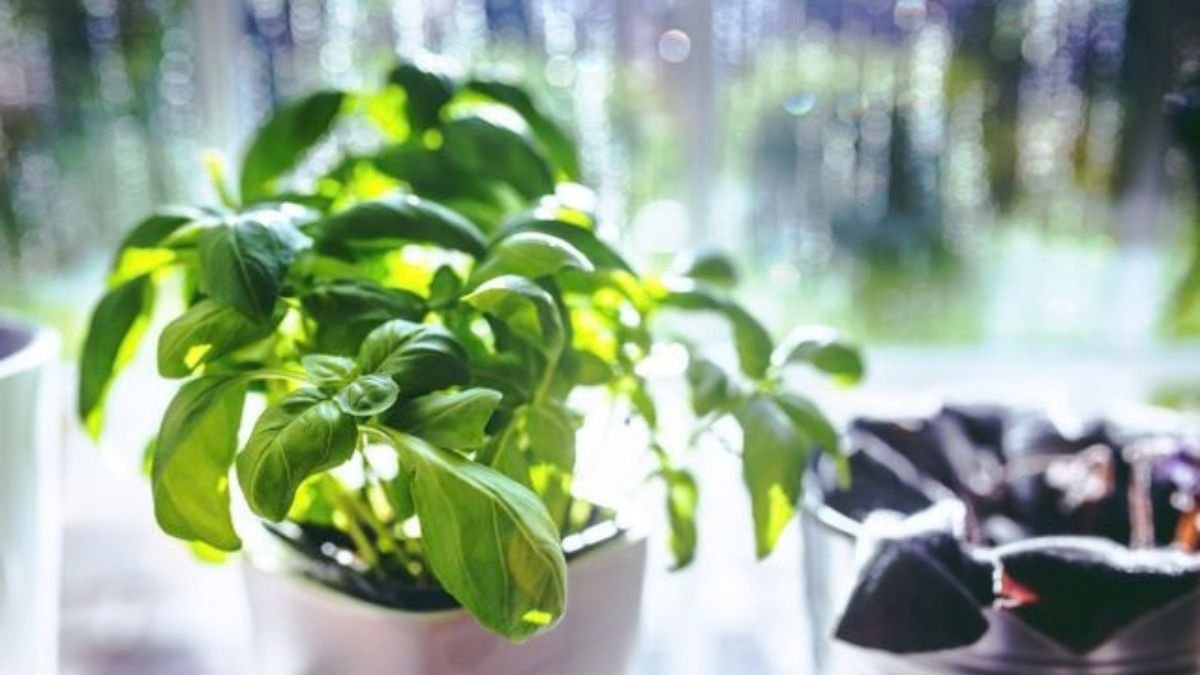
Basil, parsley, cilantro, chives, mintThese herbs grow soft, leafy stems and use water quickly. They do best in richer soil that stays lightly moist but never soggy, and most of them cope with a little less sun.
- Pot: plastic or glazed pots hold moisture longer
- Soil: potting mix with a little compost mixed in
- Sun: 4–6 hours (basil prefers 6–8)
- Water: when the top inch (2.5 cm) of soil is dry
Watch for: wilting in heat and early flowering.
Best Pots for Herbs
The most important feature of any herb pot is drainage holes. Without them, extra water collects at the bottom, roots run out of air, and they begin to rot. Size and material matter too, but drainage comes first.
Pot materials compared
- Terracotta (clay): porous, so it lets soil dry faster. It is ideal for rosemary, thyme and oregano. In hot weather it may need watering daily.
- Plastic: lightweight, cheap and slower to dry out. A good choice for basil, parsley and mint.
- Glazed ceramic: holds moisture like plastic and looks good, but it is heavy. Check that it has a drainage hole.
- Fabric grow bags: excellent drainage and airflow, but they dry out quickly and need frequent watering.
- Wooden planters: good for mixed herb boxes. Choose untreated or rot-resistant wood and make sure there are drainage holes.
What size pot do herbs need?
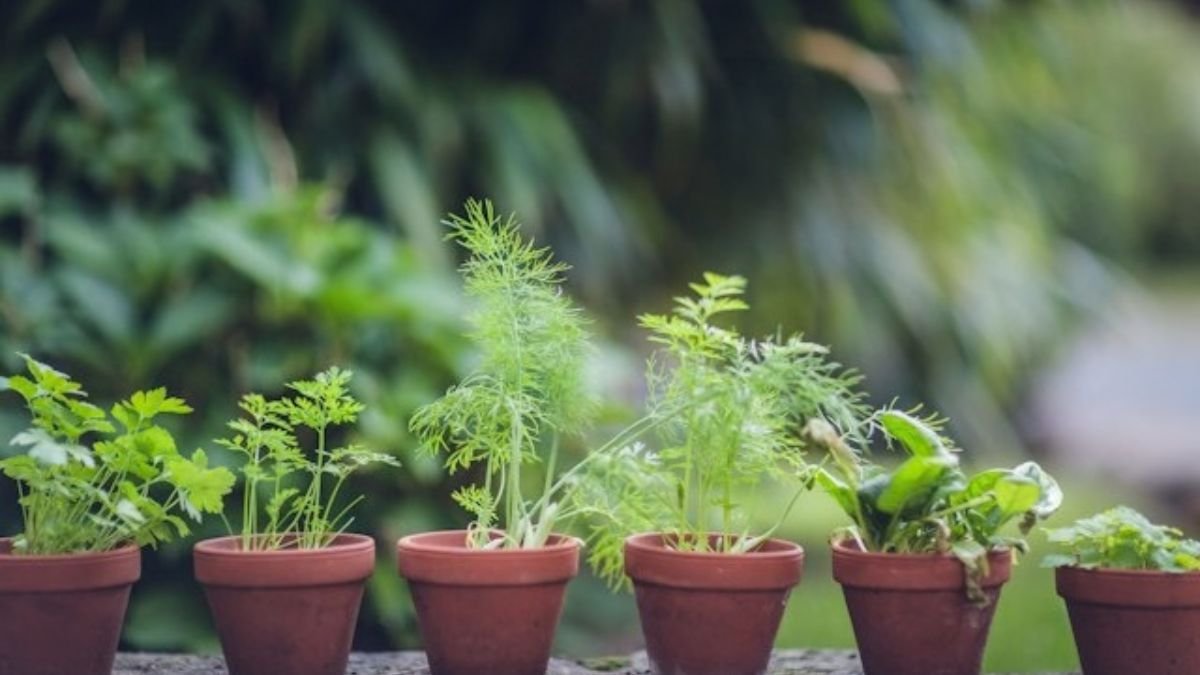
Most single herbs grow well in a pot that is 8–12 inches (20–30 cm) wide. Deep-rooted herbs such as parsley and cilantro do better in a pot that is at least 10 inches (25 cm) deep. If you want to plant several herbs together, choose a planter at least 18 inches (45 cm) long or wide.
A bigger pot holds more water and dries more slowly, which helps in hot weather. But a tiny plant in a huge pot can stay wet for too long. When repotting, move up only one size, about 2 inches (5 cm) wider.
Pots without drainage holes
If you love a pot that has no holes, you have two safe options:
- Use it as an outer pot. Plant the herb in a plastic pot with holes, set it inside the decorative pot, and empty any water that collects at the bottom after watering.
- Drill holes. Plastic and wood are easy to drill. Glazed ceramic and terracotta need a masonry or tile bit and a slow, steady hand.
Best Soil for Potted Herbs
Always use fresh potting mix, not soil dug from the garden. Garden soil packs down in a pot, drains badly and can bring weeds and pests with it. Potting mix stays light and airy, so roots get both water and air.
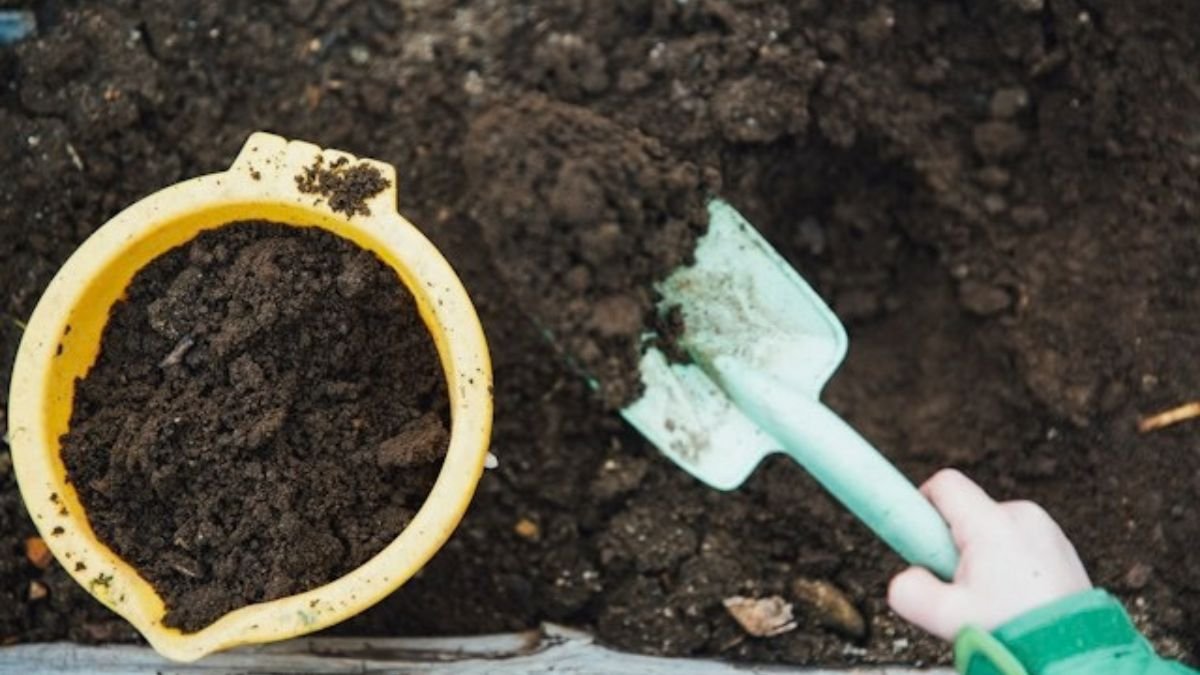
- For moisture-loving herbs (basil, parsley, cilantro, chives, mint): use a good potting mix. You can mix in a little compost, about 1 part compost to 4 parts potting mix, for extra nutrients.
- For Mediterranean herbs (rosemary, thyme, oregano, sage): mix about 3 parts potting mix with 1 part perlite or coarse sand so water drains fast. Skip the compost.
- Refresh every year. Potting mix breaks down and loses nutrients. Replace at least the top few inches each spring, or repot into fresh mix.
How to Plant Herbs in Pots
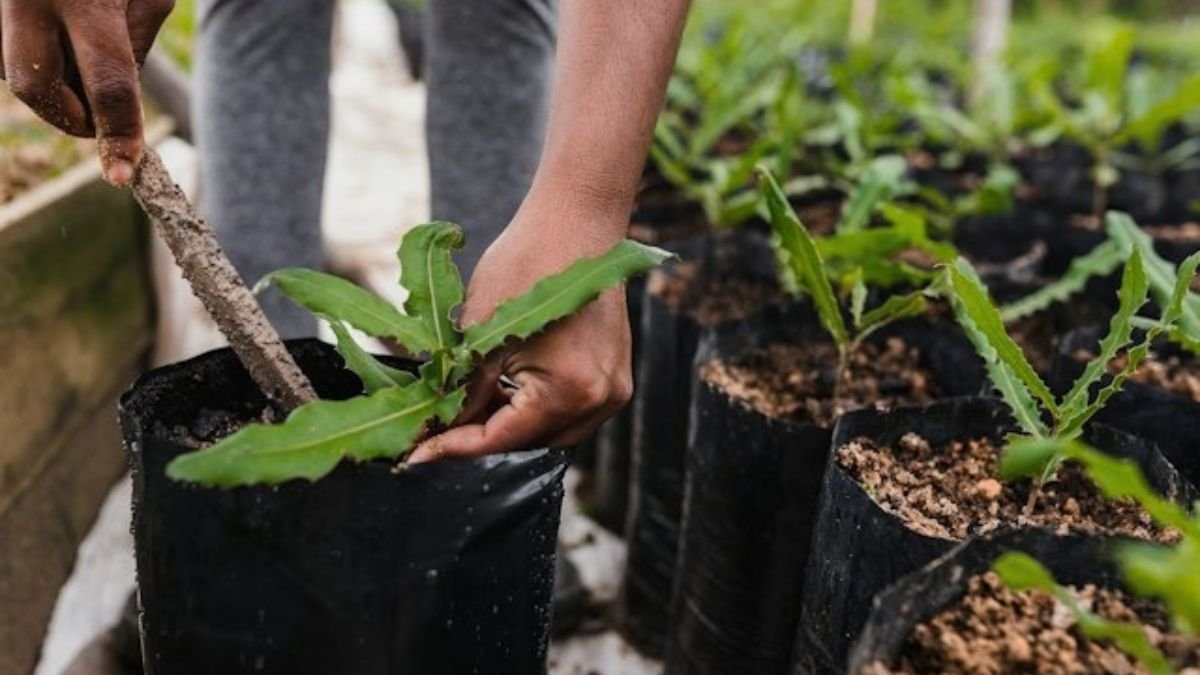
You can start herbs from nursery plants or from seed. Nursery plants give you a harvest within weeks and are the easiest way to begin, especially for rosemary, thyme, oregano and sage, which are slow from seed. Basil, cilantro, parsley and chives are easy and cheap to grow from seed, covered in the next section.
Planting steps
- Check the drainage. Make sure the pot has holes. Cover large holes with a piece of mesh so the soil stays in.
- Fill with potting mix. Add mix until it is about 1 inch (2.5 cm) below the rim. This gap gives you room to water without spilling over.
- Loosen the roots. Slide the herb out of its nursery pot and gently tease apart any roots that circle the bottom.
- Set the plant. Place it in the pot at the same depth it was growing before. Burying the stem can cause rot.
- Fill around it. Add mix around the root ball and press gently to remove large air pockets.
- Water well. Water slowly until it runs out of the drainage holes.
- Introduce it to the sun slowly. If the plant came from indoors or a greenhouse, give it a few hours of sun at first and increase over 5–7 days, so the leaves don’t scorch.
Watch a step-by-step demonstration of planting herbs in containers:
Growing Herbs from Seed in Pots
Growing from seed costs less and gives you many plants from one packet. It works best for basil, cilantro, parsley and chives.
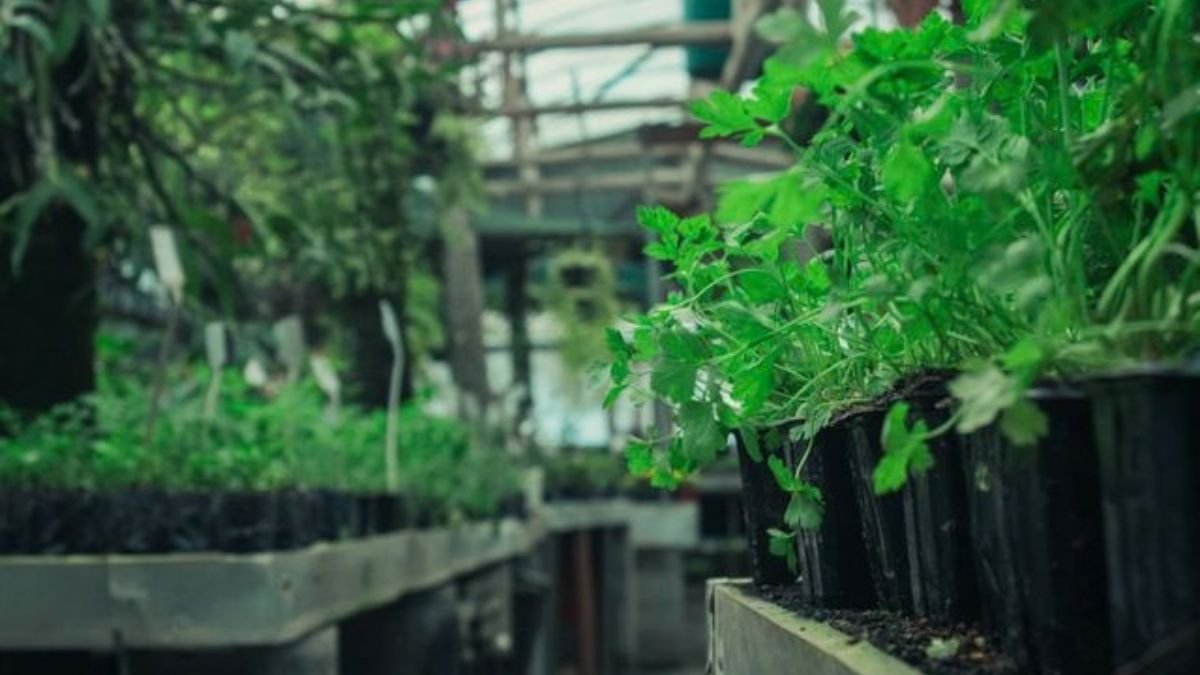
- Sow thinly and shallow. Most herb seeds are small, so cover them with only about ¼ inch (6 mm) of mix. Follow the depth on the seed packet.
- Keep the mix moist. It should feel like a wrung-out sponge, damp but not soggy. A fine spray or gentle watering avoids washing seeds out.
- Be patient with parsley. Basil often sprouts in about a week or two. Parsley can take 3–4 weeks.
- Thin the seedlings. Once they have their first true leaves, snip the weakest ones at soil level so the rest have space. Use the spacing on the packet as a guide.
- Sow cilantro and parsley where they will grow. Both have long roots that dislike being moved.
- Sow cilantro in batches. A new pot or sowing every 3–4 weeks keeps leaves coming, because each plant runs to seed quickly in warm weather.
Which Herbs Grow Well Together in the Same Container
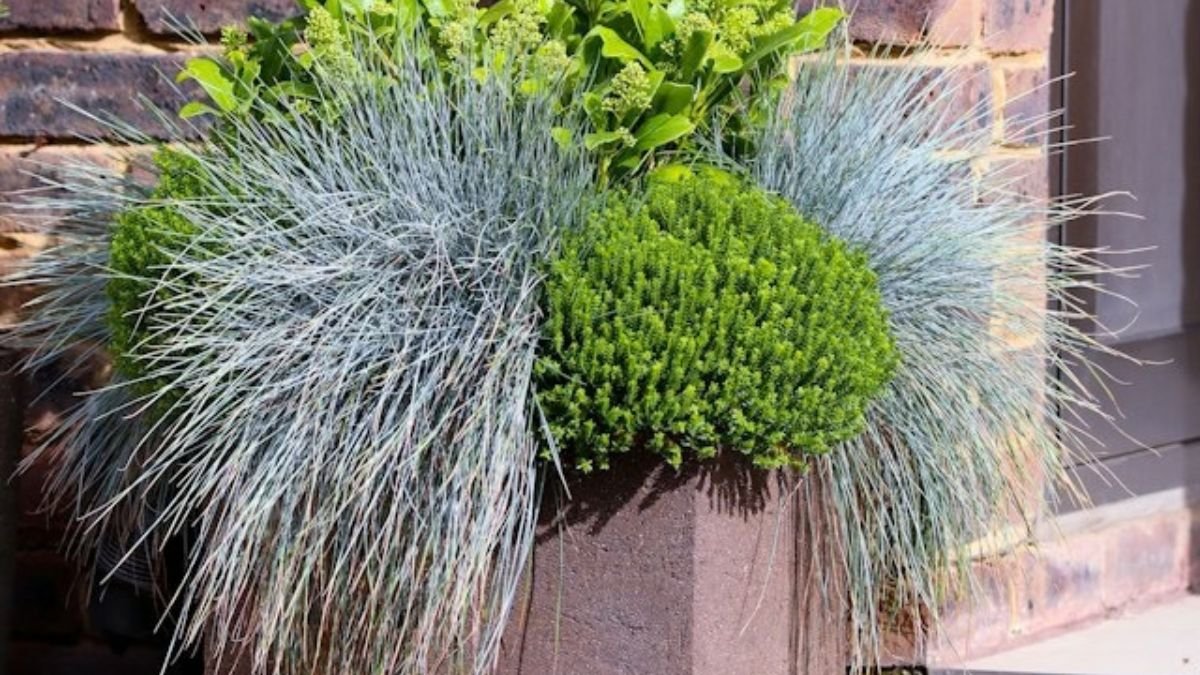
Sharing a pot saves space, but only if the herbs have the same needs. Use this rule: pair herbs with the same sun, the same water needs and a similar growth habit. That is why the two groups from earlier are the best starting point.
| Pot Combination | Suggested Pot Size | Why It Works |
|---|---|---|
| Rosemary + thyme + oregano | 18–24 in (45–60 cm) wide | All like full sun and dry soil. Plant rosemary at the back or center and let thyme trail over the edge. |
| Basil + parsley + chives | 16–18 in (40–45 cm) wide | All like steady moisture and richer soil. Give them a spot with at least 6 hours of sun. |
| Cilantro + parsley + chives | 16–18 in (40–45 cm) wide | A cooler-weather pot. Provide some afternoon shade in hot climates. |
| Mint | 12 in (30 cm) or larger, alone | Mint spreads aggressively and crowds out neighbors. |
Leave room for growth. Herbs planted shoulder to shoulder compete for water and light.
- Mint roots and runners spread quickly and take over a shared pot.
- Avoid pairing basil with rosemary or thyme, because they need different amounts of water.
- Put taller herbs at the back or center, trailing herbs at the edge.
How Much Sun Do Herbs Need?
Most herbs need 6–8 hours of direct sun a day to grow strong and flavorful. Parsley, chives, cilantro and mint tolerate 4–6 hours and often appreciate some afternoon shade in hot climates.
- Too little light: tall, leggy stems, pale leaves and weak growth. Move the pot to a brighter spot.
- Too much heat: scorched leaf edges, wilting and soil that dries within hours. Move the pot to afternoon shade, group pots together, or choose light-colored pots that absorb less heat.
- Growing indoors: use a very bright window or a grow light for at least 6 hours a day, and turn the pot every week so growth stays even.
Watering and Feeding Herbs in Pots
Watering is where most container herbs go wrong. Pots dry out faster than garden soil, but they also stay soggy if the drainage is poor. The fix is to check the soil, not the calendar.
How to water
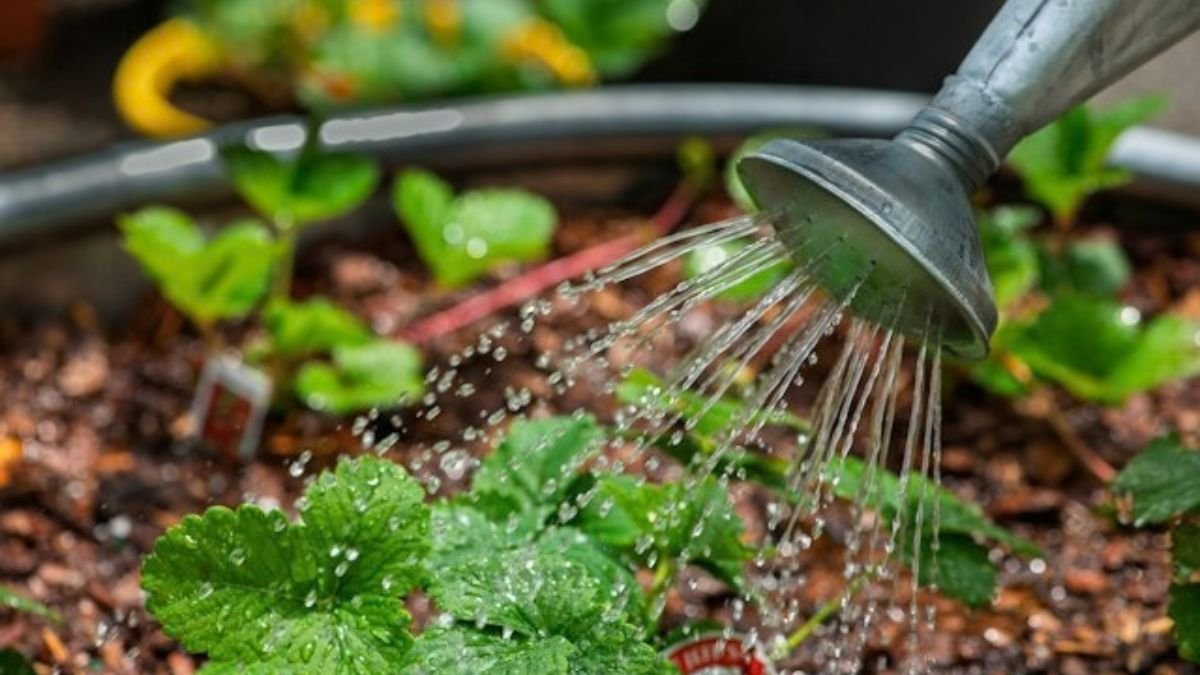
- Water deeply, not often. Pour slowly until water runs out of the drainage holes, so the whole root ball is wet.
- Empty the saucer. Do not let the pot sit in water. Tip it out after 15–30 minutes.
- Water in the morning. Plants have time to use the water before the heat of the day, and leaves dry faster, which lowers the risk of mildew.
- Water the soil, not the leaves.
- Adjust for the weather. Small pots in hot summer weather may need water every day. In cool, cloudy weather, several days may pass between waterings.
How to feed
- Moisture-loving herbs: feed with a liquid fertilizer at half the label strength every 3–4 weeks during the growing season.
- Mediterranean herbs: they need very little. Feed lightly once or twice a season, or simply refresh the soil each year.
- Avoid overfeeding. Too much fertilizer causes weak, leggy growth and can burn roots.
Repotting and cold weather
- Repot when roots fill the pot. Roots circling the inside or poking out of the holes mean the plant has outgrown its home. This usually happens every 1–2 years.
- Protect from frost. Move tender herbs such as basil and rosemary to a sheltered spot or indoors when frost is forecast. Hardy herbs like chives, thyme, sage and oregano often survive cold, but roots in pots are more exposed than in the ground, so shelter them from freezing wind.
How to Harvest Herbs Without Killing the Plant
Regular harvesting keeps herbs bushy and productive. Waiting too long makes them leggy and more likely to flower. A few simple rules protect the plant:
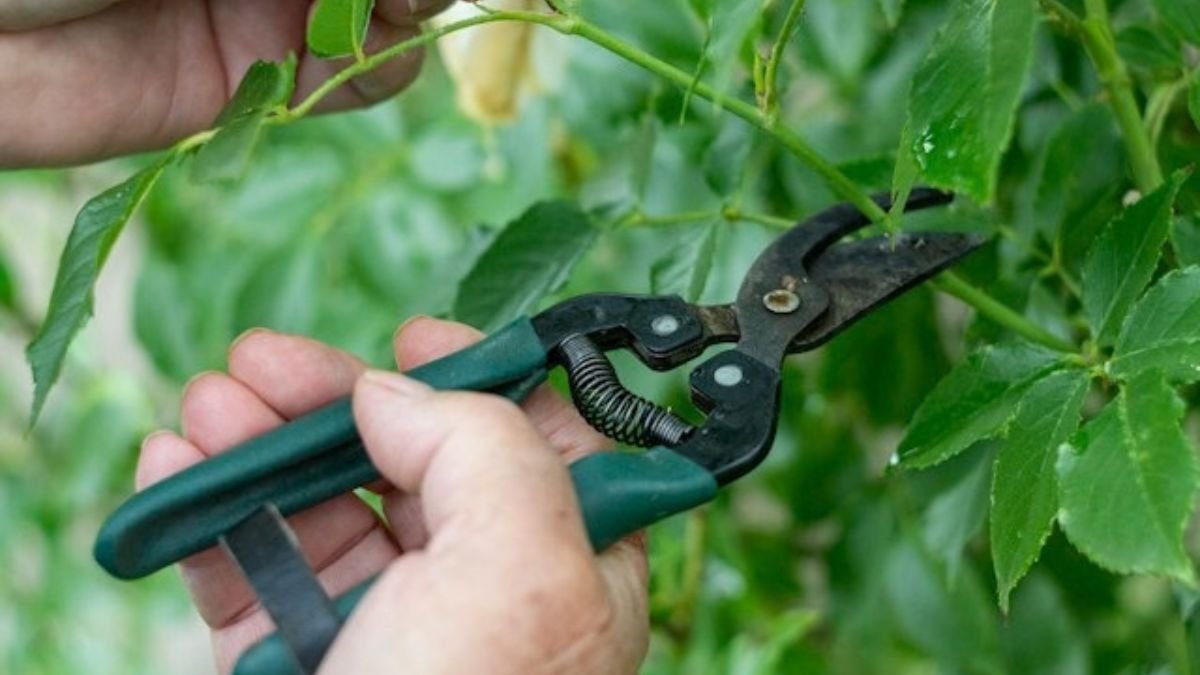
- Take no more than one third of the plant at a time.
- Start once the plant is established, with several sets of healthy leaves.
- Harvest in the morning, after the dew has dried.
- Use clean scissors or snips for a neat cut.
Herb-by-herb harvesting
- Basil: cut or pinch the stem just above a pair of leaves. New shoots grow from that point. Pinch off flower buds to keep leaves coming.
- Mint: cut stems just above a pair of leaves, which encourages bushy growth.
- Rosemary, thyme, oregano and sage: cut the soft, green tips. Avoid cutting into bare, woody stems, which may not regrow.
- Parsley and cilantro: cut the outer stems at the base and leave the center to keep growing.
- Chives: cut the leaves about 1–2 inches (2.5–5 cm) above the soil.
Watch how to harvest herbs so they keep growing:
Common Problems and Simple Fixes
Most container herb problems come from water, light or crowding. Use this table to match the symptom to the cause.
| Symptom | Likely Cause | What to Do |
|---|---|---|
| Yellow leaves and soil stays wet | Overwatering or poor drainage | Let the top of the soil dry, check the drainage holes, and repot into fresh mix if the soil is soggy. |
| Yellow lower leaves and slow growth | Used-up nutrients in old potting mix | Feed at half strength or refresh the soil. |
| Tall, thin stems and pale leaves | Not enough light | Move to a brighter spot and pinch the tips to encourage branching. |
| Wilting with dry soil | Underwatering | Water deeply. The plant usually recovers within hours. |
| Wilting with wet soil | Root rot from too much water | Tip the plant out, trim black or mushy roots, and repot into fresh mix in a pot with drainage. |
| Brown, crispy leaf edges | Heat, dryness or fertilizer build-up | Water deeply, add afternoon shade, and flush the soil with plain water. |
| Basil or cilantro flowers early | Heat stress or an aging plant | Pinch off basil flower buds. Sow cilantro again and give it afternoon shade. |
| White, powdery coating on leaves | Powdery mildew | Improve airflow, water the soil not the leaves, and remove badly affected leaves. |
| Tiny insects and sticky leaves | Aphids | Rinse with a strong spray of water. If needed, use a soap product labeled for edible plants, and wash herbs before eating. |
Beginner Checklist Before You Start
- Pick a sunny spot: aim for 6 hours of direct sun, or at least 4 for parsley, chives, cilantro and mint.
- Choose pots with drainage holes: 8–12 inches (20–30 cm) wide for single herbs.
- Use fresh potting mix: add perlite or sand for rosemary, thyme, oregano and sage.
- Group herbs by water needs: Mediterranean herbs together, moisture-loving herbs together.
- Give mint its own pot: no exceptions.
- Water with the finger test: and empty the saucer afterwards.
- Harvest little and often: never more than one third at a time.
Frequently Asked Questions
What is the easiest herb to grow in a pot?
Chives, thyme, oregano and mint are among the most forgiving. Basil and parsley are also easy, but they need more regular watering. If you tend to forget to water, start with thyme or oregano. If you can water regularly, start with basil, parsley or chives.
Which herbs grow well together in the same pot?
Pair herbs with the same sun and water needs. Rosemary, thyme and oregano suit one pot because they like sun and dry soil. Basil, parsley and chives suit another because they like steady moisture. Keep mint in its own pot, because it spreads and crowds out other plants.
How big should a pot be for herbs?
Most single herbs grow well in a pot 8–12 inches (20–30 cm) wide. Parsley and cilantro do better in a deeper pot of at least 10 inches (25 cm). For a mixed planter, choose one at least 18 inches (45 cm) long or wide.
Do herbs need full sun?
Most herbs grow best with 6–8 hours of direct sun a day. Parsley, chives, cilantro and mint tolerate 4–6 hours and often benefit from afternoon shade in hot climates.
Why are my potted herbs dying?
The most common cause is too much water or a pot with poor drainage, which leads to yellow leaves and root rot. The next most common causes are too little light and letting the pot dry out completely. Check the drainage holes and the soil moisture first.
Can I grow herbs in pots indoors?
Yes. Place pots in a very bright window or under a grow light for at least 6 hours a day, use pots with drainage holes, and water only when the top of the soil is dry. Compact herbs such as chives, parsley, thyme, mint and basil do best indoors.
This guide is for general gardening information. Results vary with climate, light and variety, so check with your local nursery or agricultural extension service for advice specific to your area.