
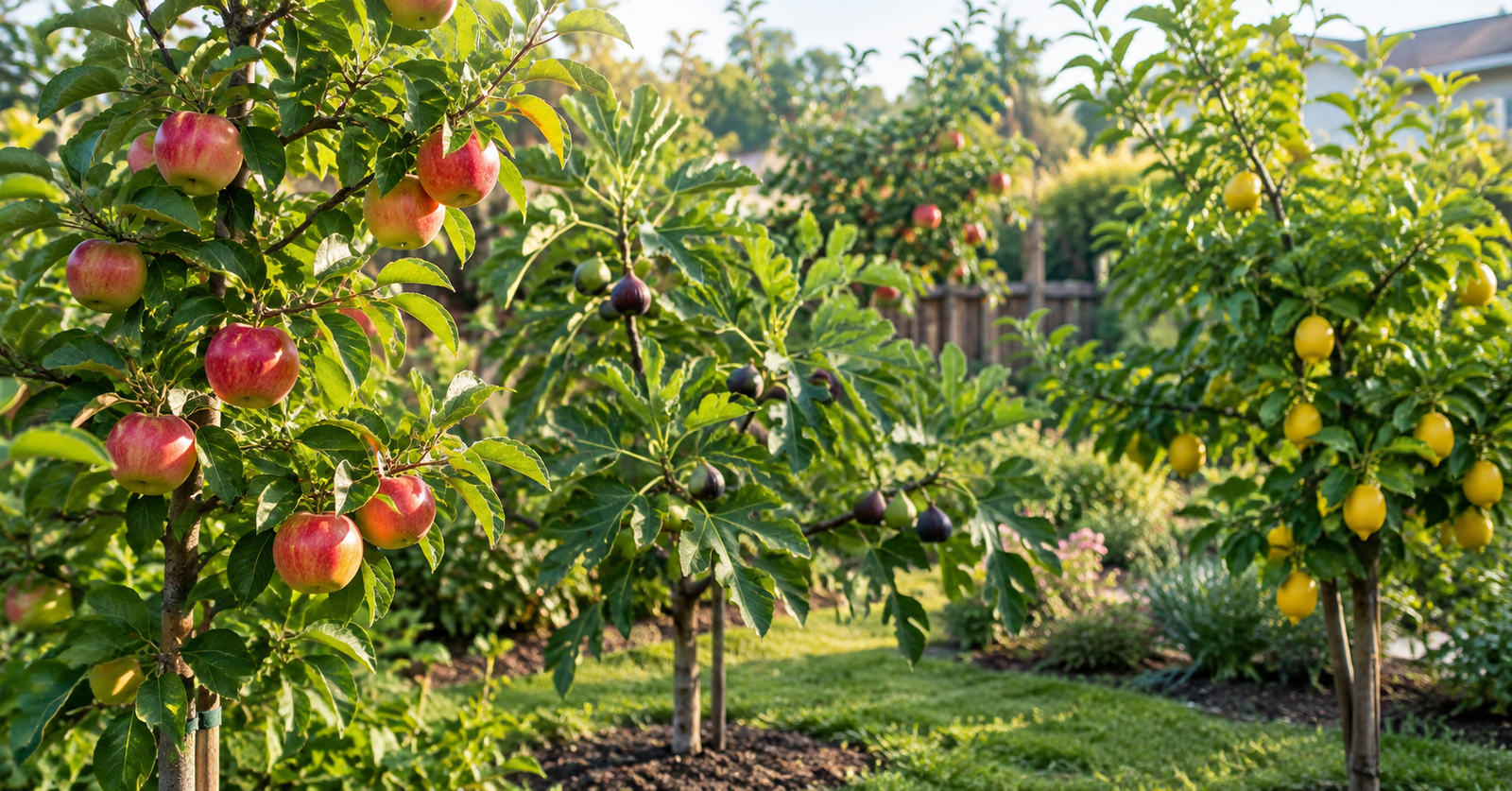
Easy Fruit Trees to Grow at Home: A Beginner’s Guide to Planting & Care
Which fruit trees are actually easy, when to plant them, how to get them into the ground properly, and how to keep them healthy until the first harvest.
What’s in this guide
- Easy-to-Grow Fruit Trees for Beginners
- How to Choose the Right Tree
- Best Time to Plant Fruit Trees
- Sun, Soil & Spacing
- How to Plant a Fruit Tree
- Fruit Tree Care
- How Long Fruit Trees Take to Bear Fruit
- When Is Fruit Ready to Pick?
- Common Problems and Fixes
- Growing Fruit Trees in Pots
- Fruit Trees for Small Gardens
- Common Beginner Mistakes
- FAQ
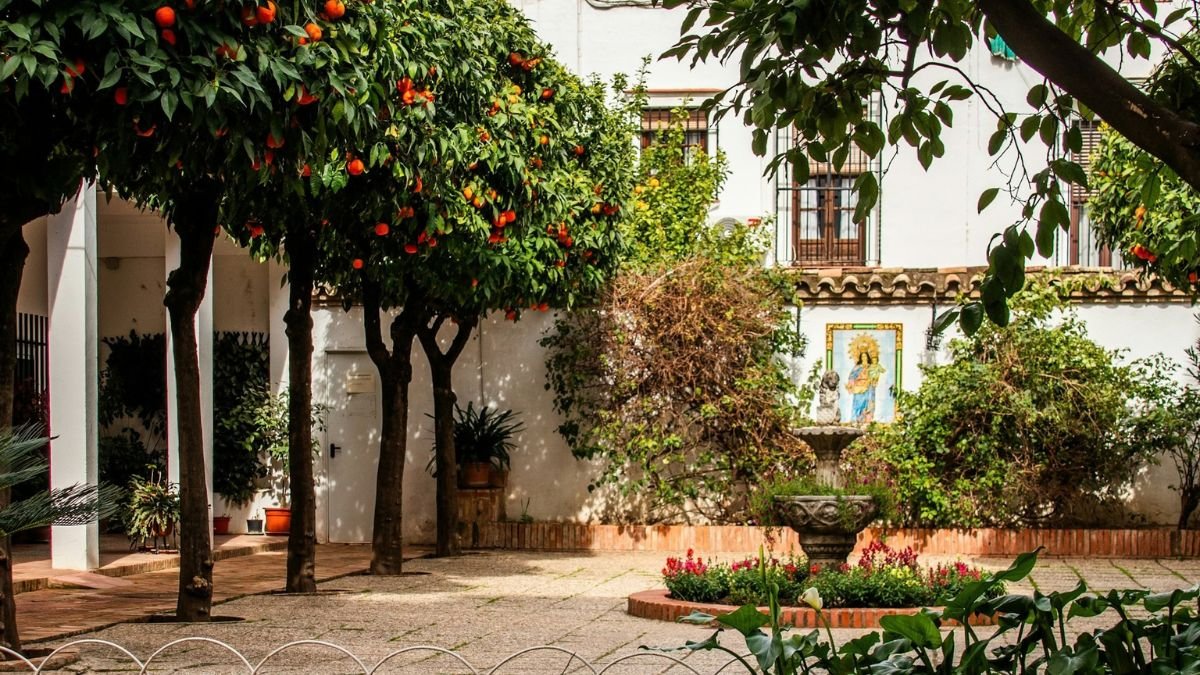
Fruit gardening for beginners can look intimidating: pollination, pruning, pests, and years of waiting before the first harvest. The good news is that a handful of fruit trees are forgiving, productive and happy in ordinary garden conditions.
If you’re wondering how to grow fruit trees without wasting money or years, the answer comes down to three choices: picking the right tree for your climate, planting it correctly, and giving it steady care for the first two or three years. Everything in this guide follows that order, so you can read it start to finish or jump to the part you need.
Answer these 3 questions before you buy anything
- What is my climate like? Find your hardiness zone (or simply the coldest winter temperature you usually get). This decides which trees will survive and which will fruit.
- How much space and sun do I have? A tree needs 6–8 hours of direct sun and room for its full-grown size. If you only have a balcony, jump to the section on growing fruit trees in pots.
- Do I have room for one tree or two? Some trees fruit alone. Others need a partner nearby. Knowing this now avoids the classic mistake of a healthy tree that never fruits.
Easy-to-Grow Fruit Trees for Beginners
If you’ve been asking what fruit trees are easy to grow, start with these eight. They are the best fruit trees to grow at home for beginners because they are tolerant, widely sold in dwarf sizes, and don’t need specialist care. The table below is a quick comparison, and each tree is explained in more detail underneath.
| Tree | First Fruit In | Typical Size | Grows in Pots? | Needs a Partner Tree? | Best Climate |
|---|---|---|---|---|---|
| Fig | 2–3 years | 8–15 ft | Yes | No | Mild to warm |
| Apple | 2–5 years (dwarf) | 8–12 ft (dwarf) | Dwarf types | Usually yes | Cool to mild |
| Pear | 3–6 years | 8–15 ft (dwarf) | Dwarf types | Usually yes | Cool to mild |
| Plum | 3–5 years | 10–15 ft | Dwarf types | Varies by type | Cool to mild |
| Peach | 2–4 years | 10–15 ft | Dwarf types | No | Mild to warm, needs winter chill |
| Meyer Lemon | 2–4 years | 6–10 ft | Excellent | No | Warm, frost-free |
| Pomegranate | 2–4 years | 8–12 ft | Yes | No | Warm, dry summers |
| Persimmon | 3–4 years | 12–20 ft | Dwarf types | No (common types) | Mild to warm |
Times and sizes are typical for grafted trees and vary with variety, rootstock and growing conditions.
🌿 Fig
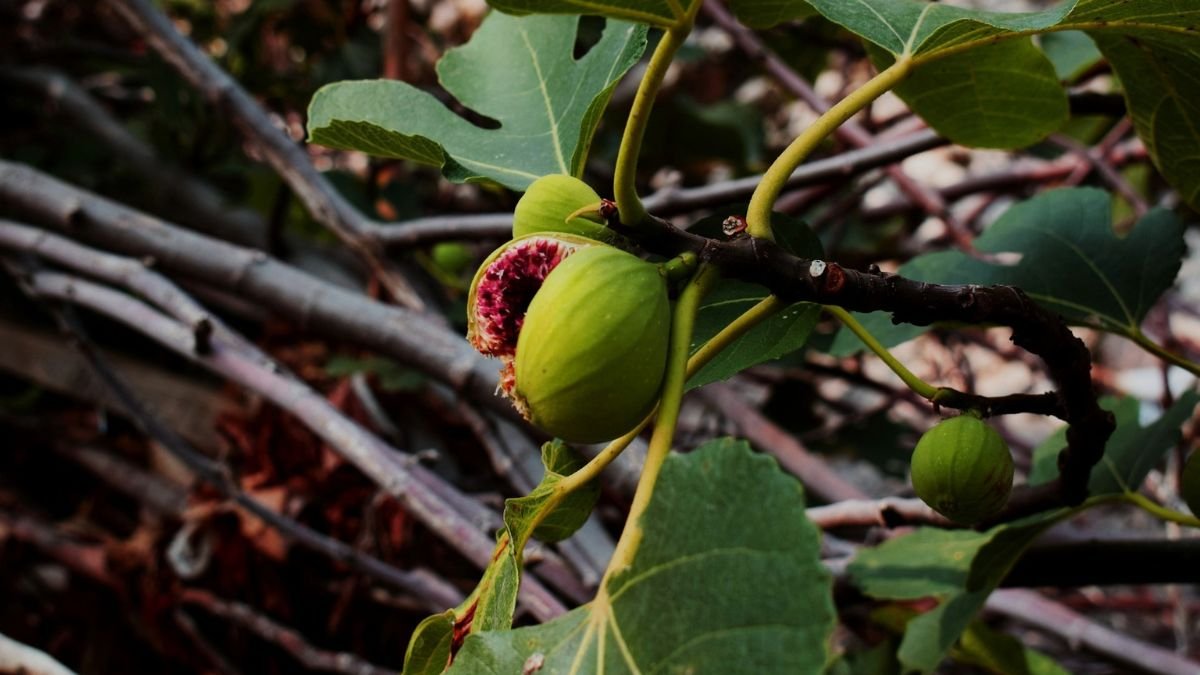
Best for: warm or mild climates, pots, no-fuss beginnersFigs are self-fertile, so one tree is enough. They tolerate poor soil and dry spells once established, stay compact with light pruning, and do well in large containers.
- Fruit in about 2–3 years
- Full sun, well-drained soil
- Cold-hardy varieties such as ‘Chicago Hardy’ handle cooler winters
Watch out: birds love ripe figs, and hard frosts can damage top growth.
🍎 Apple
Best for: cool to mild climates, small yards (dwarf rootstock)Apples come in hundreds of varieties, including disease-resistant ones, and dwarf rootstocks keep the tree small and bring fruit earlier. They are reliable in cooler regions where other fruit struggles.
- Dwarf trees often fruit in 2–5 years
- Most need a second apple variety nearby to pollinate (a crabapple also works)
- Choose scab-resistant varieties for less spraying
Watch out: codling moth and apple scab are the common problems.
🍐 Pear
Best for: cool to mild climates, long-term plantingPears are long-lived, tolerate a range of soils and are usually less bothered by pests than apples. Their upright habit suits narrow spaces.
- Fruit in about 3–6 years
- Most varieties need a compatible partner tree
- European pears ripen best when picked slightly firm and finished indoors
Watch out: fire blight in some regions, so pick resistant varieties.
🍇 Plum
Best for: cool to mild climates, gardeners who want heavy cropsMany European plums, such as ‘Victoria’, are self-fertile and crop generously. Plum trees are compact and tolerate a range of soils if drainage is good.
- Fruit in about 3–5 years
- Japanese plums usually need a partner tree
- Thin heavy crops so branches don’t snap
Watch out: early blossom is easily hit by spring frost.
🍑 Peach
Best for: mild to warm climates with some winter chillPeaches are one of the faster fruit trees to reward you, and most varieties are self-fertile. Genetic dwarf types are bred for pots and small spaces.
- Fruit in about 2–4 years
- Needs a variety matched to your winter chill hours
- Needs yearly pruning to stay productive
Watch out: peach leaf curl. Choose resistant varieties and avoid wetting the leaves.
🍋 Meyer Lemon
Best for: warm, frost-free climates, or pots you can move indoorsMeyer lemons are self-fertile, compact, and one of the best fruit trees to grow in containers. In warm areas they can flower and fruit through much of the year.
- Fruit in about 2–4 years
- Needs full sun and excellent drainage
- Feed more often than other fruit trees
Watch out: frost. Move pots under cover or protect the tree when cold is forecast.
🔴 Pomegranate
Best for: hot, dry summers and low-maintenance gardensPomegranates are drought-tolerant once established, self-fertile, rarely troubled by pests, and produce beautiful flowers before the fruit.
- Fruit in about 2–4 years
- Grows as a large shrub or small multi-stem tree
- Needs hot summers to ripen fruit well
Watch out: fruit splits if watering swings between very dry and very wet.
🍊 Persimmon
Best for: mild to warm climates, low-spray gardensAsian persimmons such as ‘Fuyu’ have few pest problems, need little pruning, and give attractive autumn colour along with the fruit.
- Fruit in about 3–4 years
- ‘Fuyu’ can be eaten firm, ‘Hachiya’ only when fully soft
- Common varieties are self-fertile
Watch out: uneven watering can make fruit drop early.
How to Choose the Right Fruit Tree for Your Garden
Reading about eight good trees is easy. Deciding which one to buy is harder. Use this quick guide to match a tree to your situation.
| Your Situation | Good First Choices |
|---|---|
| Only room for one tree | Fig, peach, Meyer lemon or pomegranate (all self-fertile) |
| Cold winters | Apple, pear, European plum, cold-hardy fig varieties |
| Hot, dry summers | Pomegranate, fig, persimmon |
| Balcony or patio | Meyer lemon, fig, dwarf peach |
| Want fruit fastest | Peach, fig, dwarf grafted trees from a nursery |
| Want to spray as little as possible | Fig, pomegranate, persimmon, disease-resistant apples |
Do you need two trees for pollination? Self-fertile trees (fig, peach, lemon, pomegranate, many plums) set fruit on their own. Cross-pollinated trees (most apples and pears) need a second, compatible variety that flowers at the same time, planted within roughly 50 feet. A neighbour’s tree can count, so look around before buying a second one. The plant label or a nursery can confirm.
Bees do the pollinating, so avoid spraying anything while the tree is in flower, and plant a few flowers nearby to keep pollinators around.
What to look for when buying a tree
- Buy locally if you can. A local nursery sells varieties proven in your climate and can tell you about winter chill hours (the number of cold hours a tree needs to flower properly).
- Check the label. It should name the variety and the rootstock, and say whether the tree is self-fertile.
- Choose dwarf or semi-dwarf. Rootstock decides the final size. Dwarf trees are easier to prune, pick and protect, and fruit sooner.
- Inspect the tree. Look for a straight trunk, no split bark or damaged branches, a visible graft union, and roots that aren’t badly tangled or dried out.
- Bare-root or container? Bare-root trees are cheaper and sold in winter. Container trees cost more but are easier to plant and can go in for a longer part of the year.
Best Time to Plant Fruit Trees
The best time to plant fruit trees is when the tree is dormant or when the weather is mild enough for roots to settle before extreme heat or freezing ground. That gives the root system time to grow out into the soil before the tree has to support leaves and fruit.
When is the best time to plant fruit trees?
- Bare-root trees: late winter to early spring, while the tree is still dormant and the soil is workable.
- Container-grown trees: spring or early autumn. Container trees can go in almost any time the ground isn’t frozen or baked dry.
- Mild-winter climates: autumn is excellent, because roots grow through the cool months and the tree is ready for spring.
- Avoid: the hottest part of summer and periods when the ground is frozen or waterlogged.
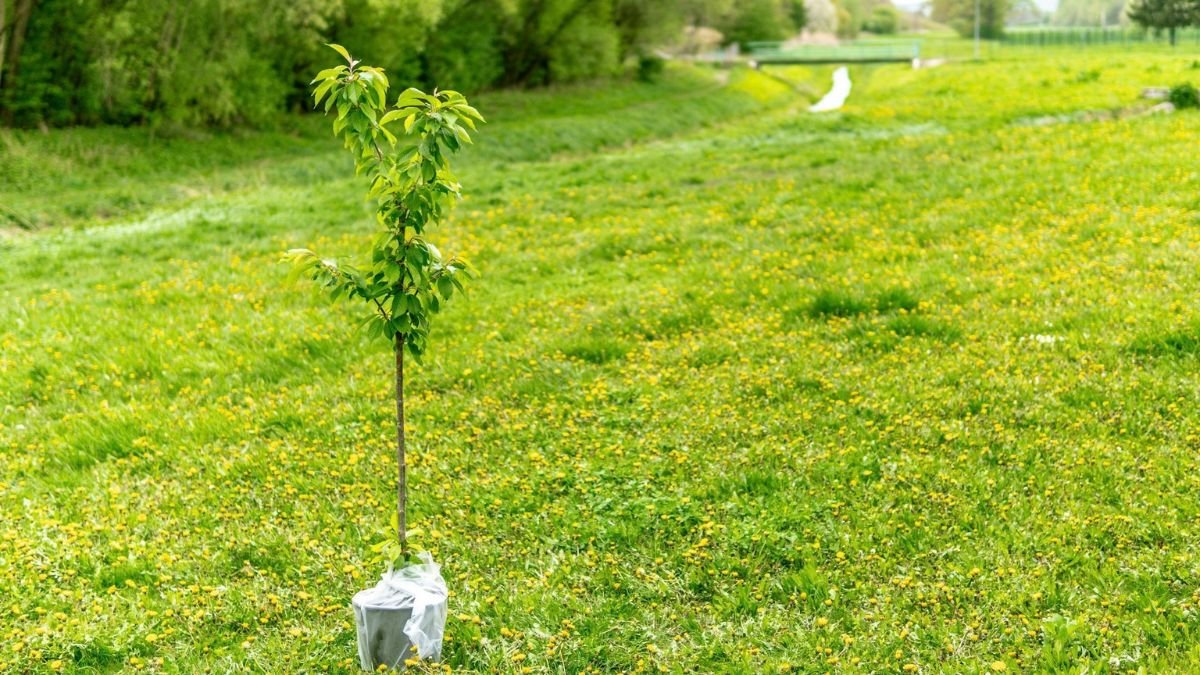
Choosing the Right Spot: Sun, Soil & Spacing
Where you plant matters more than almost anything you do afterwards. A good tree in a bad spot struggles for years, and a tree moved later loses time and root growth.
How much sun do fruit trees need?
Most fruit trees need at least 6–8 hours of direct sunlight a day. Morning sun is especially valuable because it dries dew from the leaves and reduces disease.
A simple sun test: on a sunny day, check your chosen spot at about 9 a.m., noon and 3 p.m. Count how many of those checks show full sun, and remember that a building or tree that shades the spot in winter may not shade it in summer.
Avoid frost pockets. Cold air flows downhill and settles at the bottom of a slope. Fruit trees planted in these low spots can lose their blossom to late frost, so a spot partway up a slope is safer.
What soil is best for fruit trees?
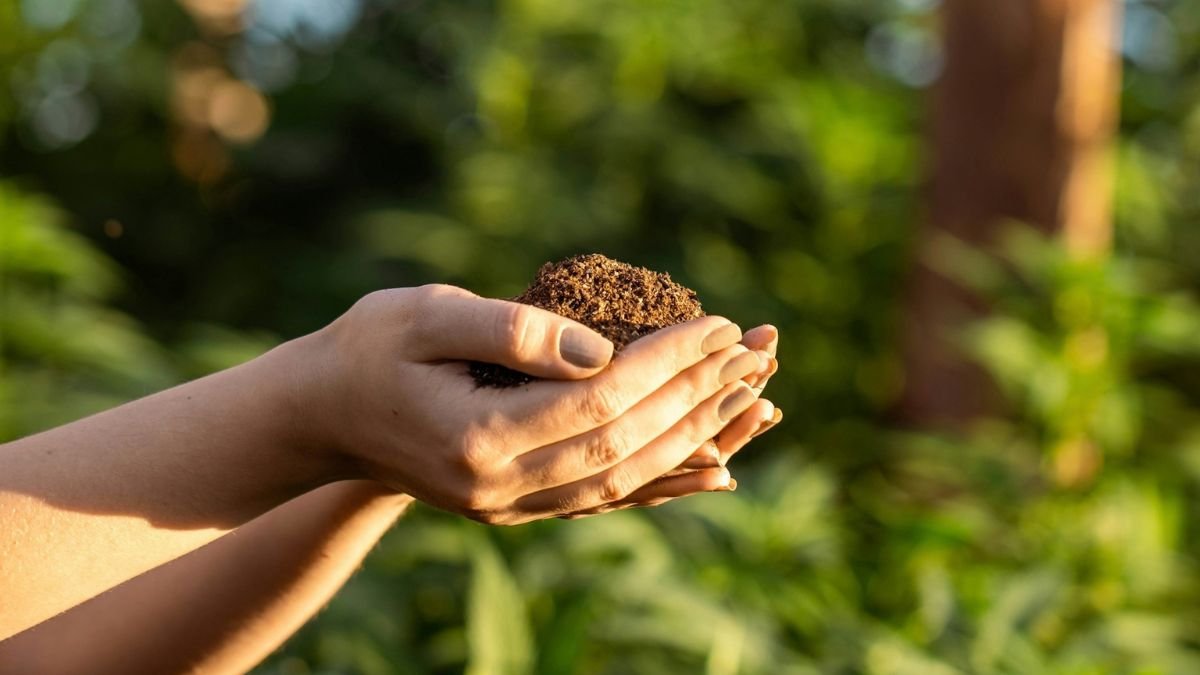
Fruit trees prefer well-drained, fertile soil with a pH of roughly 6.0–7.0. Drainage matters most, because waterlogged roots suffocate and rot.
How to test drainage in 10 minutes:
- Dig a hole about a foot deep and wide.
- Fill it with water and let it drain away completely.
- Fill it a second time and watch. If it drains within a few hours, drainage is good. If water is still sitting there the next day, drainage is poor.
If drainage is poor, plant on a low mound about 12 inches high or in a large raised bed. For pH, an inexpensive home test kit or a local soil lab or extension service can tell you where you stand.
Heavy clay benefits from compost worked into a wide area (not just the planting hole), while sandy soil holds more moisture once you add organic matter.
How far apart to plant fruit trees
Spacing depends on the rootstock, so check the plant tag. As a general guide:
| Tree Size | Space Between Trees | Good For |
|---|---|---|
| Dwarf | 8–10 ft | Small gardens, pots, fast fruiting |
| Semi-dwarf | 12–15 ft | Most home gardens |
| Standard | 20–25 ft | Large yards and orchards |
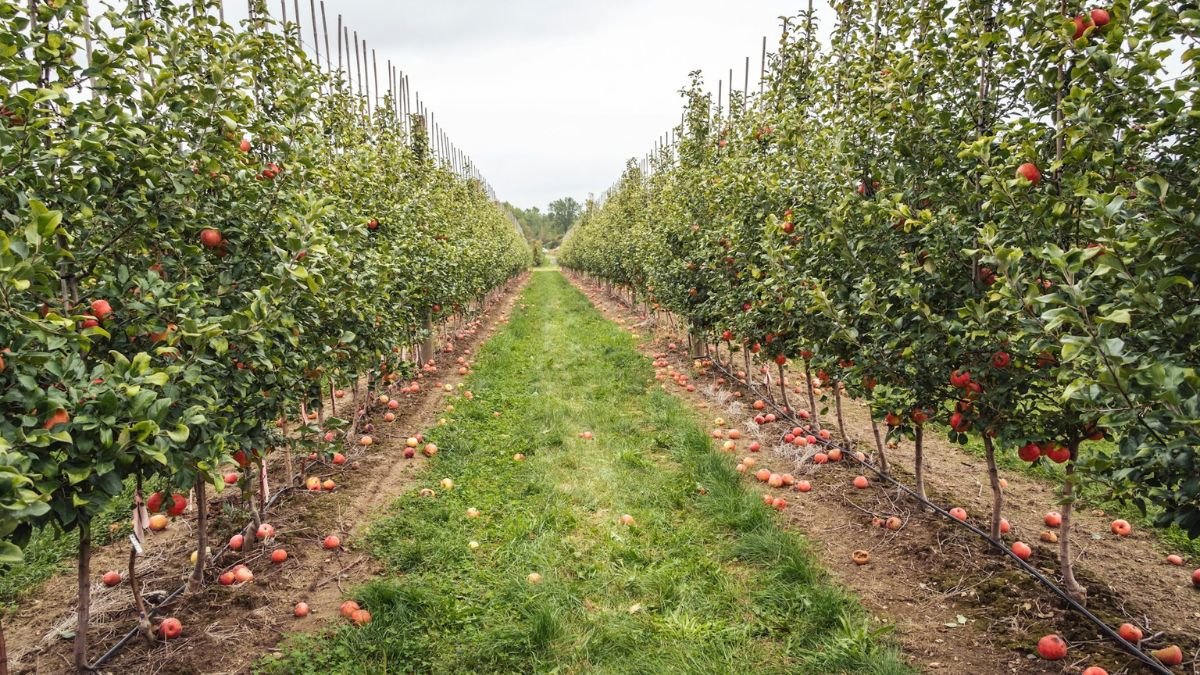
Crowded trees shade each other, trap humidity and get more disease. Also keep trees a comfortable distance from buildings, fences and drains, as big roots and branches cause problems later.
Planning a mixed garden with vegetables underneath or nearby? Our vegetable garden layout and spacing guide shows how far apart common crops should sit, which helps you leave the right room around your trees.
How to Plant a Fruit Tree
Knowing how to plant a fruit tree properly is the biggest single factor in long-term success. Before planting day, get these ready:
- A spade or shovel, and a bucket of water
- A few inches of mulch (wood chips, shredded leaves or bark)
- A stake and soft ties, only if the site is windy
- A trunk guard if rabbits or rodents are a problem in your area
Bare-root vs container: what changes?
- Bare-root: soak the roots in water for a few hours before planting, trim any broken roots, and spread the roots out over a small mound of soil in the hole.
- Container: slide the tree out of the pot and loosen any roots circling the edge, or lightly tease them apart. Roots left in a tight circle can keep circling and choke the tree.
Planting steps
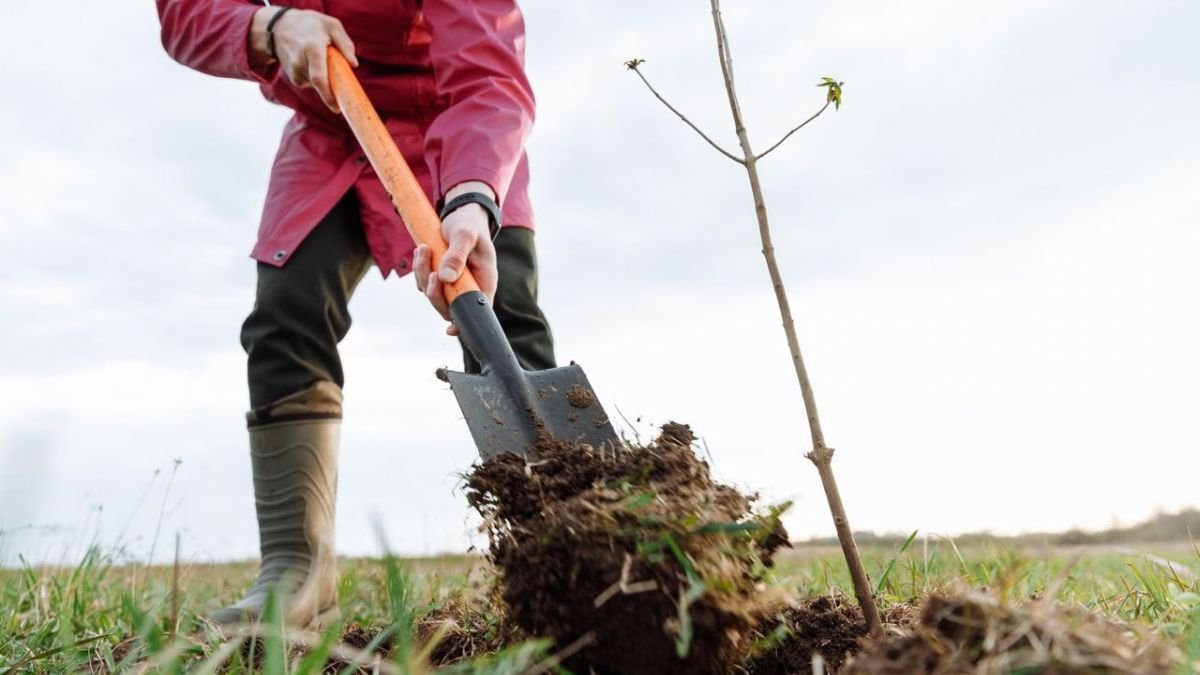
- Dig the hole. Make it two to three times as wide as the root ball, but no deeper than the root ball itself.
- Set the depth. Place the tree so the root flare (where the trunk widens) sits at ground level. On grafted trees, keep the graft union (the bump on the lower trunk) about 2–4 inches above the soil.
- Backfill. Refill with the soil you dug out, firming it gently to remove air pockets. Avoid packing rich compost or fertilizer into the hole itself.
- Water deeply. Soak the whole root zone slowly right after planting so the soil settles around the roots.
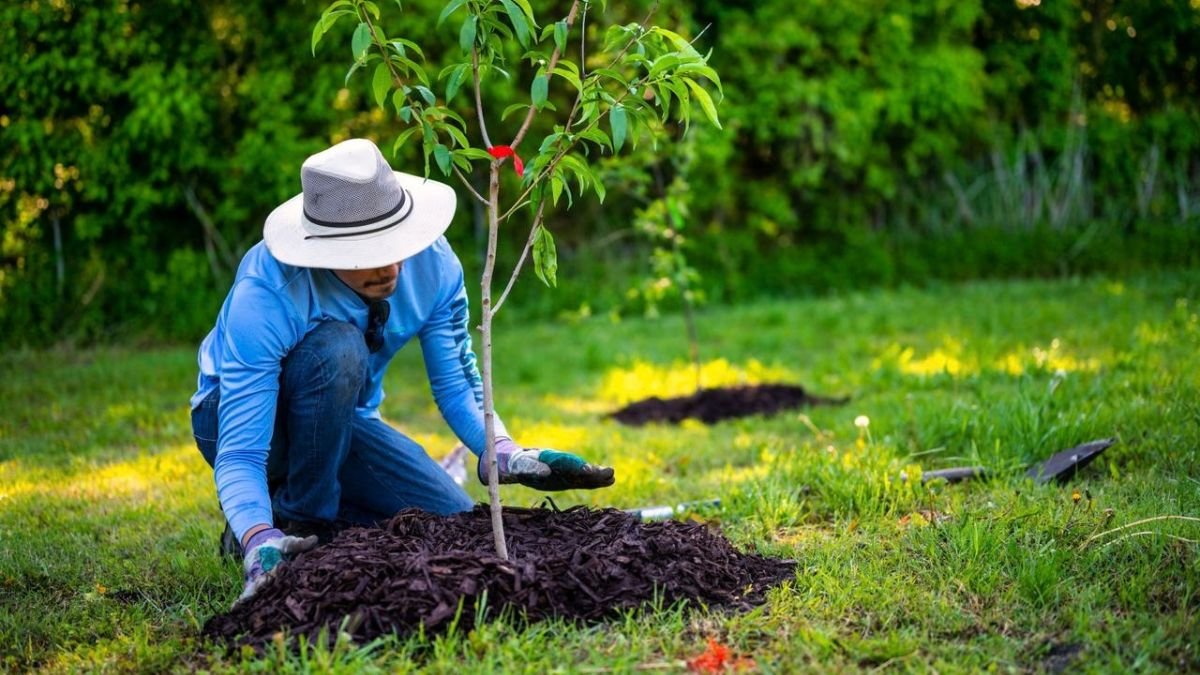
- Mulch. Add 2–4 inches of mulch in a ring, leaving a gap of a few inches around the trunk.
- Stake only if needed. In windy spots, use one stake and a loose tie. Remove it after a year so the trunk builds its own strength.
How deep to plant a fruit tree
Planting too deep is one of the most common causes of failure. Bury the trunk and it can rot, while planting too shallow leaves roots exposed to drying out. Match the depth the tree grew at in the nursery pot, with the root flare visible at the surface.
The first week after planting
- Water again if the soil feels dry a few inches down.
- Don’t fertilize yet. New roots can be burned by fertilizer.
- Remove nursery tags or wire from branches before they cut into the bark.
- Follow the nursery’s advice about first pruning. Some bare-root trees are sold as a single stem and are cut back at planting to encourage branching.
Watch a step-by-step demonstration of planting a fruit tree:
Fruit Tree Care for Beginners
Learning how to care for fruit trees is mostly about consistency: steady water, light feeding, and a little attention to pruning and pests. The first two or three years decide how strong the tree will be for decades, so this is where beginner effort pays off most.
How often to water fruit trees
How often to water fruit trees depends on age, weather and soil, but deep, less frequent watering beats frequent shallow watering. It pushes roots downward and makes the tree more resilient.
| Tree Stage | How Often to Water |
|---|---|
| Planting day | Deep soak so the soil settles around the roots |
| Newly planted (first growing season) | Once or twice a week, more in hot, dry or sandy conditions |
| Second year | Every 7–10 days when there is no rain |
| Established trees | A deep soak every 1–2 weeks in dry spells |
Instead of following a fixed schedule, use the finger test: push a finger 2–3 inches into the soil near the tree. If it’s dry, water. If it’s still damp, wait. As a target, established trees do well with about an inch of water a week from rain and watering combined.
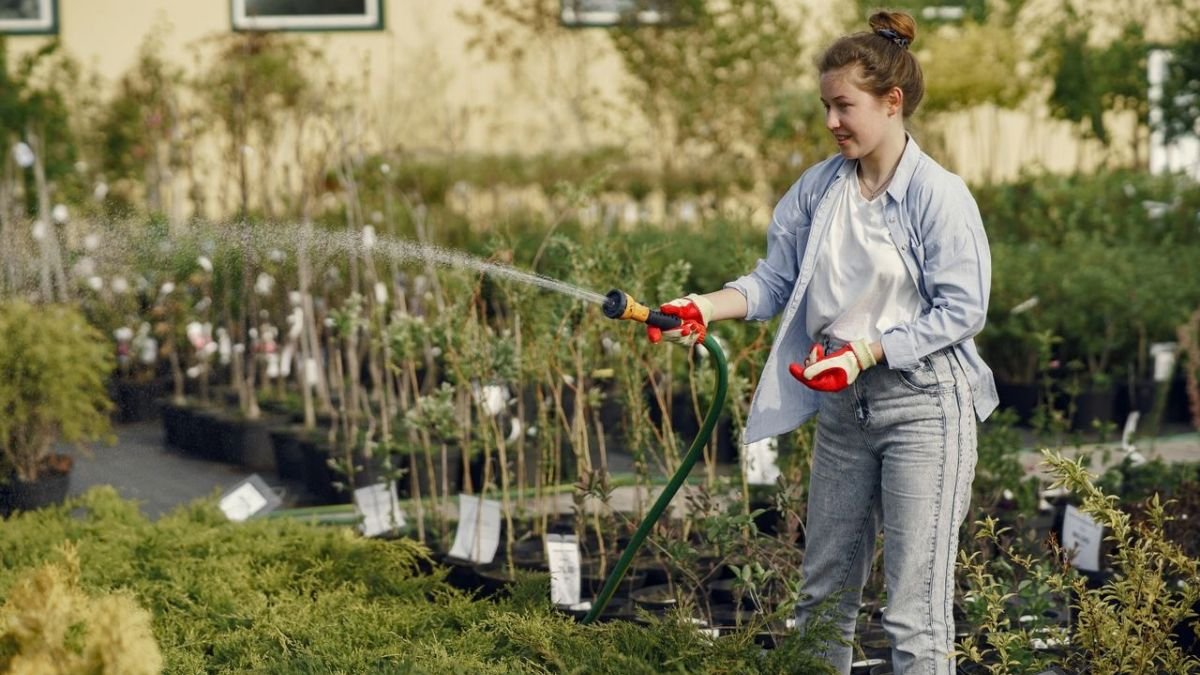
For newly planted fruit trees, the best method is a slow soak at the base, using a hose on a trickle for several minutes, so the water sinks down instead of running away.
Is my tree getting too much or too little water?
| Sign | Likely Cause | What to Do |
|---|---|---|
| Yellowing leaves, soil constantly wet | Too much water or poor drainage | Water less often and check drainage |
| Wilting, dry crispy leaf edges, dry soil | Too little water | Soak deeply and mulch to hold moisture |
| Fruit splitting | Very dry spell followed by heavy watering or rain | Keep watering even and mulch |
| Fruit or leaves dropping early | Water stress or heat | Check soil moisture more often |
How to fertilize fruit trees
Don’t fertilize at planting. Wait until you see new growth, then start light. For most fruit trees, one feeding a year in early spring, as growth begins, is enough. Use a balanced fertilizer (such as 10-10-10) or a layer of compost, and follow the label rate carefully. Spread it under the branches, not against the trunk.
- How often to fertilize fruit trees: once in early spring for most trees. Citrus such as lemon prefers more frequent feeding through the growing season.
- Stop by midsummer: late feeding pushes soft growth that winter can damage.
- Go easy on nitrogen: too much gives lots of leaves and little fruit.
- Test first if you can: a soil test shows what your soil lacks, so you don’t add nutrients it already has.
Mulch, weeds and trunk protection
Mulch is the easiest way to improve fruit tree care. A 2–4 inch layer of wood chips or shredded leaves keeps moisture in, suppresses weeds and steadies soil temperature. Pull it back a few inches from the trunk, since mulch piled against the bark invites rot and rodents. Clear grass and weeds from around young trees so they aren’t competing for water.
In winter, a plastic or wire trunk guard protects thin young bark from rabbits, mice and sunscald.
Pruning basics for beginners
You don’t need to master pruning on day one. In the first years, simply remove:
- Dead, damaged or diseased branches
- Branches that cross or rub against each other
- Suckers (fast shoots) growing from the base or the rootstock
Aim for an open shape that lets light and air reach the centre of the tree. Apples and pears are usually pruned in late winter while dormant, whereas plums and cherries are often better pruned in summer in many regions, which reduces disease risk. Ask your local nursery for the right timing in your area, and always use clean, sharp tools.
Thin the fruit
It feels wrong, but removing some small fruit in early summer gives you bigger, tastier fruit and protects branches from breaking under the weight. Leave about a hand’s width between fruit on apples and peaches.
A simple fruit tree care calendar
| Season | What to do |
|---|---|
| Late winter / early spring | Plant bare-root trees, prune dormant apples and pears, apply the yearly feeding as growth starts |
| Spring | Refresh mulch, water regularly, watch for frost during blossom and protect flowers if needed |
| Summer | Water deeply in dry spells, thin the fruit, watch for pests and diseases, prune plums and cherries |
| Autumn | Harvest, clear fallen fruit, plant container trees in mild climates, protect young trunks from rodents |
How Long Do Fruit Trees Take to Bear Fruit?
How long fruit trees take to bear fruit depends mostly on the rootstock and how the tree was propagated, not just the type of fruit. Nursery-grown, grafted trees fruit much sooner than trees grown from seed.
| Tree Type | Typical Time to First Fruit |
|---|---|
| Dwarf grafted trees | 2–4 years |
| Semi-dwarf grafted trees | 3–5 years |
| Standard grafted trees | 4–8 years |
| Grown from seed | Often 5–10+ years, and the fruit is unpredictable |
If you want fruit sooner, choose a dwarf or semi-dwarf grafted tree. And if your tree flowers heavily in its first or second year, pick off most of the blossom or tiny fruit so the tree puts its energy into roots and branches first. That patience gives bigger harvests later.
How to Know When Fruit Is Ready to Pick
Picking too early gives sour, starchy fruit. Picking too late gives mushy fruit or lets birds get there first. These quick signs help you judge each tree:
| Fruit | Ready When |
|---|---|
| Apple | Lifts off the branch easily with a slight twist, and the seeds inside have turned brown |
| Pear | Full size and still firm. European pears finish ripening off the tree, indoors |
| Peach | Background colour turns from green to yellow or cream, it smells sweet and gives slightly when pressed |
| Plum | Full colour, slightly soft, and comes away from the stem easily |
| Fig | Soft, and the neck bends and droops. Figs don’t ripen further after picking |
| Lemon | Fully coloured (Meyer lemons take on an orange-yellow tint) and slightly soft to the touch |
| Pomegranate | Deep skin colour, slightly flattened sides, and a metallic sound when tapped |
| Persimmon | Fully orange. ‘Fuyu’ can be eaten firm, while ‘Hachiya’ must be completely soft |
Common Fruit Tree Problems and Simple Fixes
Almost every fruit tree has a problem or two at some point. Most are manageable if you spot them early. Walk around your tree once a week and look at the leaves, the bark and the fruit.
| What You See | Likely Cause | What to Do |
|---|---|---|
| Plenty of flowers but little or no fruit | Poor pollination or frost damage | Check whether your tree needs a partner, avoid spraying during bloom, and cover blossom on frost nights |
| Curled, reddish leaves on a peach | Peach leaf curl (a fungal disease) | Remove affected leaves, keep foliage dry, and plant resistant varieties next time |
| Small holes or worms in apples | Codling moth | Pick up fallen fruit, use pheromone traps or fruit bags, and ask your nursery about local controls |
| Sticky leaves, curled new growth, ants | Aphids | Spray them off with a strong jet of water and encourage ladybirds |
| Bark chewed near the base in winter | Rabbits or rodents | Fit a trunk guard and keep mulch off the trunk |
| Fruit splitting | Uneven watering | Mulch and water evenly, especially after a dry spell |
For anything more serious, take a clear photo and ask your local garden centre or agricultural extension service. Always follow product labels if you use a treatment.
Can You Grow Fruit Trees in Pots?
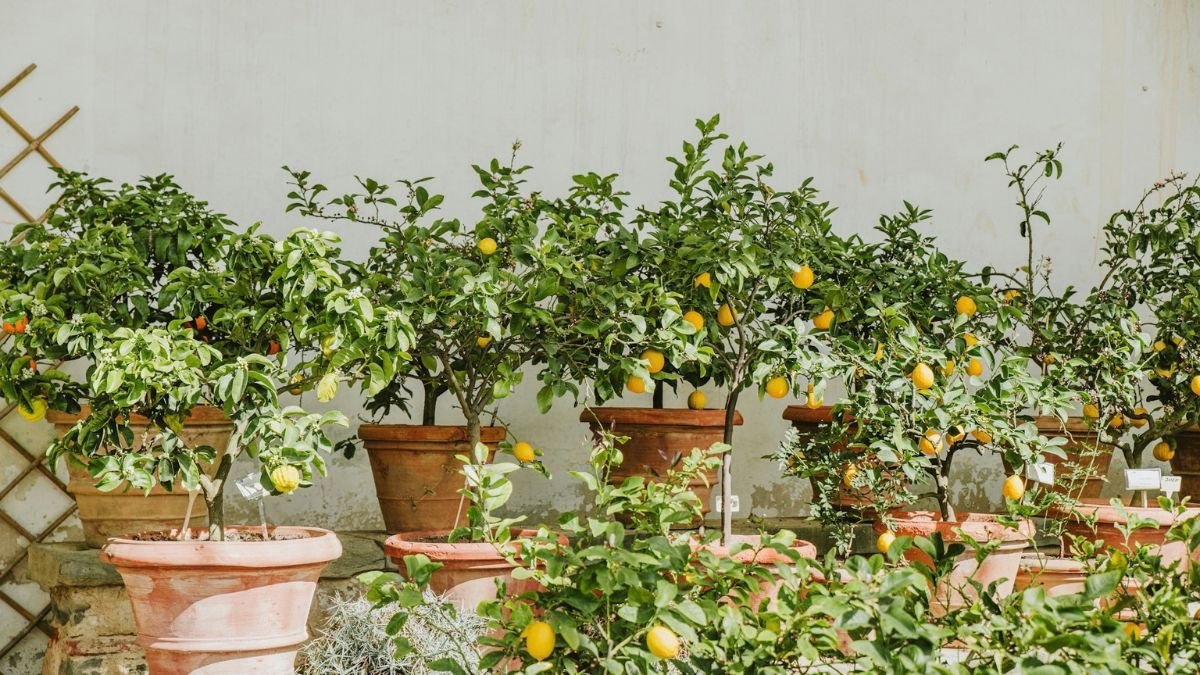
Yes, you can grow fruit trees in pots, and growing fruit trees in pots and containers is one of the best ways to enjoy fruit on a patio, balcony or rented property. It also lets you move tender trees to shelter in winter. The key is choosing a naturally compact tree and giving it a big enough container.
Container trees stay smaller and often fruit a little sooner because their roots are restricted, but they depend entirely on you for water and food. If you can commit to checking them every day or two in summer, they are very rewarding.
Best fruit trees to grow in containers
- Meyer lemon and other dwarf citrus
- Fig, which is naturally happy with restricted roots
- Dwarf peach (genetic dwarf varieties)
- Dwarf apple and pear on dwarfing rootstock
- Pomegranate, which is compact and drought-tolerant
Choosing the pot and soil
Start with a container of about 15–20 gallons (roughly 20–24 inches wide). A pot that’s too small dries out constantly, and one that’s far too big keeps soil wet for too long. Make sure it has drainage holes, and fill it with a good quality potting mix rather than garden soil, which compacts in containers. A pot on wheels makes it easy to move the tree to shelter.
Container care essentials
- Water more often: pots dry out much faster than the ground, sometimes daily in summer. Use the finger test before each watering.
- Feed regularly: nutrients wash out of containers, so feed more often than you would a ground-planted tree.
- Refresh the roots: every 2–3 years, repot or trim the roots and replace part of the potting mix.
- Winter protection: move tender trees such as lemon to a sheltered, bright spot when frost is forecast, and keep pots of hardy trees out of freezing wind.
See how fruit trees are grown and cared for in containers:
Fruit Trees for Small Gardens
Limited space doesn’t rule out fruit. The best fruit trees for small gardens are small fruit trees for small gardens: compact varieties, dwarf rootstocks, and trees trained to grow flat or narrow.
- Dwarf rootstocks: keep apples, pears, plums and peaches to 8–10 feet or less.
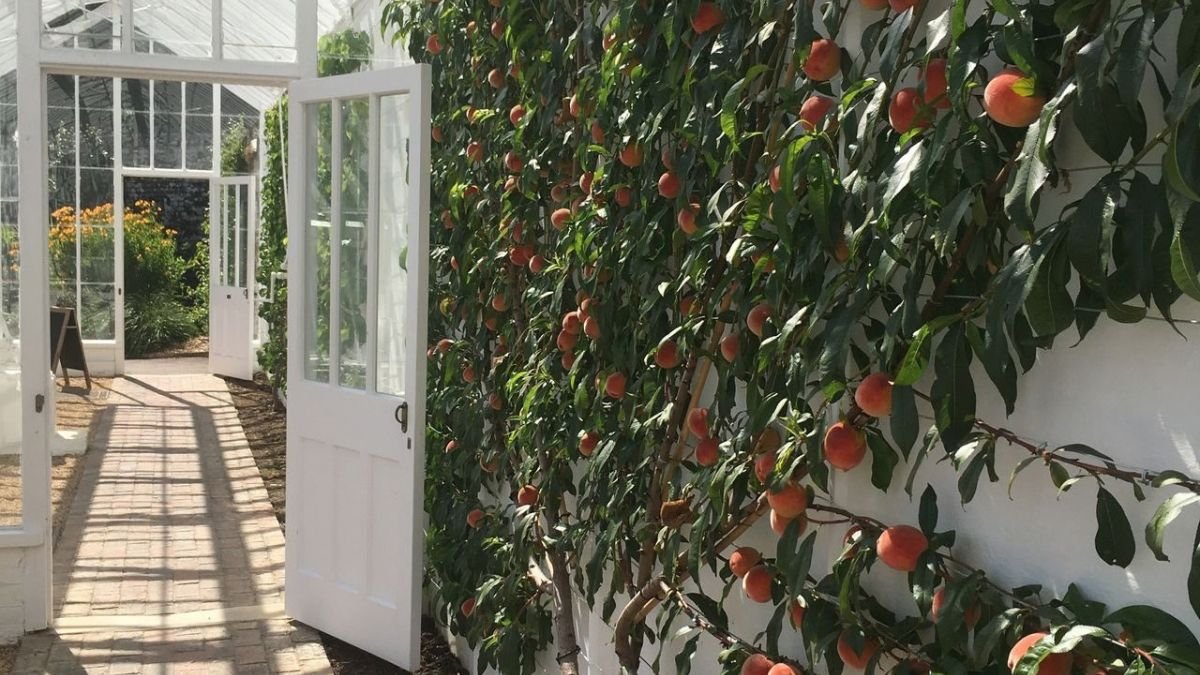
- Espalier: training a tree flat against a wall or fence uses very little ground space and makes harvesting easy.
- Columnar trees: narrow, upright apples that fit in beds only a couple of feet wide.
- Multi-variety trees: one tree grafted with several varieties solves the pollination problem in a single planting.
- Warm walls: in cooler climates, a sunny wall (south-facing in the northern hemisphere, north-facing in the southern) helps fruit ripen.
Common Fruit Tree Mistakes Beginners Make
Most failures come from a short list of avoidable errors. Check yours against this table before you plant.
| Mistake | What Goes Wrong | The Fix |
|---|---|---|
| Planting too deep | Trunk rot, weak growth, slow decline | Keep the root flare at ground level |
| Watering too much or too little | Yellow leaves, leaf drop, root rot or drought stress | Water deeply but less often, and check soil 2–3 inches down |
| Wrong location | Little fruit, frost-damaged blossom | Choose full sun and avoid low frost pockets |
| Ignoring pollination | Lots of flowers but no fruit | Pick a self-fertile tree or plant a compatible partner |
| Too much nitrogen | Leafy growth and poor fruiting | Use balanced fertilizer and stop by midsummer |
| Mulch against the trunk | Rot and rodent damage | Leave a few inches of gap around the trunk |
| Wrong variety for your climate | Winter damage or no fruit set | Check hardiness zone and chill hours with a local nursery |
Beginner Checklist Before You Buy
- Check your climate first — confirm your hardiness zone and, for peaches and apples, the winter chill hours the variety needs.
- Pick self-fertile trees if you have space for just one — fig, peach, lemon and pomegranate are the easiest.
- Choose dwarf or semi-dwarf rootstock — smaller trees fruit sooner and are easier to prune and harvest.
- Buy from a reputable nursery — look for a straight trunk, healthy roots, and a clear graft union.
- Prepare the spot before the tree arrives — full sun, good drainage and enough room at full size.
- Plan for the first two years — regular deep watering and mulch matter more than anything else.
Frequently Asked Questions
Which fruit trees are easiest to grow for beginners?
Fig, dwarf apple, pear, plum, peach, Meyer lemon, pomegranate and persimmon are among the easiest. Self-fertile trees such as fig, peach, lemon and pomegranate are simplest because you only need one tree. Always pick varieties suited to your local climate.
How long do fruit trees take to bear fruit?
Grafted dwarf trees often fruit in 2–4 years, semi-dwarf trees in 3–5 years, and standard trees in 4–8 years. Trees grown from seed can take 5–10 years or more, and the fruit may not match the parent.
How much sun do fruit trees need?
Most fruit trees need at least 6–8 hours of direct sun a day. Morning sun is particularly helpful because it dries the leaves and reduces disease. Less light usually means less fruit and weaker growth.
Can you grow fruit trees in pots?
Yes. Choose dwarf or naturally compact trees such as Meyer lemon, fig, dwarf peach or dwarf apple, and use a container of at least 15–20 gallons with drainage holes and quality potting mix. Potted trees need more frequent watering and feeding than trees in the ground.
How far apart should fruit trees be planted?
As a general guide, plant dwarf trees 8–10 feet apart, semi-dwarf trees 12–15 feet apart, and standard trees 20–25 feet apart. Check the plant tag, since spacing depends on the rootstock and variety.
How often should I water a newly planted fruit tree?
Soak the tree deeply at planting, then water once or twice a week during the first growing season, adjusting for heat, rain and soil type. Check the soil 2–3 inches down and water when it feels dry rather than on a fixed schedule.
This guide is for general gardening information. Results vary with climate, soil and variety, so check with your local nursery or agricultural extension service for advice specific to your area.