
Why Are My Rose Leaves Turning Yellow?
8 Causes & How to Fix Each One
A calm, step-by-step guide to figuring out exactly why your rose bush’s leaves are yellowing — and what to do about it today.
If you’ve caught yourself searching “why are my rose leaves turning yellow,” take a breath first — yellow leaves are one of the most common complaints in any rose garden, and in most cases the plant is not dying. It’s simply telling you something about its water, food, sunlight, or health that needs adjusting.
The tricky part is that several very different problems all show up as the same yellow leaf — overwatering, underwatering, disease, pests, and even normal aging can all look similar at first glance. This guide walks you through each cause, the specific signs that point to it, and the fix, so you can stop guessing and start treating the actual problem.
Quick self-check before you panic
Before diagnosing anything specific, ask yourself these three questions. Most cases of yellow rose leaves fall into place once you answer them honestly:
- Where are the yellow leaves? Bottom of the plant only, top growth only, or scattered everywhere?
- Do you see spots, webbing, or bugs? Black or brown spots, sticky residue, or tiny insects change the diagnosis completely.
- What does the soil feel like right now? Push a finger 2 inches in — is it bone dry, damp, or soggy?
8 Common Causes of Yellow Rose Leaves
Here are the causes that explain the vast majority of yellowing rose leaves, starting with the two most common.
💧 Overwatering
Roses like consistently moist soil, but they hate sitting in water. When roots stay waterlogged, they lose access to oxygen and start to suffocate — the plant responds by dropping yellow leaves, often starting with the lower ones.
Yellow leaves feel soft or limp, soil is soggy to the touch, sometimes a musty smell near the base, leaves may drop while still mostly green-yellow.
Let the top 2–3 inches of soil dry out before watering again. Improve drainage by mixing compost into heavy soil, and make sure pots have drainage holes.
🏜️ Underwatering
It sounds contradictory, but too little water causes the exact same yellow-leaf response. The plant sheds older leaves to conserve moisture for the parts that matter most.
Soil is dry more than 2 inches down, leaves look dry, crispy, or yellow with brown edges, whole plant looks slightly wilted in the heat of the day.
Water deeply at the base once or twice a week rather than little sips daily. A 2–3 inch layer of mulch helps the soil hold moisture between waterings.
🧪 Nutrient Deficiency (Nitrogen or Iron)
Roses are heavy feeders. A shortage of nitrogen causes older, lower leaves to turn a uniform pale yellow. A shortage of iron or magnesium causes chlorosis — the leaf turns yellow while the veins stay green.
Nitrogen: pale yellow leaves starting low on the plant, weak new growth. Iron/chlorosis: yellow leaf with clearly visible green veins, usually on newer leaves.
Feed with a balanced rose fertilizer in the growing season. For chlorosis, apply chelated iron and check that soil pH is between 6.0–6.5, where nutrients are easiest to absorb.
🍂 Black Spot Disease
This fungal disease is the single most common rose disease worldwide. It thrives in warm, humid weather and spreads through water splashing from leaf to leaf.
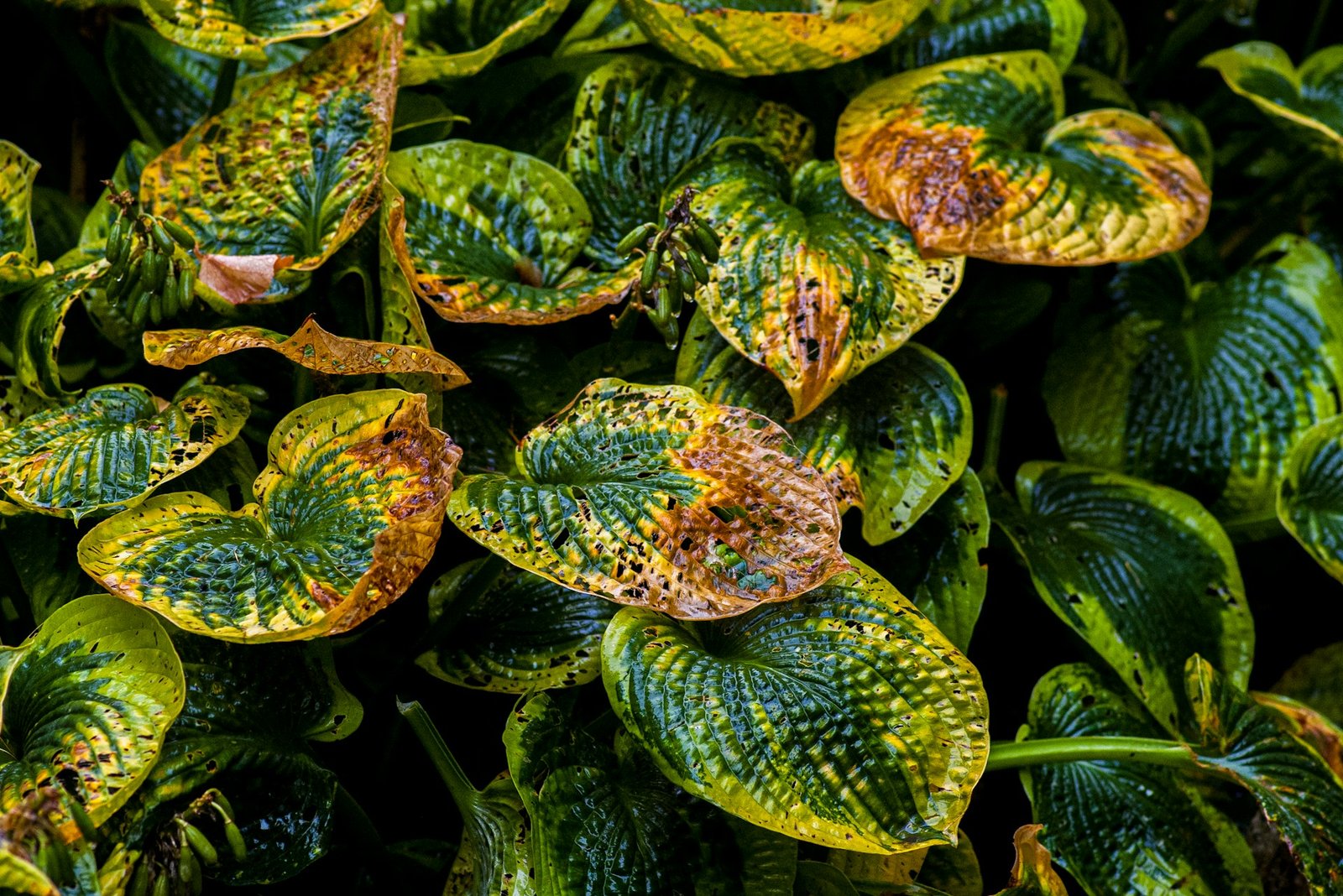
Round black or purplish-brown spots with feathered edges on the upper leaf surface, followed by yellowing around the spot, then leaf drop.
Remove and destroy (don’t compost) infected leaves. Water at the base only, never overhead. Apply a fungicide labeled for black spot, and improve airflow by pruning crowded growth.
🐛 Pests (Aphids, Spider Mites, Thrips)
Sap-sucking insects drain nutrients directly from the leaf, leaving behind stippled or mottled yellowing — often before you even spot the bugs themselves.
Fine yellow speckling or mottling, tiny webbing under leaves (spider mites), clusters of small insects on new growth (aphids), sticky residue on leaves.
Spray leaves (top and underside) with a strong jet of water to knock pests off, then follow up with insecticidal soap or neem oil in the evening, away from direct sun.
☀️ Too Much or Too Little Sunlight
Roses need at least 6 hours of direct sun daily. Too little light weakens the plant and yellows lower leaves; intense afternoon sun in very hot climates can scorch leaves, which also turns them yellow or brown.
Low light: leggy growth, sparse blooms, yellowing on shaded inner/lower leaves. Too much sun: yellow-brown patches on the side facing direct afternoon sun.
Relocate potted roses to a spot with morning sun and afternoon shade in hot regions, or thin out overhanging branches from nearby trees that block light.
🌿 Fertilizer Burn
More fertilizer is not better. Over-applying raises the salt concentration in the soil, which pulls moisture out of the roots instead of into them.
Yellowing appears shortly after feeding, often with crispy brown leaf edges. Container roses are especially vulnerable since there’s less soil to dilute the fertilizer.
Water deeply right away to flush excess salts from the soil. Going forward, follow the product’s recommended dose exactly and always water before, not after, feeding.
🍁 Natural Aging (Nothing to Worry About)
Not every yellow leaf is a problem. Roses naturally shed their oldest, lowest leaves as part of normal growth, and many varieties yellow and drop leaves as they go dormant in autumn.
Only one or two of the oldest, lowest leaves are affected, it’s happening slowly, the rest of the plant looks healthy and is still producing new growth or blooms.
Nothing needed — simply pick off the yellow leaf so the plant can redirect energy to new growth. Keep an eye out in case it spreads.
How to Tell Which One You Have
Use this quick-reference table to match what you’re seeing to the most likely cause:
| What you see | Most likely cause |
|---|---|
| Soggy soil, soft yellow leaves near the bottom | Overwatering |
| Dry soil, crispy yellow-brown leaves | Underwatering |
| Yellow leaf, green veins clearly visible | Iron/magnesium deficiency (chlorosis) |
| Pale yellow all over, starting at the bottom | Nitrogen deficiency |
| Black/brown spots with yellow halo | Black spot disease |
| Speckled or mottled yellow, tiny bugs or webbing | Pests (mites, aphids, thrips) |
| Yellowing right after feeding, edges crispy | Fertilizer burn |
| Just one or two old, low leaves, plant otherwise healthy | Natural leaf aging |
Prefer to see it in action? Watch a quick visual walkthrough below.
How to Prevent Yellow Leaves Long-Term
Most of these causes are avoidable with a simple seasonal routine:
- Water deeply, not often — once or twice a week at the base, letting the topsoil dry between waterings.
- Feed on a schedule — a balanced rose fertilizer every 4–6 weeks through the growing season, following label amounts exactly.
- Mulch every spring — 2–3 inches of mulch locks in moisture and keeps soil temperature stable.
- Prune for airflow — an open, airy shape dries leaves faster after rain and discourages black spot.
- Inspect weekly — check the undersides of leaves for early pest activity before it spreads.
- Choose disease-resistant varieties — Knock Out, Drift, and Oso Easy series roses are bred to resist black spot.
Frequently Asked Questions
Can a yellow rose leaf turn green again?
No — once a leaf has fully yellowed, it won’t turn green again. But the good news is the plant itself usually recovers fully once you fix the underlying cause; new growth will come in healthy and green.
Should I remove yellow leaves from my rose bush?
Yes, generally. Removing yellow leaves — especially any with black spot — helps the plant focus energy on new growth and prevents fungal spores from spreading to healthy leaves nearby.
How often should I water rose bushes in summer?
Most established rose bushes do well with a deep watering once or twice a week in summer, adjusted for rainfall and how fast your soil drains. Container roses may need water more often since they dry out faster.
Is yellowing always a sign my rose is dying?
Not at all. In most cases yellow leaves are a fixable stress signal, not a fatal condition. Roses are resilient — as long as the stem and new buds still look healthy, the plant can bounce back.