
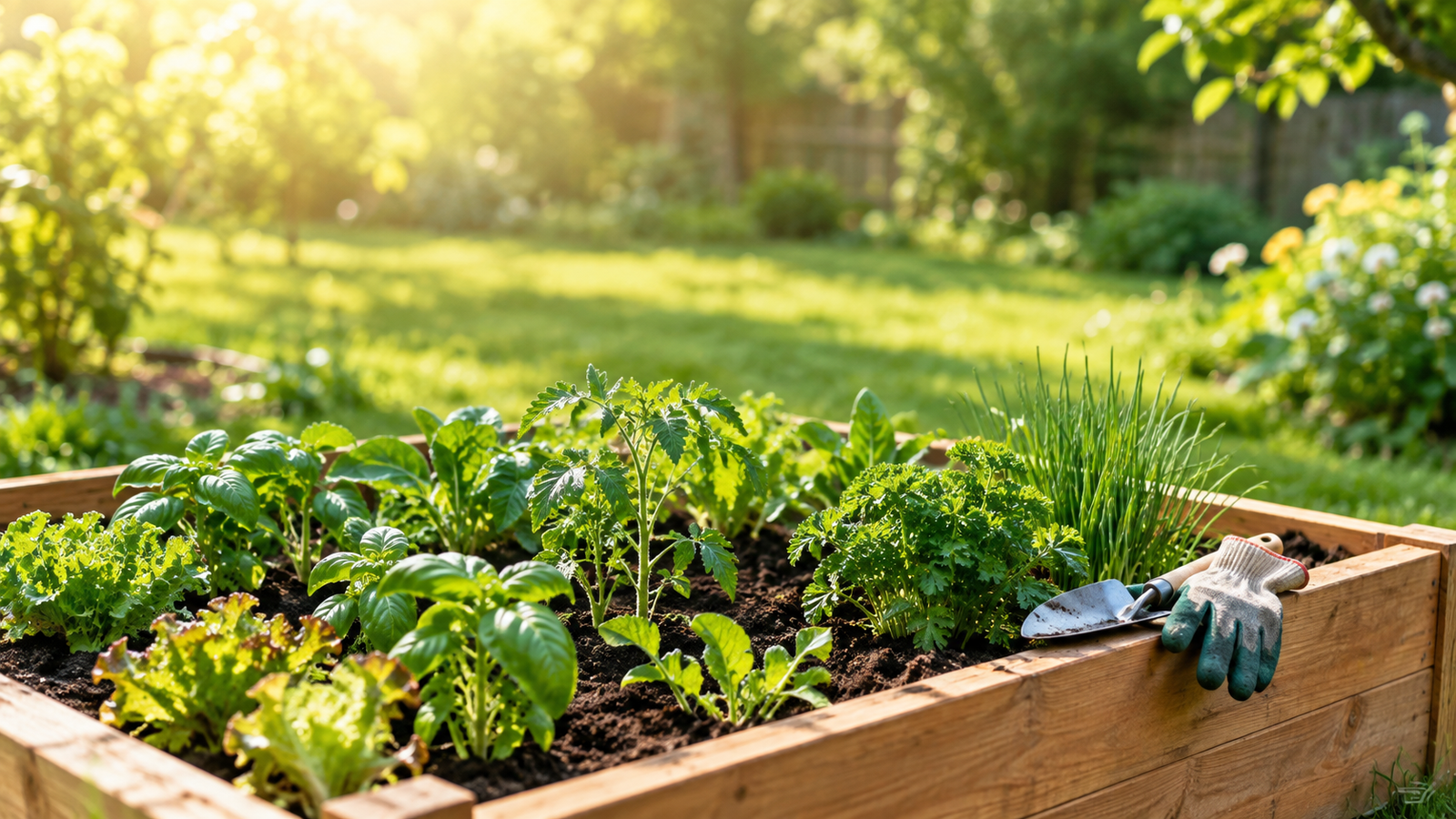
Starting your first garden doesn’t have to be complicated. You don’t need a huge backyard, expensive tools, or years of experience to grow healthy plants — just a bit of patience and the right approach.
These beginner gardening tips will walk you through everything you need to know: choosing a location, preparing your soil, watering correctly, picking the right plants, container gardening for beginners, composting basics, and the common mistakes most new gardeners make — so you can skip them entirely.
In this guide: location, soil, watering, plant selection, container gardening, composting, and a simple weekly routine you can actually stick to.
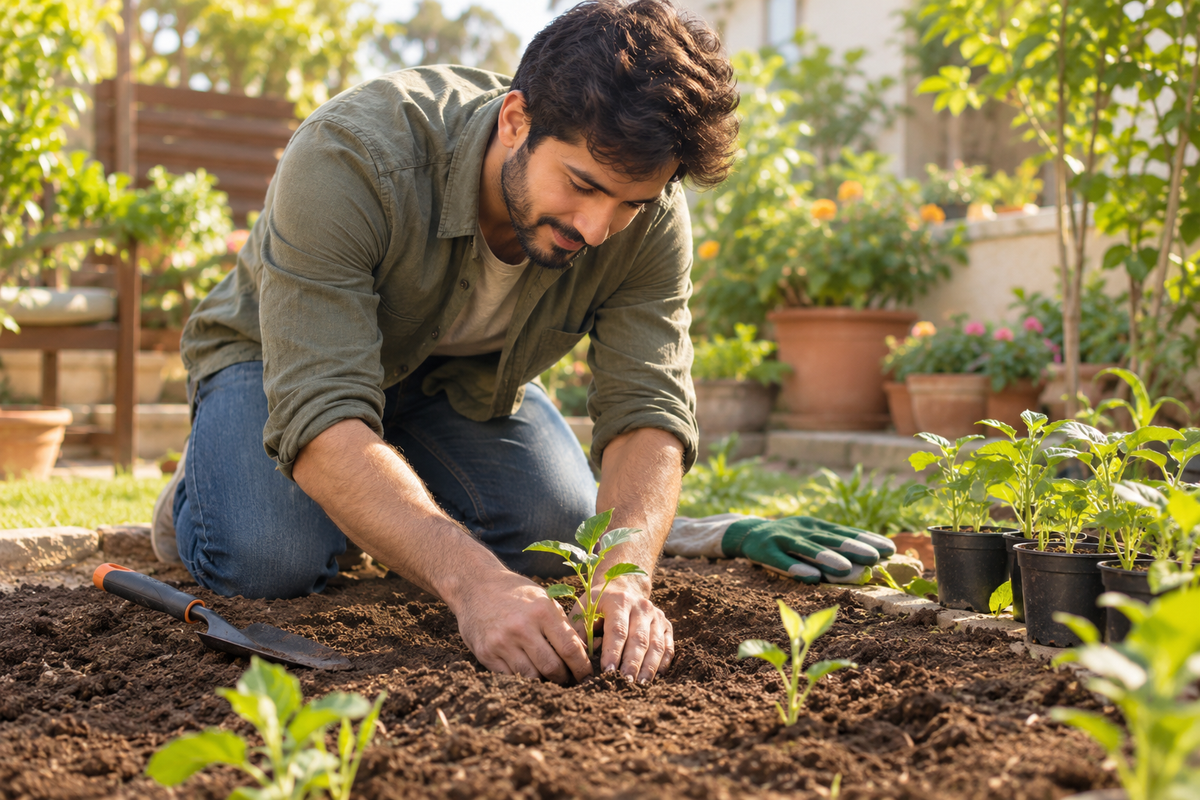
A simple garden is a great place to start learning.
1. Choose the Right Location First
Before you buy a single plant, figure out where it’s going to live. This is the single most overlooked step among beginner gardening tips — and skipping it causes more failed gardens than bad soil ever does.
Walk around your space and pay attention to:
- How much direct sunlight it gets, and at what time of day
- Whether water drains away or pools after rain
- Distance from a hose or water source
- Shade from trees, fences, or buildings
- How much room you actually have to work with
Most vegetables and flowering plants want several hours of direct sun daily, though some do fine in partial shade. And if you don’t have a yard, that’s fine — a sunny balcony, patio corner, or windowsill can absolutely work as your first growing space.
Tip: Pick a spot you’ll walk past often. A tiny garden you check daily beats a big one you forget about.
2. Start Small — Seriously
New gardeners almost always plant too much, too soon. Every extra plant means more watering, more spacing decisions, more things that can go wrong — and more to keep track of while you’re still learning the basics.
For your first season, try:
- 2–3 vegetables
- 1–2 herbs
- A couple of flowering plants
- One or two containers, if space is tight
Once you see what actually thrives in your conditions, expand from there. A small, well-tended garden teaches you far more than a big one you can’t keep up with.
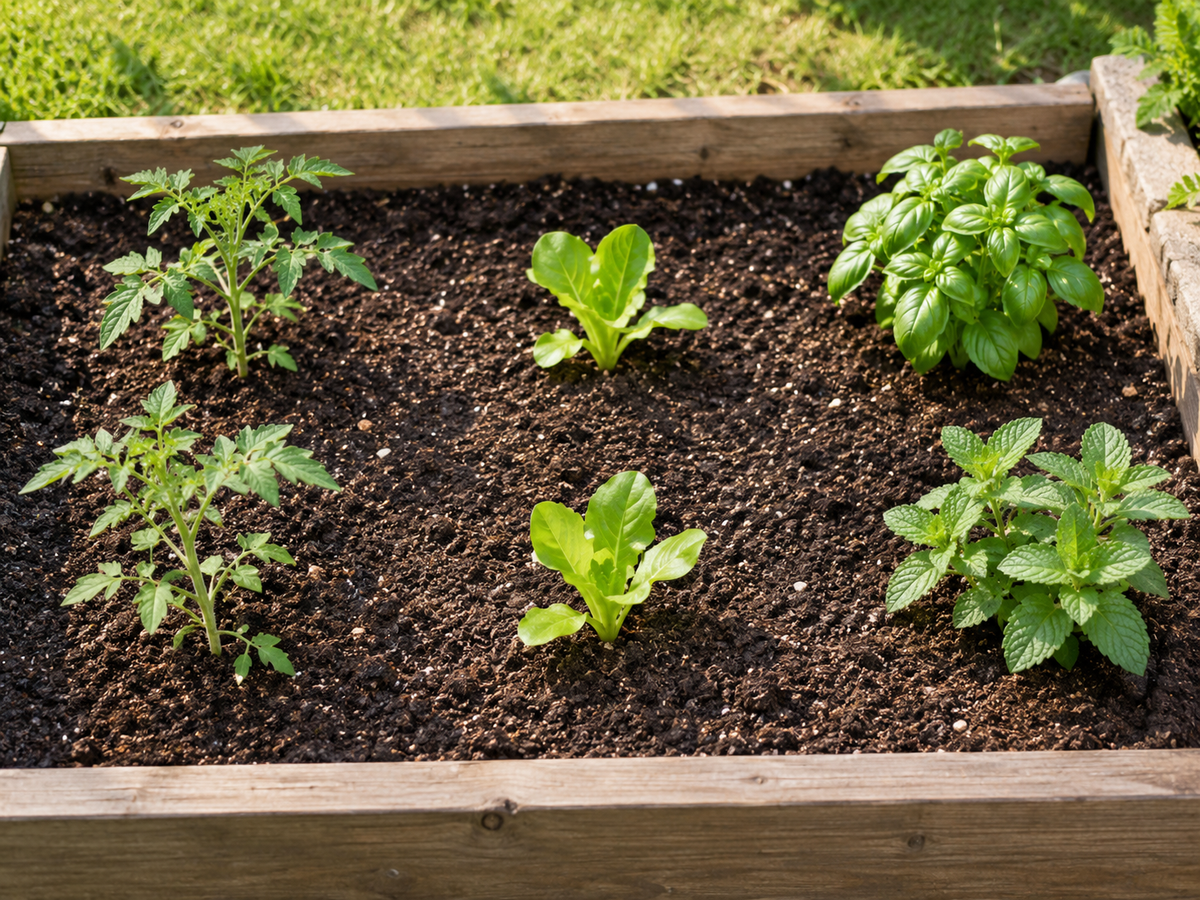
Starting with a small garden makes learning easier.
3. Match Plants to Your Actual Conditions
A pretty plant isn’t automatically the right plant. Before buying anything, check its:
- Sunlight needs
- Water requirements
- Mature size (that tiny seedling might triple in size)
- Soil preference
- Cold/heat tolerance for your climate
- Whether it suits a container
A sun-loving plant will struggle in a shady corner no matter how much you water it. Seed packets and plant tags usually list spacing, sun, and planting-time info — read them before you buy, not after.
Simple rule: choose plants for the conditions you have, not the ones you wish you had.
4. Understand Your Soil Before “Fixing” It
Healthy soil is the foundation of strong roots. Sandy soil drains fast and dries out quickly; heavy clay holds water and compacts easily.
Before adding any products, check your soil:
- Does water drain within a reasonable time?
- Does it turn rock-hard when dry?
- Does it stay soggy for days?
- Does it already have visible organic matter?
A basic soil test can tell you pH and nutrient levels if you want more detail.
About compost
Compost improves organic matter and structure, but more isn’t automatically better. Use finished compost as a supplement — not a fix-all every time a plant looks unhappy.
5. Water Based on the Plant, Not the Clock
There’s no single watering schedule that works for every garden — weather, soil type, plant type, and container size all change how much water is actually needed.
A simple approach:
- Check moisture at the root zone, not just the surface.
- Know what that specific plant needs.
- Water when it’s actually needed — not on autopilot.
- Water thoroughly, not with a light splash.
- Avoid keeping soil constantly soaked.
Containers dry out faster than garden beds, especially in hot weather, so check them more often.
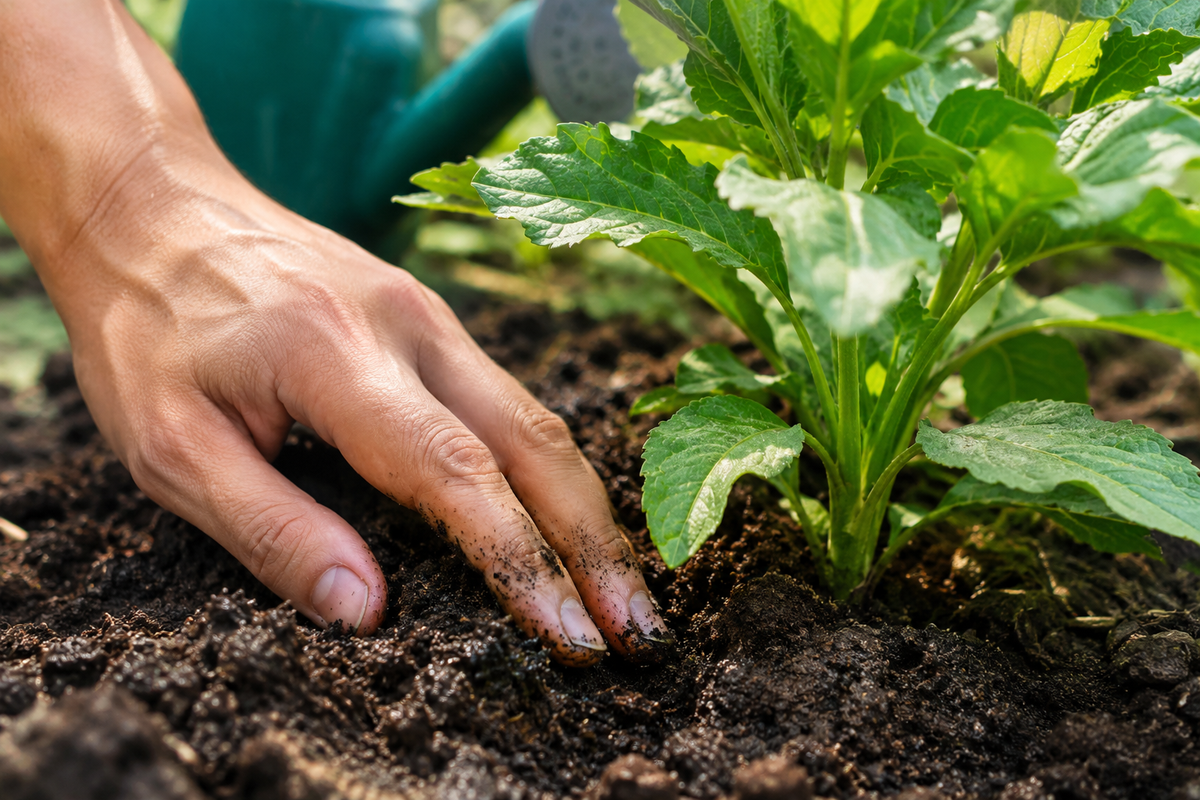
Check soil moisture instead of watering automatically.
Avoid both extremes
Underwatering causes wilting; overwatering suffocates roots by leaving no air in the soil. The goal is the right amount, not more.
6. Try Container Gardening for Beginners
No backyard? No problem. Container gardening for beginners is one of the easiest ways to start, and it works well on balconies, patios, and porches.
Good container options include:
- Herbs
- Lettuce and leafy greens
- Peppers
- Compact tomato varieties
- Flowers
- Some smaller vegetables
Always choose containers with drainage holes, and match pot size to root size — a large root system in a small pot will struggle no matter how well you care for it.
Use the right mix: a potting mix made for containers beats regular garden soil, since it’s built for drainage, moisture retention, and root airflow.
7. Grow a Few Vegetables First
Interested in vegetable gardening? Resist growing everything at once. Pick a few crops suited to your space, sunlight, and local climate — beginners often do well starting with:
- Lettuce
- Radishes
- Green beans
- Peppers
- Tomatoes
Check your local planting calendar, since timing varies a lot by region.
Keep a simple garden log
Write down what you planted, when, where, how it performed, and any pest issues. This one habit makes your second garden dramatically better than your first.
8. Don’t Skip Herbs and Flowers
Gardening doesn’t have to be vegetables-only. Herbs do especially well in containers and small spaces, and flowers add color while attracting pollinators that help your whole garden.
When picking flowers, consider sunlight, soil, mature size, water needs, and bloom season — choose based on fit, not just looks at the garden center.
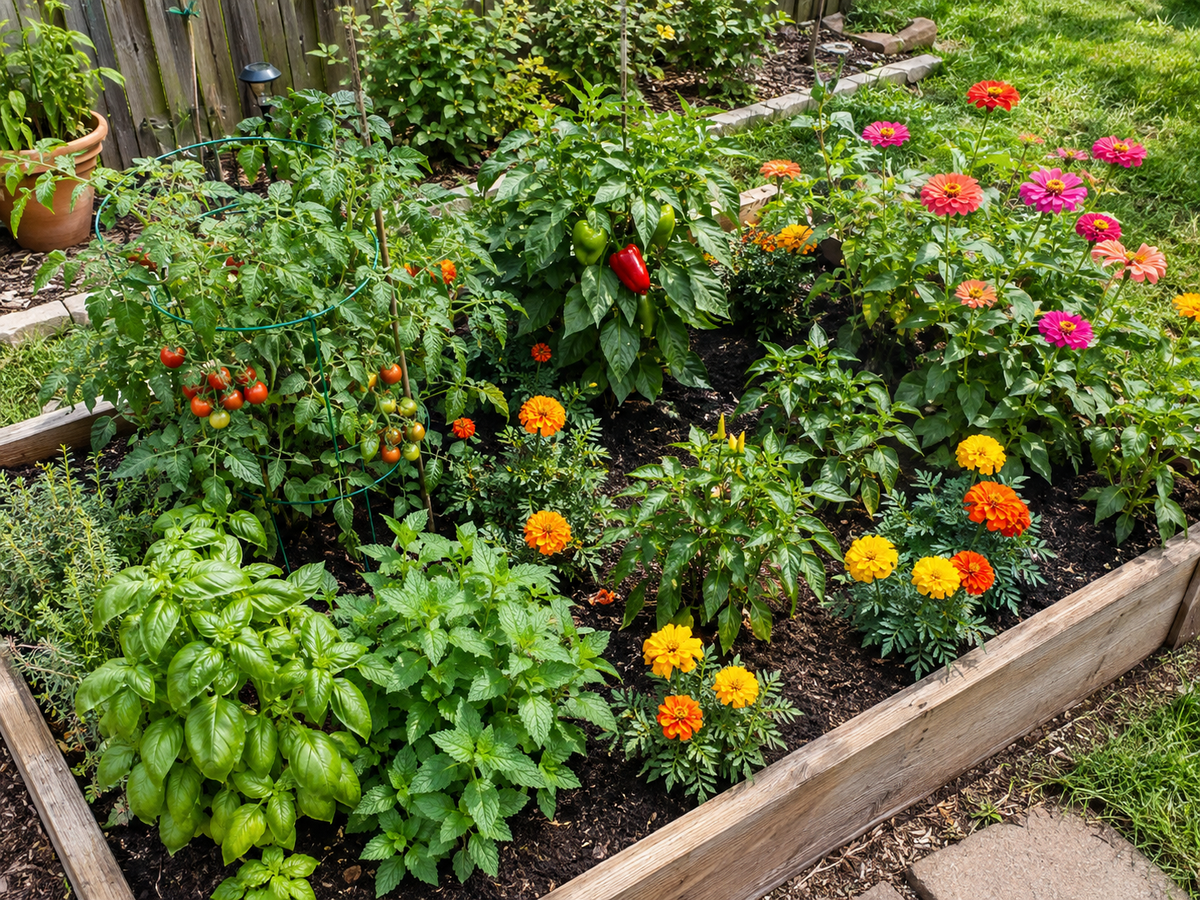
A beginner garden can combine food, herbs, and flowers.
9. Learn Composting Basics
Composting turns kitchen and yard waste into a useful soil amendment — and it’s one of the most beginner-friendly gardening skills to pick up.
A working compost system needs the right mix of materials, moisture, air, and time. You don’t need anything fancy to start — a simple bin or manageable pile is enough.
Remember: compost improves soil, but it’s not a cure for every plant problem. Use it as one tool among several.
10. Observe Before You Act
The most useful of all beginner gardening tips: watch your plants regularly instead of guessing.
Watch for:
- Wilting or yellowing leaves
- Holes or chew marks
- Leaf spots
- Stunted growth
- Very dry or very soggy soil
Before reaching for fertilizer, ask why it’s happening — too much/too little sun, water, or a pest? Fixing the cause works better than treating the symptom blindly.
Common Beginner Gardening Mistakes
- Planting too much — start with what you can realistically maintain
- Ignoring sunlight needs — match plant to spot, not the other way around
- Watering on a fixed schedule — check the soil instead
- Crowding plants — they compete for light, water, and nutrients
- Overusing fertilizer/products — more isn’t automatically better
- Poor drainage — a fast way to kill roots
- Expecting instant results — gardening rewards patience
A Simple Weekly Gardening Routine
A few times a week: check soil moisture, plant health, pests, weeds, and any drying containers.
Once a week: weed, inspect more closely, harvest anything ready, and jot down anything unusual.
End of season: note what worked, what didn’t, and what to change next time. This single habit turns your first season into real experience.
Quick Start Checklist
- ☐ Choose a suitable location
- ☐ Check sunlight and drainage
- ☐ Start small
- ☐ Pick plants suited to your conditions
- ☐ Prepare soil or potting mix
- ☐ Learn each plant’s watering needs
- ☐ Check plants regularly
- ☐ Keep simple notes
- ☐ Expand only once you’re comfortable
Frequently Asked Questions
What are the best gardening tips for beginners?
Start small, pick the right location, understand your soil, choose plants suited to your conditions, water properly, and check your plants regularly.
How do I start gardening for the first time?
Pick a manageable space, check its sun and drainage, choose a few suitable plants, and learn their basic soil and water needs before planting.
Is container gardening good for beginners?
Yes — it’s one of the easiest ways to start with limited space. Use a container with drainage holes and a proper potting mix.
How often should I water my garden?
There’s no fixed schedule — check the soil and consider the plant type, weather, and container size before watering.
What should a beginner plant first?
Pick plants that match your sunlight, space, and climate. A few easy herbs or vegetables beat a large collection of demanding plants.
Final Thoughts
You don’t need a perfect garden to become a good gardener. Start small, pick plants that fit your actual conditions, learn how your soil behaves, water thoughtfully, and pay attention to what your plants are telling you.
Your first garden doesn’t need to impress anyone — it just needs to teach you something. Once you understand your space, you can keep growing from there.